
Why the United States Temporarily Eased Sanctions on Iranian Oil
Sanctions Eased For Whom?

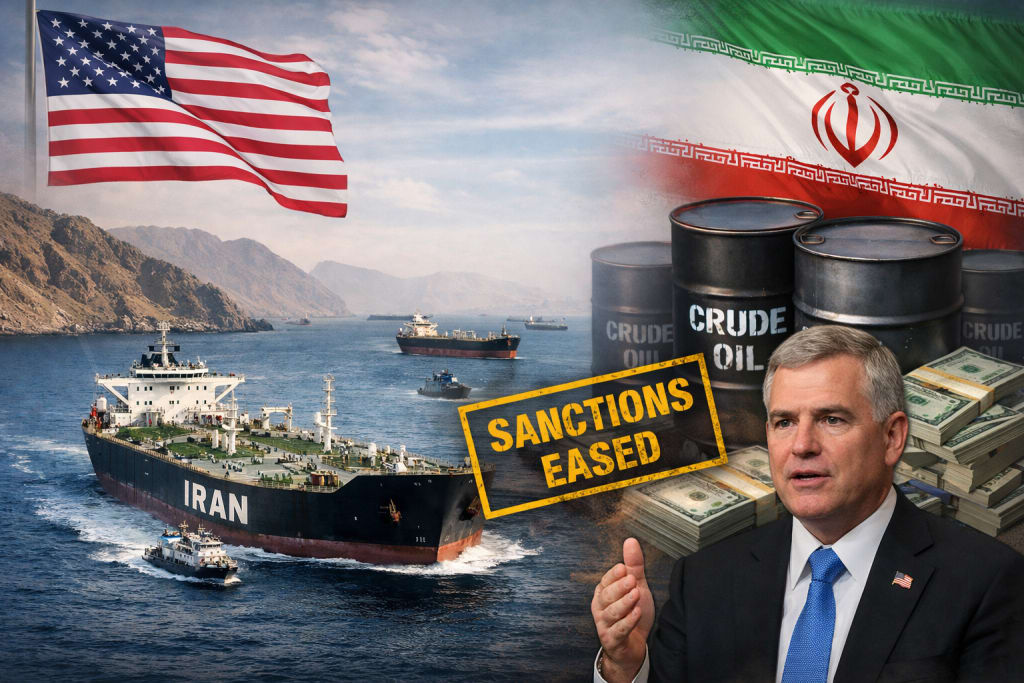
In a surprising and strategically calculated move, the United States recently decided to temporarily ease sanctions on Iranian oil exports. This decision comes at a time when global energy markets are under immense pressure due to escalating tensions around the Strait of Hormuz—one of the world’s most critical maritime chokepoints for oil transportation. The move, though limited in scope and duration, reflects the complex balance between geopolitical strategy and economic necessity.
The Strait of Hormuz serves as a vital artery for global energy supplies, with nearly one-fifth of the world’s oil passing through it daily. However, ongoing conflict and heightened security risks in the region have severely disrupted shipping operations. Tankers have faced delays, insurance costs have surged, and in some cases, routes have been temporarily abandoned. As a result, oil shipments from the region have reportedly dropped by as much as 90 percent compared to normal levels. This dramatic decline has triggered fears of a global supply crunch and a sharp spike in oil prices.
In response to this emerging crisis, the U.S. Department of the Treasury issued a 30-day temporary license allowing certain Iranian oil exports to proceed. However, this is not a blanket relaxation of sanctions. The license applies strictly to oil that had already been loaded onto vessels before the announcement. New deals, contracts, or shipments remain prohibited, signaling that the United States is not abandoning its broader sanctions framework against Iran.
The primary objective of this temporary easing is to stabilize global oil markets. By allowing already-loaded Iranian oil to reach its destination, the United States aims to prevent an immediate supply shock. Energy markets are highly sensitive to disruptions, and even a short-term shortage can lead to price volatility that affects economies worldwide. By ensuring that existing shipments are not stranded at sea, Washington is effectively buying time to manage the crisis and prevent panic in global markets.
Another notable aspect of this decision is the unprecedented provision that allows the United States itself to import Iranian oil under specific conditions. This marks a rare departure from longstanding policy, as Washington has for years imposed strict bans on Iranian crude. While the allowance is temporary and limited, it underscores the severity of the current situation and the willingness of U.S. policymakers to adopt flexible measures when faced with global economic risks.
Despite this apparent relaxation, U.S. officials have been quick to emphasize that their “maximum pressure” campaign against Iran remains intact. Treasury Secretary Scott Bessent clarified that Iran will not have unrestricted access to the revenues generated from these oil sales. Financial controls and restrictions on Iran’s access to the international banking system will continue to limit its economic gains. In effect, the United States is attempting to separate the physical flow of oil from the financial benefits typically associated with it.
This approach highlights a nuanced strategy: leveraging Iranian oil to stabilize global markets while still maintaining economic pressure on Tehran. By doing so, Washington aims to address immediate energy concerns without compromising its long-term geopolitical objectives. It is a delicate balancing act that reflects the interconnected nature of modern geopolitics and global trade.
Additionally, the temporary license serves practical purposes beyond market stabilization. With tensions high in the Strait of Hormuz, ensuring the safe passage of vessels is critical to avoiding environmental disasters or maritime accidents. Allowing ships already at sea to complete their journeys reduces the risk of abandoned cargoes, potential oil spills, and logistical chaos in an already fragile region.
In conclusion, the U.S. decision to temporarily ease sanctions on Iranian oil exports is not a shift in policy but a tactical response to an urgent global challenge. It demonstrates how economic realities can sometimes necessitate short-term flexibility, even within rigid geopolitical frameworks. By permitting limited oil flows while maintaining broader restrictions, the United States is attempting to navigate a complex crisis—one where energy security, market stability, and strategic interests are deeply intertwined.
As the situation in the Strait of Hormuz continues to evolve, the world will be watching closely to see whether this temporary measure succeeds in stabilizing markets or merely delays a larger crisis.
About the Creator
Ibrahim Shah
I am an Assistant Professor with a strong commitment to teaching,and academic service. My work focuses on fostering critical thinking, encouraging interdisciplinary learning, and supporting student development.
Reader insights
Nice work
Very well written. Keep up the good work!
Top insight
Eye opening
Niche topic & fresh perspectives
Keep reading
More stories from Ibrahim Shah and writers in The Swamp and other communities.
IS Russia Winning Ukraine War?
For much of the conflict, Europe framed Ukraine’s struggle as a clear case of resistance against Russian aggression. The narrative was straightforward: Ukraine was defending sovereignty, and Europe stood firmly behind it. However, by 2026, the situation has evolved into something far more complex. The war is no longer just about Ukraine—it has become a broader strategic test for Europe itself. At the center of this test lies what analysts are calling the “Trump Conundrum.”
By Ibrahim Shah 15 days ago in The Swamp
The Forsyth House Fire
Since 1851, Forsyth House has stood on the corner of Union Street and Gordon Street in the heart of Glasgow. Its iconic, or was... because on Sunday 8th of March, 2026, a fire broke out in a small, seemingly un-named shop in the building and tore all that history down. As I write, the rubble is still unsettled and the street is still blocked off. Central Station is quiet on the upper level, and around 30 small businesses have quite literally gone up in smoke.
By S. A. Crawford19 days ago in The Swamp
The Legacy Trump Is Building for Himself
“Who has a hole in them so big they need to take cheap shots at the dead, especially since the dead can no longer defend themselves? Actually, we know the answer to that question: Donald Trump. Donald Trump has a hole in him that big." — electoral-vote.com
By Carl J. Petersenabout 8 hours ago in The Swamp


Comments (1)
Amazing article