
Ukraine Strings Nets Over Cities as Killer Drones Turn Streets Into War Zones
Improvised defenses reveal how modern warfare is reshaping urban life and civilian survival
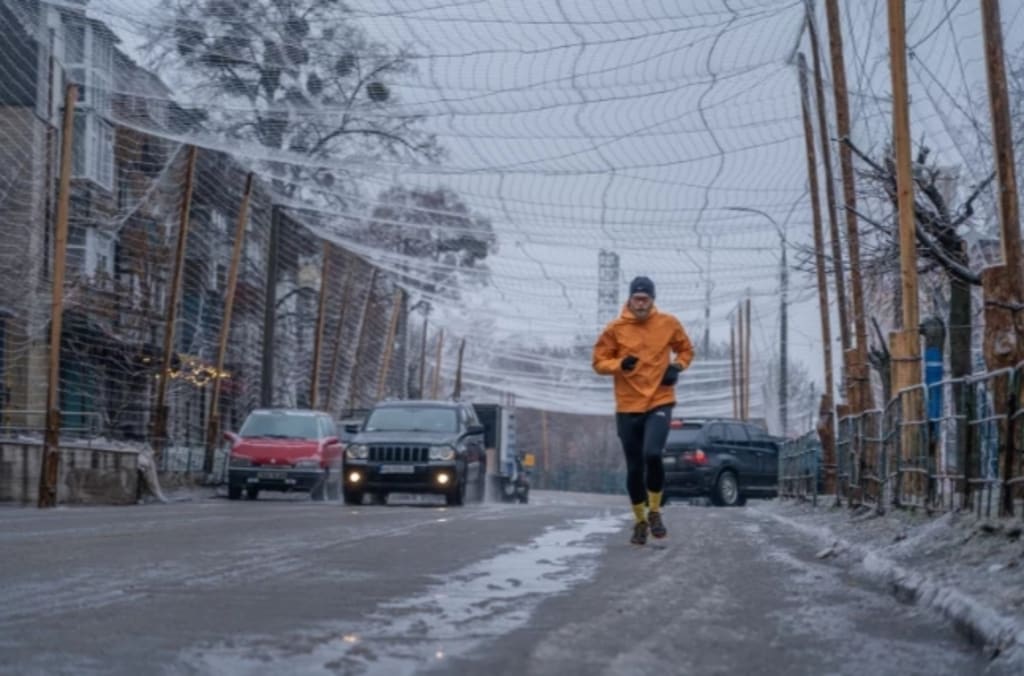
In the heart of Ukraine’s embattled cities, a striking new feature has begun to appear above streets, courtyards, and residential blocks: vast webs of netting stretched between buildings. At first glance, they resemble construction scaffolding or urban art installations. But their purpose is far more urgent—and grim. These nets are the latest line of defense against the growing threat of low-cost, highly lethal drones that have transformed everyday spaces into active combat zones.
As the war drags on, Ukraine’s adaptation underscores a chilling reality: the front lines are no longer confined to distant battlefields. They now run through neighborhoods, marketplaces, and city centers, where civilians live under the constant threat of aerial attack.
The Rise of the Urban Drone Threat
Drones have become one of the defining weapons of the war in Ukraine. Initially used for reconnaissance, they have rapidly evolved into precision strike tools capable of targeting vehicles, infrastructure, and even individual soldiers with deadly accuracy.
Particularly dangerous are first-person-view (FPV) drones—small, agile devices piloted remotely through live video feeds. These drones can weave through narrow streets, enter buildings, and strike with minimal warning. Often packed with explosives, they are inexpensive to produce but devastating in effect.
Unlike traditional missiles or artillery, FPV drones blur the boundary between battlefield and civilian space. A quiet street can become a target within seconds. A parked car or open window can turn into a point of vulnerability. This unpredictability has forced Ukrainian forces and civilians alike to rethink how cities can be defended.
Nets as Shields: A Low-Tech Solution to a High-Tech Problem
In response, Ukrainian engineers, soldiers, and volunteers have turned to a surprisingly simple solution: nets. Strung across streets or draped over key locations, these barriers are designed to intercept or entangle incoming drones before they reach their targets.
The concept is straightforward. FPV drones rely on speed and maneuverability, but they are also fragile. A well-placed net can disrupt their flight path, cause them to crash prematurely, or detonate at a safer distance from people and infrastructure.
These nets are being deployed in strategic areas—near military checkpoints, logistics hubs, and densely populated zones. In some cases, entire streets are covered, creating protective corridors that reduce the risk of drone strikes.
While not foolproof, the nets offer a crucial advantage: they are cheap, quick to install, and scalable. In a war where both sides are constantly innovating, such adaptability can mean the difference between life and death.
A City Transformed
The visual impact of these defenses is profound. Cities that once bustled with normal life now bear the unmistakable marks of a war fought from above. Nets crisscross the skyline, sandbags line sidewalks, and anti-drone measures are integrated into everyday infrastructure.
For residents, this transformation is more than cosmetic. It represents a fundamental shift in how urban space is experienced. Walking down the street now involves scanning not just the ground, but the sky. The hum of a drone engine can trigger immediate fear, sending people scrambling for cover.
Children grow up recognizing the sound of different drones. Shopkeepers adjust their hours based on perceived risk. Public gatherings are limited, not only by missile threats but by the possibility of sudden, targeted drone attacks.
In this environment, the line between civilian and combatant spaces becomes increasingly blurred.
The Psychology of Constant Surveillance
Beyond the physical danger, drones impose a psychological toll. Their presence creates a sense of constant surveillance and vulnerability. Unlike traditional airstrikes, which are often preceded by sirens or detectable launches, drones can appear suddenly and strike with precision.
This unpredictability breeds anxiety. Even in moments of relative calm, the possibility of an unseen drone looms overhead. The nets, while protective, also serve as a visible reminder of that threat.
In many ways, the war has become as much about endurance as it is about firepower. Maintaining morale in cities under continuous drone threat is a challenge that extends beyond military strategy into the realm of social resilience.
Innovation on Both Sides
The use of nets is just one example of how Ukraine is adapting to the evolving drone threat. Electronic jamming systems, camouflage techniques, and decentralized defense networks are also being employed to counteract drone operations.
However, this is a dynamic contest. As defenses improve, so do offensive capabilities. Drone operators develop new tactics to bypass obstacles, including flying at higher altitudes, approaching from unexpected angles, or using more robust designs.
This cycle of adaptation highlights a broader trend in modern warfare: the rapid pace of technological evolution. Unlike traditional weapons systems, which can take years to develop, drones and countermeasures can be modified and deployed in a matter of weeks.
The result is a constantly shifting battlefield, where innovation is as critical as firepower.
Global Implications
What is happening in Ukraine has implications far beyond its borders. The widespread use of drones in urban environments is likely to shape future conflicts around the world.
Cities, once considered relatively secure compared to front-line battlefields, are increasingly vulnerable to low-cost aerial threats. The Ukrainian experience demonstrates that even basic defenses—like nets—can play a role in mitigating these risks.
Military planners and policymakers are closely watching these developments. The lessons learned in Ukraine could influence how cities are designed, how infrastructure is protected, and how civilians are prepared for future conflicts.
Conclusion: Survival in a New Kind of War
The image of nets stretched across Ukrainian streets captures the essence of a new era in warfare—one where survival depends on ingenuity, adaptability, and resilience.
As killer drones turn urban landscapes into contested spaces, traditional notions of safety and distance from the front lines are being upended. In their place emerges a reality where every street can be a battlefield, and every civilian a potential target.
Yet, amid this uncertainty, the response of Ukrainian communities offers a measure of hope. By turning simple materials into life-saving defenses, they demonstrate that even in the face of relentless technological threats, human creativity and determination remain powerful tools.
In the end, the nets overhead are more than just barriers—they are symbols of a society refusing to surrender its streets to the machinery of war.
About the Creator
The Forsyth House Fire
Since 1851, Forsyth House has stood on the corner of Union Street and Gordon Street in the heart of Glasgow. Its iconic, or was... because on Sunday 8th of March, 2026, a fire broke out in a small, seemingly un-named shop in the building and tore all that history down. As I write, the rubble is still unsettled and the street is still blocked off. Central Station is quiet on the upper level, and around 30 small businesses have quite literally gone up in smoke.
By S. A. Crawford5 days ago in The Swamp
Trump Calls for Naval Coalition to Open Strait of Hormuz: Can It Work?
The Strait of Hormuz has long been one of the world’s most critical maritime chokepoints. In 2026, escalating tensions between the United States and Iran have once again turned this narrow waterway into a focal point of global security and economic concern. Amid rising conflict, U.S. President Donald Trump has called for an international naval coalition to secure and reopen the strait, urging several major economies to send warships to escort commercial vessels. �
By Jameel Jamali2 days ago in The Swamp



Comments
There are no comments for this story
Be the first to respond and start the conversation.