
Not like Others!?
How Iran plays the game?

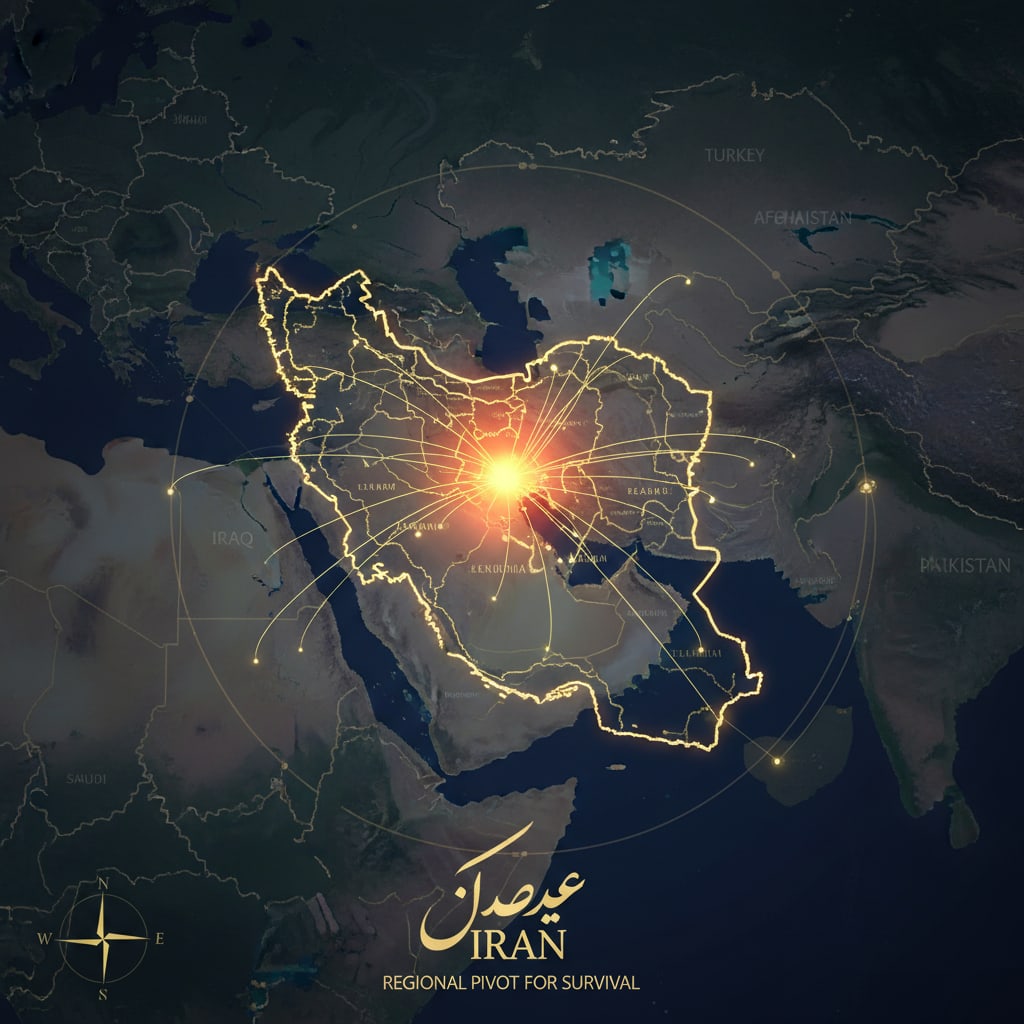
Some countries follow global trends, and some adjust under pressure, but there are a few that stand firm and even reshape the pressure itself. Iran is one of those countries. It cannot be understood only through headlines or political speeches. To understand Iran, you have to look at where it sits, what it has gone through, and how it thinks.
Iran is located in one of the most sensitive places in the world. Right next to it is the Strait of Hormuz, a narrow waterway through which a large part of the world’s oil passes. This is not just a simple sea route; it is a global lifeline. When tension rises there, the whole world feels it. Oil prices move, markets react, and governments pay attention. This gives Iran a kind of power that cannot be removed, because geography cannot be changed. No matter how strong global powers become, they cannot relocate this chokepoint or ignore its importance.
But Iran does not play the same game as other countries. It does not always try to compete directly with stronger military powers like the United States. Instead, it plays a deeper and more strategic game. In this game, the battlefield is not only military—it is economic and psychological. It understands that modern conflicts are not always decided by weapons alone, but by influence, pressure, and the ability to control uncertainty.
Because of its position, Iran can create pressure on the Gulf region without direct confrontation. The economies of countries like Saudi Arabia and United Arab Emirates depend heavily on stable oil exports and secure shipping routes. When Iran signals instability in the Strait of Hormuz, even slightly, it creates fear in the markets. Ships become cautious, insurance costs rise, investors hesitate, and uncertainty spreads. Iran does not need to fully block anything; the idea of disruption alone is enough to shake confidence.
This is where its strategy becomes powerful. It threatens stability, not just systems. And when stability is threatened, economies feel it immediately. This pressure does not remain limited to Gulf countries. It directly connects to the United States as well. The U.S. has military bases across the region and has invested heavily in maintaining stability in the Middle East. Its presence is not only military but also economic, tied to energy security and long-term investments.
When the Gulf becomes unstable, it creates a chain reaction. Economic uncertainty grows, investments become risky, and the environment around U.S. bases becomes more complicated. Even strong military systems depend on stable surroundings to operate effectively. Iran understands this very clearly. By creating pressure in the region, it indirectly increases the cost for the United States to maintain its influence. It turns the situation into a long-term challenge instead of a direct conflict, where every move must be calculated carefully.
This is why Iran’s approach is not about quick wins. It is about endurance and pressure over time. It creates a situation where any action against it carries wider consequences, not only for governments but for global markets and ordinary economies. This forces stronger powers to think carefully before making moves, because escalation is no longer limited to the battlefield; it spreads into finance, trade, and global stability.
At the same time, Iran’s strength is not only in its location. It also comes from its history. Iran is not a new country trying to define itself; it is the continuation of an ancient civilization. From the time of the Persian Empire to the modern Islamic Revolution, the country has gone through invasions, political changes, foreign interventions, and internal transformations. Over the years, it has learned how to survive under pressure. Instead of breaking, it adapts. Resistance has become part of its identity.
This is one of the main reasons why the United States has not been able to fully change Iran. Sanctions created difficulties, but they did not collapse the system. Diplomatic efforts opened doors, but they did not lead to full transformation. Military pressure increased tension, but it did not force surrender. In many cases, external pressure made the country more united internally. What was meant to weaken it sometimes strengthened its determination.
The same pattern appears in the approach of Israel to limit Iran. While there have been attempts to weaken its capabilities and reduce its influence, Iran does not rely only on direct confrontation. It uses indirect influence, long-term thinking, and strategic patience. This makes it harder to defeat in a traditional way. Even when it faces setbacks, it continues to operate and adapt.
What makes Iran different is not just one factor. It is the combination of its location, its resources, its history, and its mindset. It does not react like other countries. It does not follow expected patterns. Instead, it changes how the game is played. It understands that power is not always about strength alone; sometimes it is about positioning, timing, and perception.
In a world where many countries depend on stability to survive, Iran has learned how to use instability as a tool. It creates pressure without always acting, influences outcomes without direct control, and remains important even under isolation. This ability to operate within uncertainty gives it an advantage that is difficult to counter.
That is why Iran is not easy to change. It does not simply respond to global power; it interacts with it in its own way. It absorbs pressure, redirects it, and continues forward, often turning challenges into leverage.
It is not like others.
About the Creator
Keramatullah Wardak
I write practical, science-backed content on health, productivity, and self-improvement. Passionate about helping you eat smarter, think clearer, and live better—one article at a time.
Keep reading
More stories from Keramatullah Wardak and writers in The Swamp and other communities.
Trade Weaponization - Punishment to Pakistan
In the rugged passes where the mountains of Afghanistan meet the plains of Pakistan, a long-standing trade artery has always flowed: goods, fruits, textiles, vehicles, labour, ambition. But now, this artery has been deliberately constricted, and in doing so the spectre of “trade as a weapon” has re-emerged in full force. For decades, Pakistan has treated its neighbour Afghanistan not solely as an economic partner but also as a zone of leverage. This time, the calculus has taken on sharper edges: the closure of trade routes, suspension of transit agreements, and threats of permanent exclusion.
By Keramatullah Wardak4 months ago in The Swamp
The Forsyth House Fire
Since 1851, Forsyth House has stood on the corner of Union Street and Gordon Street in the heart of Glasgow. Its iconic, or was... because on Sunday 8th of March, 2026, a fire broke out in a small, seemingly un-named shop in the building and tore all that history down. As I write, the rubble is still unsettled and the street is still blocked off. Central Station is quiet on the upper level, and around 30 small businesses have quite literally gone up in smoke.
By S. A. Crawford12 days ago in The Swamp
The Fae King
It began with a girl. Black-haired and sweet and gone too soon. It is the way of mortals to die, of course. Most pass within a few decades, unless they can be tempted away to fairyland and persuaded to stay there. Even then, mortals live only as long as they can go without visits to friends or family that allow time and the weight of years to catch up to them.
By Natasja Rose5 days ago in Fiction



Comments
There are no comments for this story
Be the first to respond and start the conversation.