
Is America Losing the War Against Iran?
A Conflict Where Winning Isn’t So Simple

Introduction
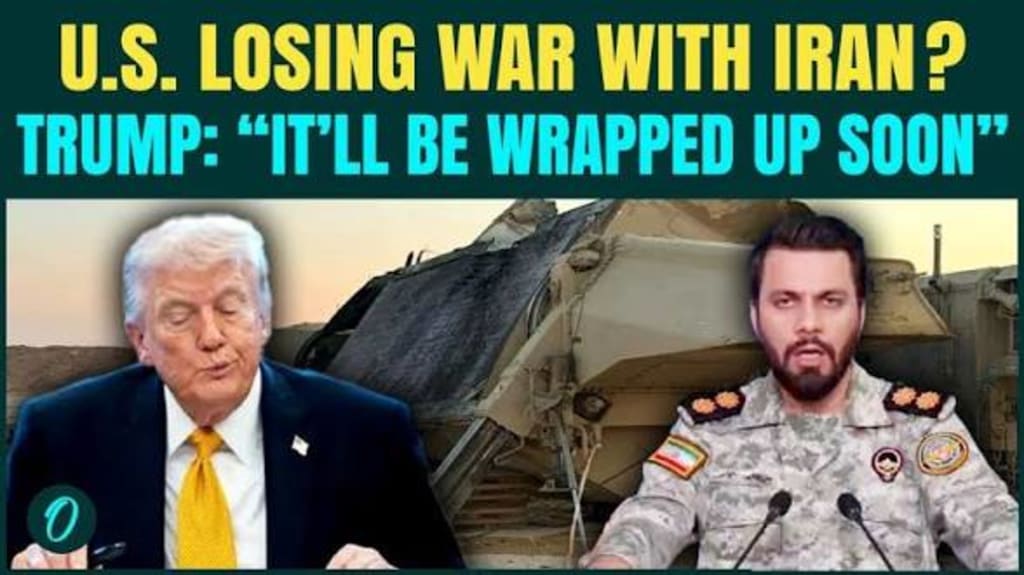
The question of whether the United States is losing a war against Iran is complex and depends on how “winning” is defined. Military strength, political goals, economic consequences, and long-term strategy all play a role. While the U.S. remains the most powerful military force in the world, recent developments in the 2026 conflict suggest that victory is far from straightforward.
Military Power: Strength vs Strategy
On paper, the United States holds overwhelming military superiority. Advanced air power, naval dominance, and precision strike capabilities have allowed it to carry out major operations, such as the large-scale strikes on Iranian targets, including key military infrastructure. �
Wikipedia
These attacks have destroyed dozens of Iranian military sites and weakened parts of its defense network. However, war is not only about firepower—it is also about endurance and adaptability.
Iran has responded with missile and drone attacks across the region, targeting U.S. bases and allies. �
Despite heavy losses, Iran continues to fight back, showing that it is far from defeated.
Wikipedia
Iran’s Strategy: Survival Over Victory
Unlike the U.S., Iran does not need to “win” in a traditional sense. Its primary objective is survival—maintaining its regime and continuing resistance.
History shows that weaker nations can outlast stronger ones by turning conflicts into long wars of attrition. Iran has used asymmetric warfare, including drones, missiles, and regional allies, to stretch U.S. resources and create constant pressure.
Even after leadership losses and infrastructure damage, Iran’s political system has not collapsed. �
This resilience suggests that achieving decisive victory may be much harder than expected.
Economic Battlefield: A Hidden War
One of the most important fronts in this conflict is economic rather than military.
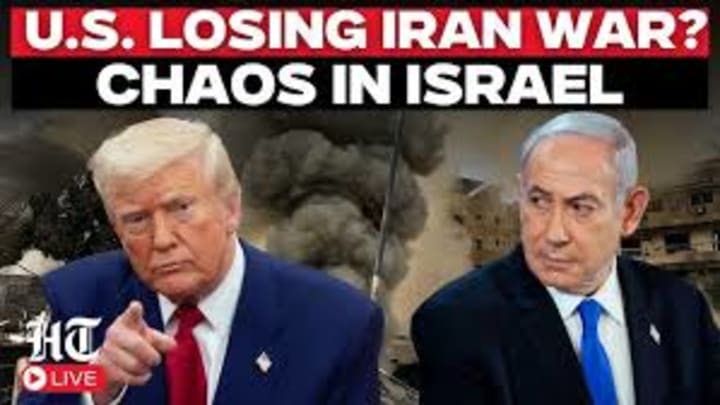
The disruption of the Strait of Hormuz—through which a large portion of the world’s oil supply passes—has triggered global economic instability. �
Oil prices have surged, global markets have shaken, and supply chains have been disrupted. �
SpecialEurasia
Even the United States, despite being a major oil producer, is feeling the impact. Gas prices have risen significantly, putting pressure on households and the economy. �
AP News
If Iran can continue to disrupt global trade and increase economic costs, it may achieve a form of strategic success without winning militarily.
Political Divisions and Global Pressure
Another challenge for the U.S. is internal and international political pressure.
Recent reports indicate disagreement within U.S. leadership about the necessity of the war, with some officials claiming Iran did not pose an immediate threat. �
Reuters
At the same time, global allies are divided. Some Gulf states support stronger action against Iran, while others fear further escalation and instability. �
The Wall Street Journal
This lack of unified support can weaken long-term strategy and make sustained military engagement more difficult.
The Cost of Prolonged Conflict
Wars are not only fought on battlefields—they are also fought through time.
- A prolonged conflict increases:
- Financial costs
- Military fatigue
- Political opposition
- Global instability
Iran’s strategy appears to focus on extending the war, forcing the U.S. into a costly and exhausting situation. If the conflict drags on without clear results, it could shift public opinion and reduce support for continued involvement.
So, Is America Losing?
The answer depends on perspective:
Militarily: The U.S. is not losing. It maintains dominance and continues to strike effectively.
Strategically: The situation is uncertain. Iran’s ability to survive and retaliate challenges U.S. objectives.
Economically and politically: The U.S. faces growing pressure, which could weaken its position over time.
In modern warfare, victory is not just about defeating the enemy—it is about achieving long-term goals. If those goals remain unmet, even a powerful nation can struggle to claim success.
Conclusion
The war between the United States and Iran is not a simple contest of strength. It is a multi-dimensional conflict involving military action, economic disruption, and political strategy.
While America is not clearly losing, it is also not clearly winning. Iran’s resilience, combined with global economic consequences and political divisions, has turned the conflict into a prolonged and uncertain struggle.
In the end, the outcome may not be decided by who is stronger—but by who can endure longer and adapt better in an increasingly complex battlefield.
About the Creator
Sk
"I am a passionate writer, crafting books and articles on Vocal Media, exploring human experiences, stories, and creative reflections."
The Forsyth House Fire
Since 1851, Forsyth House has stood on the corner of Union Street and Gordon Street in the heart of Glasgow. Its iconic, or was... because on Sunday 8th of March, 2026, a fire broke out in a small, seemingly un-named shop in the building and tore all that history down. As I write, the rubble is still unsettled and the street is still blocked off. Central Station is quiet on the upper level, and around 30 small businesses have quite literally gone up in smoke.
By S. A. Crawford6 days ago in The Swamp
Everyone Is Acting Normally Challenge Winners
In the Everyone Is Acting Normally challenge, something is clearly wrong, but no one stops to name it. Across the shortlist, that wrongness appears as resurrections, surveillance, disappearance, and denial, each treated as part of daily life.
By Vocal Curation Teamabout 9 hours ago in Resources


Comments
There are no comments for this story
Be the first to respond and start the conversation.