
Why Is Anxiety Worse at Night? Causes, Symptoms, and Proven Ways to Sleep Better
Understanding nighttime anxiety and how to regain calm, restful sleep

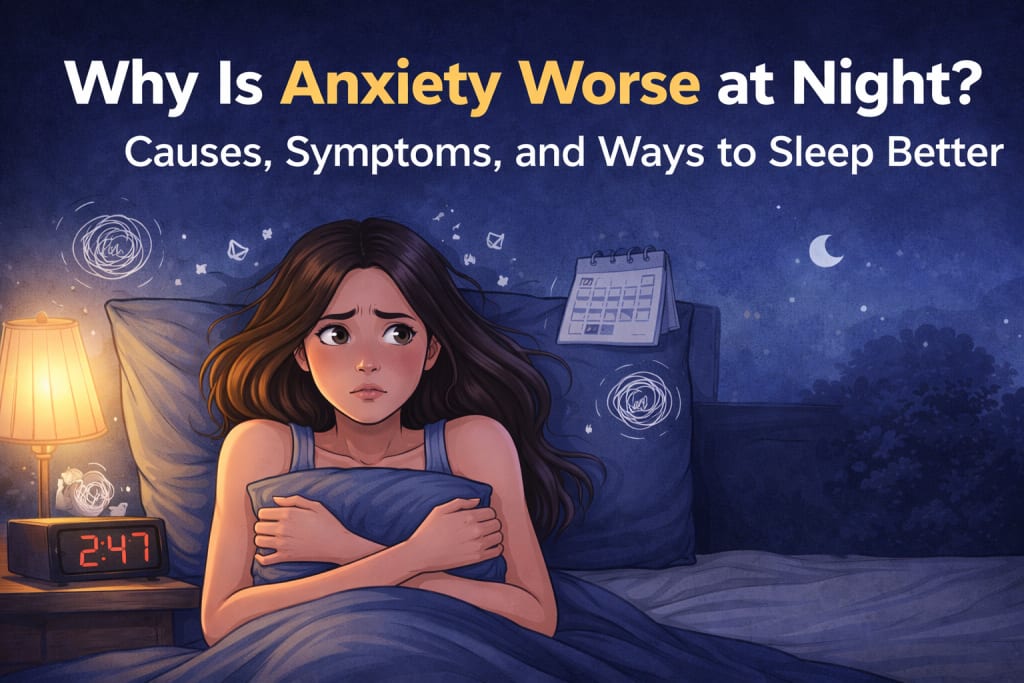
It is 11:30 PM. The house is quiet, the lights are off, and your body is finally still. But your mind? It is racing.
You replay conversations from earlier in the day. You worry about tomorrow’s responsibilities. Your heart beats a little faster, and sleep feels just out of reach.
If this sounds familiar, you are not alone. Many people experience anxiety at night, even if they feel relatively calm during the day. In fact, searches for phrases like “why is anxiety worse at night” and “nighttime anxiety symptoms” have been steadily increasing across the US.
Let’s explore why this happens and, more importantly, what you can do about it.
Why Is Anxiety Worse at Night?
Nighttime anxiety is not random. There are specific psychological and biological reasons behind it.
1. Fewer Distractions Means More Thoughts
During the day, your mind stays occupied with work, conversations, and responsibilities. At night, those distractions disappear.
This creates space for:
- Overthinking
- Worry loops
- Unresolved emotions
For example, someone who felt “fine” all day may suddenly start worrying about finances or relationships once they lie down in bed.
2. Your Brain Switches Into Reflection Mode
At night, the brain naturally shifts into processing mode. This is when it:
- Reviews the day
- Anticipates the future
- Tries to solve unresolved problems
While this is normal, it can trigger racing thoughts at night, especially if you are already prone to anxiety.
3. Cortisol and Hormonal Changes
Cortisol, also known as the stress hormone, typically drops at night. However, in people with anxiety, this rhythm can be disrupted.
This imbalance can lead to:
- Increased alertness
- Difficulty falling asleep
- Heightened emotional responses
4. Sleep Anxiety Cycle
If you have ever struggled to fall asleep, you may start worrying about not sleeping again. This creates a cycle:
Anxiety → Poor sleep → More anxiety → Worse sleep
This is often referred to as sleep anxiety, and it can become a long-term pattern if not addressed.
Common Symptoms of Nighttime Anxiety
Recognizing the signs is the first step toward managing them. Some common night anxiety symptoms include:
- Racing thoughts when trying to sleep
- Increased heart rate or chest tightness
- Restlessness or inability to stay still
- Difficulty falling or staying asleep
- Overthinking past events or future worries
- Feeling a sense of dread without a clear reason
In some cases, people may even experience mild panic symptoms at night.
A Real-Life Scenario
Consider Sarah, a working professional in her early 30s.
During the day, she manages meetings, deadlines, and social interactions without much issue. But at night, things change.
As soon as she lies down:
- She starts thinking about whether she said the wrong thing in a meeting
- She worries about upcoming deadlines
- She checks her phone repeatedly
Before she knows it, it is 2 AM, and she is still awake.
Sarah is not alone. This pattern reflects a very common experience of high-functioning anxiety, where symptoms become more noticeable only during quiet moments.
Proven Ways to Reduce Anxiety at Night
The good news is that there are effective, practical ways to manage nighttime anxiety and improve sleep quality.
1. Create a Calming Night Routine
Your brain needs signals that it is time to wind down.
Try:
- Dimming lights 1 hour before bed
- Avoiding screens or using blue light filters
- Listening to calming music or guided relaxation
Consistency is key. A predictable routine can reduce sleep-related anxiety over time.
2. Practice a “Brain Dump” Before Bed
If your mind is full of thoughts, get them out of your head and onto paper.
Write down:
- Tasks for tomorrow
- Worries or concerns
- Anything that is bothering you
This technique helps reduce overthinking at night and gives your brain permission to rest.
3. Try Deep Breathing or Relaxation Techniques
Simple breathing exercises can calm your nervous system.
One effective method:
- Inhale for 4 seconds
- Hold for 4 seconds
- Exhale for 6 seconds
Repeat for a few minutes to reduce physical symptoms of anxiety.
4. Limit Stimulants in the Evening
Caffeine and sugar can worsen nighttime anxiety.
Avoid:
- Coffee or tea after late afternoon
- Energy drinks
- Heavy meals right before bed
Instead, opt for calming options like herbal tea.
5. Set Boundaries With Your Thoughts
If your mind starts spiraling, gently interrupt it.
You can:
- Remind yourself: “I will deal with this tomorrow”
- Focus on your breath or surroundings
- Use grounding techniques like naming 5 things you can see
This helps break the cycle of racing thoughts before sleep.
6. Improve Your Sleep Environment
Your bedroom should feel safe and relaxing.
Make small changes like:
- Keeping the room cool and dark
- Using comfortable bedding
- Reducing noise or using white noise
A supportive environment can significantly improve sleep quality.
7. Know When to Seek Support
If your anxiety is:
- Persistent
- Affecting your daily life
- Causing chronic sleep problems
It may be time to seek professional help.
Mental health professionals can help identify underlying causes and provide personalized strategies, including therapy or medication management if needed.
Final Thoughts
Nighttime anxiety can feel overwhelming, especially when the world around you is quiet but your mind is anything but.
However, understanding why anxiety gets worse at night is the first step toward managing it. With the right strategies, you can break the cycle of overthinking and create a healthier relationship with sleep.
A Gentle Step Forward
If you or someone you know is struggling with anxiety at night or ongoing sleep difficulties, it may help to talk to a qualified mental health professional. Mental health support is available, and small steps can lead to meaningful improvements in both sleep and overall well-being.
About the Creator
JP Psychiatry
JP Psychiatry provides expert psychiatric care for children (6+) and adults in Chicago, the Chicagoland area and the state of Illinois. We offer personalized psychiatry, medication management, and telepsychiatry services.
Keep reading
More stories from JP Psychiatry and writers in Psyche and other communities.
Mental Health Awareness and Its Growing Importance in Today’s Society
In recent years, mental health awareness has shifted from being a neglected subject to a global priority. Once considered a taboo, conversations around emotional well-being are now central in schools, workplaces, and communities. This growing importance reflects not only the rising prevalence of conditions like anxiety and depression but also a deeper understanding of how mental health shapes overall quality of life.
By JP Psychiatry6 months ago in Psyche
Thirty (one) and Neither Flirty nor Thriving.
I'm thirty-one and orbiting the same few mistakes like they're landmarks. London is already awake before I am (or before I've slept) - sirens somewhere far enough to ignore, buses sighing at stops, people moving with purpose I can't quite borrow. I lie there for a bit, tasting last night at the back of my throat, trying to remember if I meant to drink that much or if it just...happened again.
By Stacey Vella5 days ago in Psyche
Trump’s Worldview
We all know that Trump is a narcissist. Even the people who still support him cannot deny it at this point, with all the self-aggrandizement, lavish flattery and gifts he receives from those who want to grease his hand. Qatar luxury plane, Argentinian $40B bailout, and FIFA Peace Prize are just the tips of the iceberg everyone can see, but I also encourage you to look into the crypto enrichment schemes by the Trump clan and his economic "deals." Also, research who really benefits from the Iran war.
By Lana V Lynx5 days ago in Psyche




Comments
There are no comments for this story
Be the first to respond and start the conversation.