
Mei Mei Was Not the One They Wanted
A look at the animals we overlook—and why they deserve more than pity

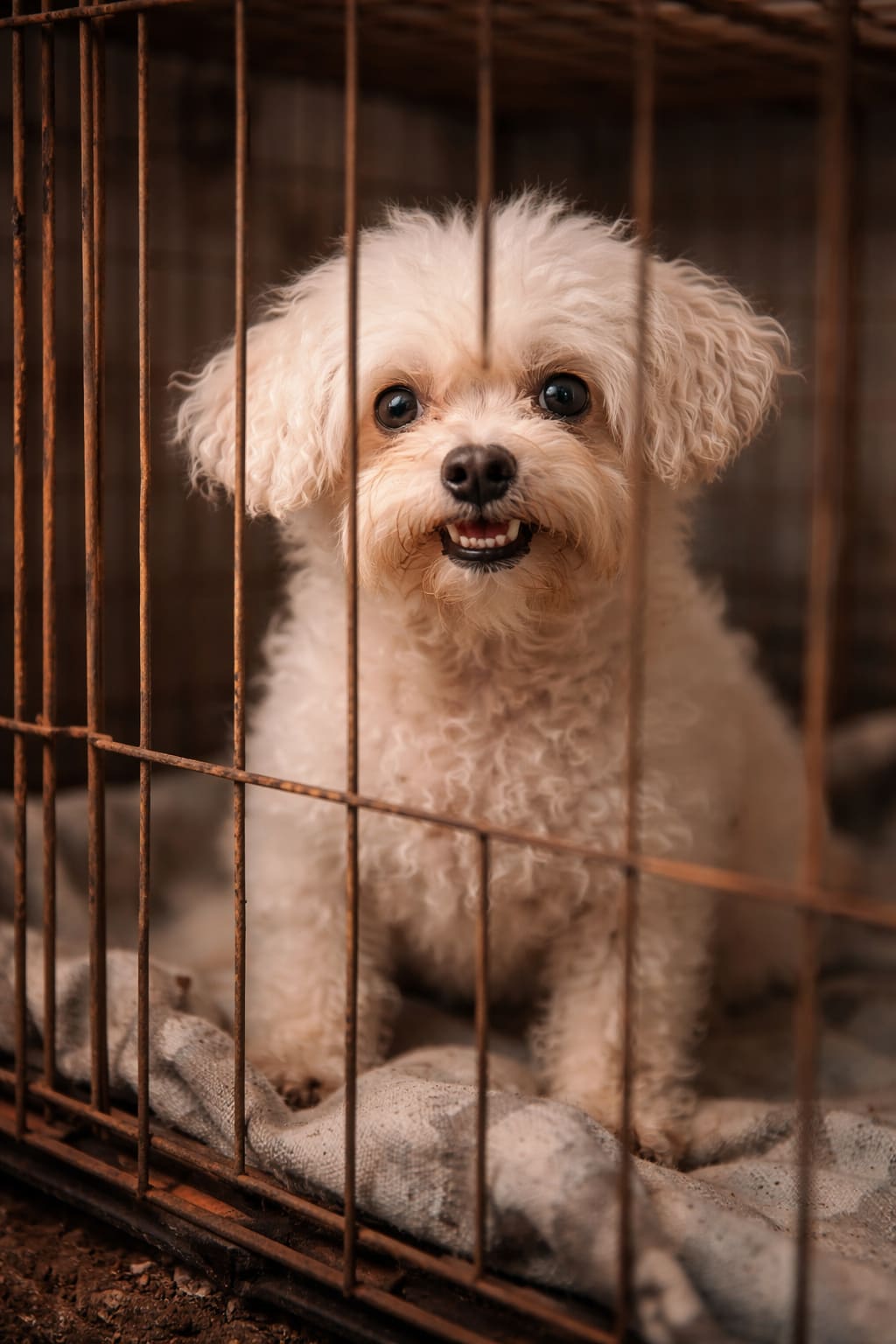
Speaking from experience (and I am sure that many of us have had these moments), it is not easy to live as a person or animal with special needs.
Other than feeling that there is no place for you, you have to deal with added problems—dietary, physical or, in some cases, emotional. Without choice, they face criticism and, ultimately, rejection. There is no need for me (but I am doing it anyway) to mention that the special needs animal sometimes experiences discomfort, both physically and emotionally, heightened especially if there is no care or support given.
Mei Mei, our Bichon Frise, was one of these animals. She was buck-toothed—not a pretty sight. She was also smaller than the typical Bichon. Like many animals that are different, she was kept in a tight cage for months before she was sold.
And we took her in.
So, on this rather serious note, I introduce the animal with special needs. These are very special creatures that need everyone’s care and attention because of a lack of a place in the world owing to their disabilities or debilitating circumstances of one kind or another. Definitely, looking after one is far from being the easiest thing, considering they are not always aesthetically pleasing. Our positive instincts are not easily stirred by the diseased, deformed or handicapped. Coming across creatures such as these can be confusing as well because of the pity we may feel on one hand and the burden of their needs on the other.
🐶💔🚫🏠➡️🤲💖🏡
Before going on any further, one may wonder which animals constitute this group. To me, at least, these creatures who cannot seem to get our attention fall into five broad categories—the runts of litters, the diseased, the handicapped, the deformed, and the granddaddy of them all—the senior pet. These creatures all have added burdens in their lives and require a little more care and attention.
What animals form this group?
The Runts of Litters
In animal litters, it is not surprising to find one that is much smaller than his brothers and sisters—the runt. (Being rather small myself, I am a little more partial to these fellows.) These little ones find it a little more difficult to nurse than their littermates and are often ignored by the group. Pushed aside, they are victims of the maxim “survival of the fittest.” While some grow to be handsome, healthy animals, others, unfortunately, perish for want of food, comfort and attention.
Being Chinese, our family named the dog mentioned at the start of this article Mei Mei (or sister). As she was undersized, she was cast aside, and the breeder had problems selling her. She was kept in “mill” conditions—cramped and a little dirty. She had health problems too, what with being sickly and a little malnourished.
The Diseased
This group of animals forms a pained and more than unfortunate lot. Other than the discomfort they experience from their condition, many are painfully—in more ways than one—rejected because few people are able to accept the responsibilities that come with taking care of a sick pet.
I paid a visit to Singapore’s Society for the Prevention of Cruelty to Animals and felt it the moment I stepped through its doors. The animals that were quickly snapped up for adoption were, of course, those who were healthy and had no attached problems. A standard-sized poodle I came across had hair and chunks of skin falling by its side. A lab lying still was malnourished and sickly. Cleaning the pens proved to be a task too, with the surrounding odour and everything else better left unnamed.
Handicapped Animals
Many of these are unfortunately born in conditions that are a little cramped, such as those in puppy mills or really small cages where there is no room for the animal to move, causing the loss of a few limbs. Others are, unfortunately, victims of accidents. Unsurprisingly, they do not fit in as well as their more nimble counterparts, often requiring wheelchairs just to move.
A Pomeranian I once owned had its legs broken by an ignorant neighbour who threw it, in a fit of pique, down some stairs. The poor dog had the resulting injuries—it had to be assisted by a K9 cart for some time. Special visits to the veterinarian, of course, took their toll monetarily as well, but the animal lived, thankfully, to a ripe old age
Animals Born with Deformities
We know of many who are born with Down’s Syndrome, hydrocephalus and other conditions which result in unfortunate deformities. Of course, the situation is repeated in the animal world, with some animals being, for want of a better word, less appealing than others because of an unwanted condition.
Mei Mei the Bichon had a few deformed teeth in the front of her mouth that did not do wonders for her appearance (not the best candidate for Cover Dog magazine because her front teeth jutted out). Added to that, the rejection she must have felt at the time made her a little grouchier than expected; till her last day at a healthy 18, she still had some esteem issues, though my family loves her dearly. Yes, animals can relate.
Senior Pets
The senior pet is another category of animals that needs a little more of our attention. These animals, like ourselves, have their share of health problems (please pardon the ironic pun) that come with age—the usual cataracts, cancer, slowness and other disorders.
My Schnauzer, Misty, which died at 14, was a little slower, and as a result we slow jogged with her and our then puppy, Cloudy. She had a few eating difficulties as well and needed to be fed at times. As was to be expected, she required a little more time and attention as she grew older—but having been a companion for an entire decade and more, she was definitely well worth it.
🐶💔🚫🏠➡️🤲💖🏡
Why should we care for animals with more needs than others?
What goes around comes around, eventually.
It will, for the most part, seem rather thankless to take care of these special creatures. There is a quiet return, though, and people tend to gravitate towards you because you have that kind heart.
Animals with special needs are just as loyal as other animals.
Animals sense the care that you give them, and this applies to those with needs as well. It can be even more so because these animals are deeply responsive to the concern you show, although they will be a little difficult at times.
You are forced to develop new skills and resilience.
Not many people in the world will be able to say that they know how to maintain wheelchairs and so forth—and the handicapped animal’s wheelchair will require you to do this on a regular basis.
You will also become something of a nutritionist, having to understand its dietary needs. Planning a diet for a special needs patient is not a skill that many can attest to.
Caring for a special needs animal fulfills our need to fix things.
Human beings all have an innate desire to put something right. Caring for an animal with special needs very much fulfills that desire. The pleasure one derives from seeing the animal being properly nursed and glowing with radiant health is a tremendous feeling.
Making the sacrifice adds structure and routine to your life.
You are forced to maintain proper schedules when caring for an animal that needs more help—when to cook for it, when to bring it for examinations by the vet, and when it needs its medication. If you are not the best of planners, like myself, this can give you a kick-start in being organised.
🐶💔🚫🏠➡️🤲💖🏡
Caring for the special needs animal – what do you need?
It is clear that these animals will need some of our attention, often more than most are prepared for. They are at a disadvantage primarily because not many have the patience or resources to take them in. Indeed, they do require meticulous attention.
To care for the special needs animal, you must:
Have lots of patience.
It is always better to admit that your time is limited than to take in an animal with special needs, only to find that the time and resources for taking care of it are not enough. It is only human to become a little impatient in the more trying circumstances they present.
Disregard your aesthetic sense.
Very naturally, these animals will not look as pleasing to the eye. One has to be willing to ignore the fact that these animals, by virtue of what they are, will not be catwalk models any time soon.
Give it lots of exercise.
We can call this animal physiotherapy. Exercise will enable the animal to perfect its motor skills and give it more confidence, just as it would for a person with a disability.
Protect it from other animals when necessary.
Such animals will have less ability to defend themselves than others and will lose in fights or tussles.
Have a special calendar for its diet.
The diet for a special needs animal will require planning and preparation. It is good to ensure that one has the time to get these plans routinised and prioritised.
Owning an animal with special needs allows you to display your true love for animals; one cannot truly say they are animal lovers unless they can accept all its defects and disabilities. Things do come full circle, and taking care of one can be extremely rewarding. If one has the time to spare and is considering adopting an animal, do consider one that needs more of your time. They need homes, just like any other.
Original article by Michelle Liew Tsui-Lin. AI tags are coincidental.
About the Creator
Michelle Liew Tsui-Lin
Hi, i am an English Language teacher cum freelance writer with a taste for pets, prose and poetry. When I'm not writing my heart out, I'm playing with my three dogs, Zorra, Cloudy and Snowball.
Keep reading
More stories from Michelle Liew Tsui-Lin and writers in Petlife and other communities.
Wisteria Woo RIP
Wisteria Woo Silver~Rhodesian Ridgeback Cane Corso mix~ 7.19.15-3.2.26 My service dog, Wisteria, had been slowing down, having mysterious health symptoms like severe hives and unexplained injury. She went to the vet last month, but unfortunately, not all tests detect all problems. When we returned to the vet yesterday, upon much more concerning symptoms suddenly appearing, we learned she had a very large mass (10inx10in) likely the very aggressive hemangiosarcoma, and that we would only be buying a few months if we went through with treatment.
By K.B. Silver 26 days ago in Petlife
Save Capron Zoo Before It’s Too Late
Some places quietly become part of who we are. They’re not always world-famous landmarks or sprawling tourist destinations. Instead, they’re places woven into everyday life–the ones where kids press their faces against exhibit glass in wonder, where families stroll on warm afternoons, and where generations share simple moments.
By Jenna Deedy6 days ago in Petlife
Parting is such sweet and salty sorrow...
Dear Wife— At first, I hesitated to go forward with this resolution. But after your recent late-night binges scarfing down bags of chicharrónes—those pork rinds you dip in butter and the god-awful crunch they make, I knew I could no longer reach you.
By Lamar Wiggins7 days ago in Fiction


Comments (1)
Omgggg, your neighbour broke your dog's leg??!! Did you take any legal action on them? I hope your neighbour breaks every bone in their body one say! Thank you so much for taking care of all these animals and for letting us know how to help them. The world needs more people like you 🥹❤️