
15 Reasons Your Cat Loves You More Than You Think
Behind those quiet stares and slow blinks lies a language of devotion—here’s how your cat is saying “I love you” every single day

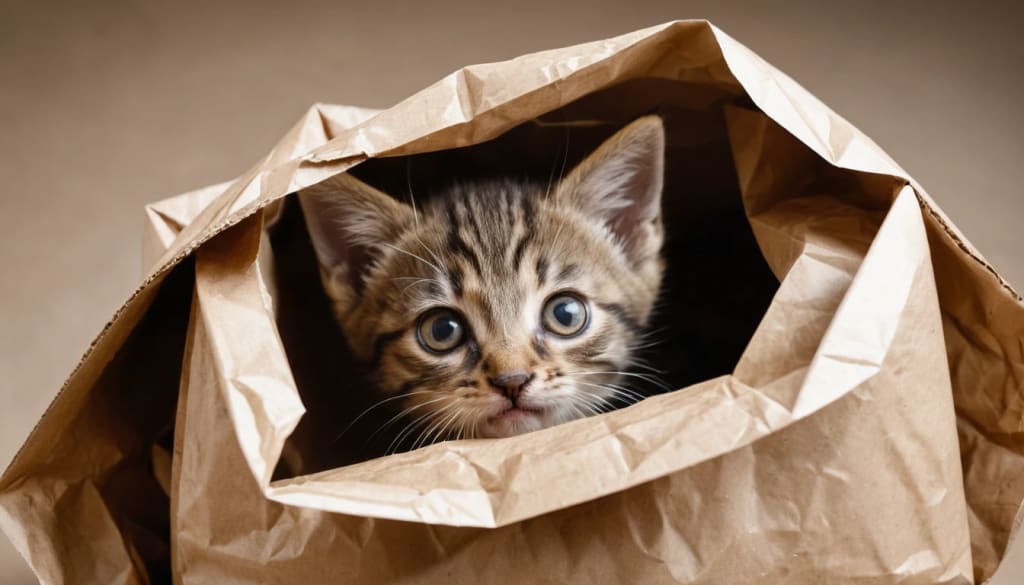
Cats have a reputation for being distant, independent, even indifferent. They glide through rooms like soft-footed aristocrats, acknowledging your presence as if you are merely part of the furniture that pays the bills. And yet, beneath that composed exterior lives a creature capable of deep, intricate affection—just expressed in a dialect far more subtle than wagging tails or enthusiastic leaps.
If you’ve ever wondered whether your cat truly loves you, the answer is almost certainly yes. You just need to learn how to read the signs written in whiskers, tail flicks, and half-closed eyes.
Here are 15 reasons your cat loves you more than you think.
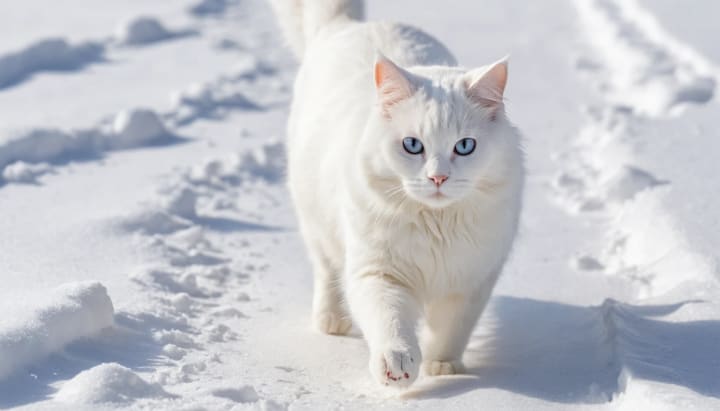
1. The Slow Blink: A Silent Love Letter
When your cat looks at you and slowly blinks, it’s not boredom—it’s trust. In the feline world, closing one’s eyes in another’s presence is an act of vulnerability.
Your cat is essentially saying, “I feel safe enough with you to lower my guard.” Try returning the gesture. That quiet exchange? It’s the closest thing cats have to a whispered “I love you.”
2. Headbutting You (Yes, Really)
That gentle bump of their head against your hand, face, or leg is called “bunting.” It’s not random—it’s intentional scent marking.
Cats have glands around their face, and when they press against you, they’re marking you as theirs. In their mind, you’re not just a human—you’re family, stamped with invisible ink that says, “belongs to me.”
3. Kneading Like a Tiny Baker
When your cat presses their paws rhythmically into your lap, blanket, or even your stomach, they’re revisiting kittenhood. This behavior originates from nursing, when kittens knead their mother to stimulate milk flow.
If your cat kneads you, you’ve been promoted to a place of comfort and security. You are, in a sense, “home.”
4. Bringing You “Gifts”
It may not feel like love when you find a toy mouse—or something less toy-like—at your feet. But in your cat’s eyes, this is generosity.
They’re sharing their “hunt” with you. It’s their way of saying, “I care about you enough to provide for you.” Even if the offering is slightly unsettling, the intention is pure.
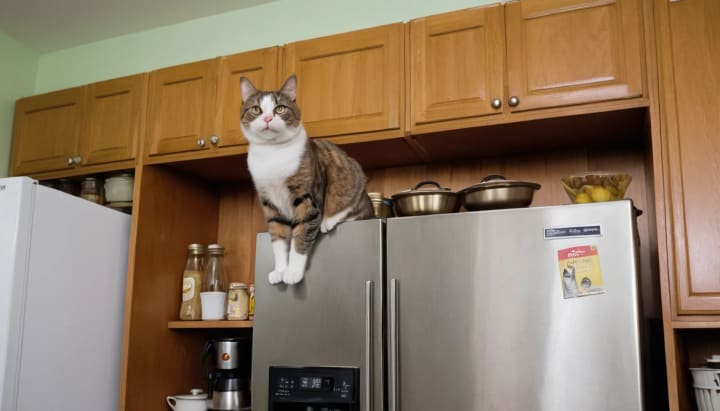
5. Following You Everywhere
Bathroom trips included.
Cats are selective with their attention. If yours trails behind you from room to room, they’re choosing your company over solitude.
In their quiet way, they’re saying, “Where you go, I go.” It’s companionship without fanfare.
6. Tail Talk: The Upright Signal
A cat walking toward you with their tail held high—especially with a slight curve at the tip—is displaying happiness and affection.
It’s the feline equivalent of a cheerful greeting. Add a little quiver to that tail, and you’ve got something close to excitement.
7. Sleeping on You (or Near You)
Cats are most vulnerable when they sleep. Choosing to nap on your chest, your lap, or even just beside you is a sign of deep trust.
You are, in that moment, their safe place—the quiet harbor where nothing bad happens.
8. Grooming You
If your cat licks your hand, hair, or even your face, they’re including you in their grooming ritual.
Cats groom those they consider part of their social group. It’s a bonding activity, a way of reinforcing connection. You’re not just nearby—you’re one of them.
9. Showing You Their Belly
This one comes with a warning label.
When a cat rolls over and exposes their belly, it’s not always an invitation for petting—but it is a sign of trust. The belly is a vulnerable area, and showing it means they feel secure around you.
Admire it carefully. Hands optional.
10. Talking to You
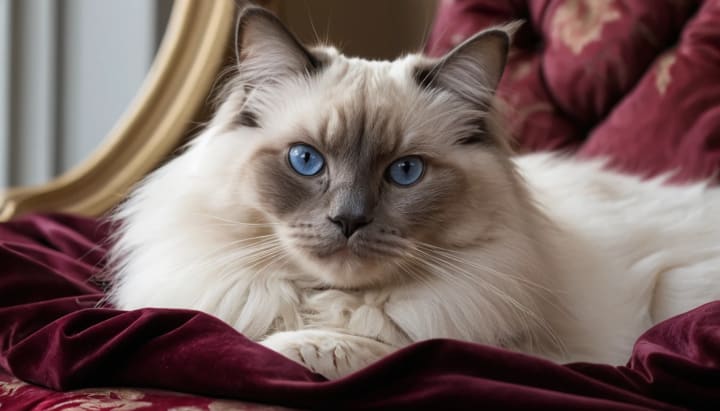
Some cats are more vocal than others, but when your cat meows at you specifically, it’s a learned behavior. Adult cats rarely meow at each other—they reserve that sound for humans.
They’ve developed a personal language just for you. Every chirp, trill, or drawn-out “meow” is a conversation.
11. The Gentle Bite
Sometimes, affection comes with teeth.
A soft nibble—often called a “love bite”—is your cat’s playful way of interacting. It’s not aggression; it’s engagement. They’re treating you like a fellow cat in their social circle.
12. Sitting on Your Stuff
Your laptop, your book, your freshly folded laundry—if it’s yours, your cat wants it.
Why? Because it smells like you. And because sitting on it ensures your attention shifts back to them. It’s equal parts affection and strategic interruption.
13. Purring in Your Presence
Purring is often associated with contentment, and while it can have other meanings, a relaxed, steady purr while they’re with you usually signals happiness.
It’s the sound of comfort—a soft engine running in the background of your shared space.
14. Greeting You at the Door
Not all cats do this, but those who do are making a clear statement: your arrival matters.
They’ve noticed your absence, and your return is an event. You are part of their routine, and your presence restores balance.
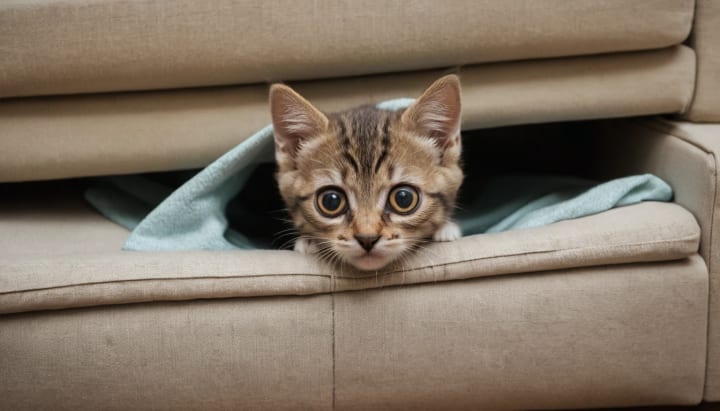
15. Simply Choosing to Be With You
Perhaps the most important sign of all is the simplest.
Cats are independent creatures. They don’t need constant companionship to feel secure. So when your cat chooses to sit beside you, rest near you, or just exist in the same space, it’s intentional.
They could be anywhere—but they’re with you.
Final Thoughts: Love, in a Quieter Language
A cat’s love isn’t loud. It doesn’t announce itself with grand gestures or dramatic displays. Instead, it unfolds in small, deliberate moments—a blink, a purr, a quiet presence at your side.
It’s a kind of love that asks you to slow down, to notice, to understand a different rhythm.
Once you learn to read it, you realize something remarkable: your cat has been telling you they love you all along.
Just not in words.
About the Creator
Algieba
Curious observer of the world, exploring the latest ideas, trends, and stories that shape our lives. A thoughtful writer who seeks to make sense of complex topics and share insights that inform, inspire, and engage readers.
Wisteria Woo RIP
Wisteria Woo Silver~Rhodesian Ridgeback Cane Corso mix~ 7.19.15-3.2.26 My service dog, Wisteria, had been slowing down, having mysterious health symptoms like severe hives and unexplained injury. She went to the vet last month, but unfortunately, not all tests detect all problems. When we returned to the vet yesterday, upon much more concerning symptoms suddenly appearing, we learned she had a very large mass (10inx10in) likely the very aggressive hemangiosarcoma, and that we would only be buying a few months if we went through with treatment.
By K.B. Silver 27 days ago in Petlife
Are Maine Coon Cats Hypoallergenic? 10 Myths And Truths
Are Maine Coon Cats Hypoallergenic? 10 Myths You Should Stop Believing Maine Coon cats are one of the most breeds in the world. Their large size, fluffy fur, and friendly personality make them irresistible. But many people wonder: are Maine Coon cats hypoallergenic?
By Anna Smith6 days ago in Petlife
You Should Stop Trying to Be a Better Person
A year ago, I spent two days in the Colombian mountains drinking ayahuasca as part of a spiritual ceremony. An experience that pulled apart every detail of my being and rearranged me in a new sequence. I wish that life became easier after the feat. It didn’t.
By Annaise Michelle8 days ago in Humans


Comments
There are no comments for this story
Be the first to respond and start the conversation.