
Finding Inspiration Beyond the Screen: Travel, Nature, and Creative Renewal
I remember one moment clearly sitting by the water after an intense production cycle. No phone, no notifications, no pressure. Just silence and space.

I remember one moment clearly—sitting by the water after an intense production cycle. No phone, no notifications, no pressure. Just silence and space.
That was when the idea finally came.
Not in front of a screen. Not during editing. But in stillness.

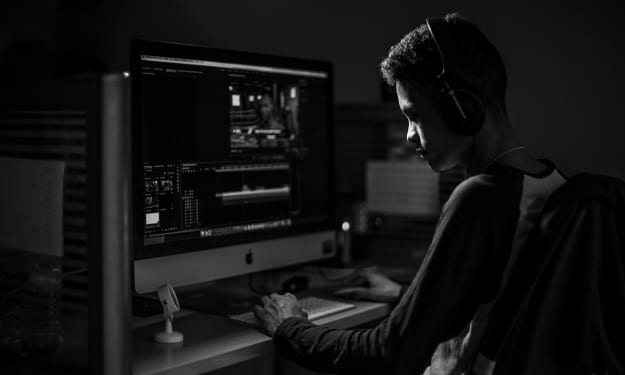
As someone working across both film and AI-driven storytelling, I spend a large part of my time in digital environments. Yet the most meaningful creative breakthroughs I’ve experienced have always come from stepping away from them.
The Creative Paradox
There’s a strange contradiction in modern storytelling. We rely on advanced technology to create—but often need to disconnect from it to think clearly.
Over time, I’ve come to understand a simple truth:
Technology executes. Nature generates.
Tools can build, enhance, and accelerate ideas. But the ideas themselves—the ones with emotional depth—come from real experiences.
Where Ideas Actually Begin
Some of my best ideas haven’t come at a desk. They’ve appeared during quiet, unstructured moments—walking along a coastline, exploring unfamiliar places, or simply sitting without distraction.

These moments aren’t interruptions to the process.
They are the process.
When the noise fades, the mind starts to move differently. Freely. Creatively.
The Problem with Constant Attention
We live in a system designed to keep us distracted. Notifications, updates, and endless scrolling make it difficult to stay focused.
But creativity doesn’t thrive in reaction mode. It needs space.

Studies increasingly show that time spent in natural environments improves cognitive function and creative thinking. The mind works better when it isn’t overwhelmed.
Nature as a Reset
There’s a reason being outdoors feels different.
Natural environments gently hold your attention without demanding it. This allows the brain to recover from mental fatigue and shift into a more creative state.
After spending time outside, I notice:
Clearer thinking
Better emotional awareness
Stronger creative instincts
It’s not a coincidence. It’s a reset.
Travel as Creative Fuel
Travel has become one of the most important parts of my creative process.
New environments, cultures, and conversations expose you to perspectives you can’t simulate. They add texture to storytelling in a way that digital tools alone never can.
I’ve learned to follow one rule:
Experience first. Capture later.
Being fully present leads to more authentic ideas—and ultimately, more honest work.
Movement Changes Thinking
Some ideas don’t come when you’re sitting still.
They show up while moving—walking, swimming, exploring.
There’s something about physical motion that unlocks mental clarity. Problems that feel complicated at a desk often resolve themselves naturally when the body is in motion.
It’s one of the simplest creative tools, and one of the most overlooked.
The Power of Real Environments
Working in digital spaces means constantly engaging with artificial visuals. But no virtual environment fully replicates the emotional impact of real landscapes.
Standing in a vast, open space changes your perspective. And perspective is everything in storytelling.
Without it, even the most technically advanced work can feel empty.
Human Connection Beyond the Screen
Some of the most meaningful moments I’ve experienced while traveling weren’t about places—they were about people.
Shared experiences, conversations, and unexpected connections create emotional depth that translates directly into creative work.
In an increasingly digital industry, this human element matters more than ever.
Intentional Disconnection
I’ve started scheduling time each year to completely disconnect:
No screens
No constant updates
Just movement, nature, and presence
This isn’t about taking a break.
It’s about resetting creatively.
Every time I return, the difference is clear.
Bringing It Back to AI Storytelling
AI tools are evolving rapidly. Creating content is easier than ever.
But the real challenge isn’t execution anymore.
It’s human understanding.
Technology can enhance storytelling—but it can’t replace lived experience, emotional nuance, or perspective.
Those still come from the real world.
The Return
After every period of disconnection, the results are consistent:
More clarity
Better ideas
Stronger creative energy
Stepping away doesn’t slow the process—it improves it.
Permission to Step Away
In a world that values constant productivity, slowing down can feel like falling behind.
But creativity doesn’t work that way.
Sometimes the most productive thing you can do is step away, explore, and simply be present.
Because the ideas that truly connect with people don’t come from screens.
They come from life.
About the Creator
Keep reading
More stories from Andreas Szakacs and writers in Lifehack and other communities.
Lessons from the Golf Course: Discipline, Focus, and the Art of Performance
Golf was never meant to teach me anything about performance. At first, it was simply a way to slow down. A walk across wide green space, the sound of a clean strike, the quiet challenge of sending a small white ball toward a distant target.
By Andreas Szakacs2 days ago in Gamers
Let's Nail A Cyberbully
Technology can make life easier, and usually everyone benefits from technological advances. However, this always means that the bad guys benefit as well, to the detriment of society as a whole. As social media became a thing, it gave rise to the cyberbully, a malicious person who uses social media and other technologies to harass their victims. However, while their attacks can be devastating to the right victims, usually those lacking self-confidence or who have been recently victimized, there are ways to deal with them and get back some of the peace you had prior to their attacks.
By Jamais Jochim7 days ago in Lifehack
Navigating a Move in Minneapolis: Insights From Experienced Local Movers
Moving can be one of life’s most stressful events, especially in a city like Minneapolis, where the mix of urban density and suburban sprawl presents unique challenges. From navigating narrow Uptown streets to coordinating elevator access in high-rise buildings, a successful move requires careful preparation and a team that understands the nuances of the local environment.
By House Doctora day ago in Lifehack
Babbling Dixie
The short form of tomorrow is never the whole story. Abbreviations mean nothing when we are born to die and we all are aren't we? Being spoken for before birth is something we're not supposed to remember like some kind of karma after effect. Still here we are spending our lives looking for each other.
By Canuck Scriber Lisa Lachapellea day ago in Fiction



Comments
There are no comments for this story
Be the first to respond and start the conversation.