
Expiry Management: How to Track Meds & Never Miss a Date
How to Track Meds & Never Miss a Date


Why Expiry Management Matters More Than You Think
Expired medicines don't just lose their potency — some can become genuinely harmful. Tetracycline antibiotics, for example, can degrade into toxic compounds past their expiry date. Yet most households have at least two or three expired medicines sitting in a drawer right now.
Expiry management is the practice of systematically monitoring the shelf-life dates on medicines, supplements, and health products so nothing slips past you. This guide walks you through every step: understanding what expiry dates mean, setting up a tracking system, choosing the right medicine expiry tracker, and avoiding the most common mistakes caregivers make.
By the end, you'll have a clear, practical system you can start today — no complicated tools required.
What Is Expiry Management and Why Does It Apply to Medicines?
The Meaning Behind an Expiry Date
An expiry date is the manufacturer's guarantee that the product remains fully potent and safe until that specific date — when stored correctly. After that point, the guarantee ends.
For over-the-counter painkillers, the risk of using something slightly past its date is usually low. For prescription antibiotics, insulin, eye drops, or heart medications, the stakes are much higher. Degraded active ingredients can mean under-dosing, which is a real problem when you need reliable results.
💡 Expert Insight: Pharmacists recommend a "first in, first out" rotation for home medicine cabinets. Place newer stock behind older items so you always reach for the one expiring soonest.
Who Needs an Expiry Management System?
Anyone managing medicines at home benefits from a structured approach, but it's especially critical for:
- Caregivers managing medicines for elderly parents or young children
- People with chronic conditions who take multiple daily medications
- Households that stock a first-aid kit or emergency supplies
- Anyone who buys vitamins or supplements in bulk
How to Set Up an Expiry Management System at Home
Step 1: Do a Full Audit
Pull every medicine, supplement, and health product out of storage. Sort them into three groups: still valid, expiring within 90 days, and already expired.
- Gather everything from cabinets, drawers, bags, and the fridge
- Note the expiry date on each item
- Safely dispose of anything already expired — most pharmacies accept old medicines for proper disposal
Step 2: Choose Your Tracking Method
You don't need anything fancy to start. A basic list on paper works. The goal is consistency. Your main options are a paper log, a spreadsheet with color-coded formatting, or a dedicated medicine expiry tracker app that scans barcodes and sends automatic alerts.
Step 3: Set Expiry Alerts
The most important part of any expiry management system is the alert. Knowing an item expires in three months is useless if you forget by next week. Set calendar reminders 30, 60, and 90 days ahead of each expiry date.
Most medicine expiry tracker apps handle this automatically. In practice, users who rely on manual reminders miss significantly more dates than those using an automated expiry alert system.
💡 Expert Tip: Set your first expiry alert 90 days before the date — not 7 days. This gives you time to refill prescriptions or order replacements without rushing.
Step 4: Build a Rotation Habit
Every time you add a new item to your medicine stock, log it immediately. Do a full cabinet review every three months — set a quarterly calendar event. Based on consistent use, this habit takes less than 15 minutes once your system is running.
Choosing the Right Expiry Date Tracker App
A dedicated expiry date tracker app is the easiest way to automate expiry management, especially for households with many items or multiple caregivers.
Features to look for:
- Barcode scanner — auto-fills product name and expiry date
- Push notifications — reliable expiry alert at your chosen interval
- Multiple user access — essential for shared caregiving situations
- Category sorting — separate medicines, supplements, and first-aid items
- Cloud backup — so data isn't lost when you change phones
Free vs. paid: Free expiry date tracker apps work well for small households. For managing medicines for an elderly relative or tracking a large cabinet, a paid plan offers unlimited entries and cleaner multi-user access — usually just a few dollars per month.
💡 From Experience: Users managing medicines for elderly parents report that apps with photo capture are especially helpful — snapping an image of the label means you can verify details without digging through a drawer.
Common Expiry Management Mistakes to Avoid
1. Checking dates only when you need the medicine Discovering an expired antibiotic at 11 PM when someone is sick is stressful and potentially dangerous. Proactive checking is the whole point.
2. Ignoring storage conditions Expiry dates assume ideal storage. Medicines kept in a hot, humid bathroom cabinet may degrade faster than the label suggests. A cool, dry bedroom drawer is a far better option.
3. Assuming "a few days over" is always fine For insulin, certain eye drops, liquid antibiotics, and EpiPens, even a short lag past the expiry date can affect performance. When in doubt, replace it.
4. Not involving all caregivers If multiple people manage medicines for the same household, everyone needs access to the same system. A shared app or a single visible log prevents missed updates and duplicate purchases.
Expiry Management Methods: Comparison at a Glance

Expert Tips for Long-Term Success
- Label everything the moment it enters your home, including supplements bought in bulk
- Keep a "watch list" of items expiring in the next 60 days visible on your fridge or phone
- Check expiry dates on your travel medicine kit before you leave — not when you arrive
- Caregivers: photograph medicine labels and store images in a shared folder for quick reference
- Review and dispose of expired items every season to keep your system clean
💡 Pro Tip: Color coding works well for physical systems. Red stickers for items expiring within 30 days, yellow for 31–90 days, green for anything beyond. A quick visual scan tells you everything.
Putting It All Together
Effective expiry management doesn't require expensive tools or hours of effort — just one audit, one tracking method, and one quarterly review habit.
Start with a 15-minute cabinet audit today. Log what you have, note the dates, and set your first expiry alerts. Whether you choose a notebook, a spreadsheet, or a dedicated medicine expiry tracker app, the important thing is starting.
Your family's health is worth those 15 minutes.
Frequently Asked Questions
Q1: What is expiry management for medicines? Expiry management for medicines is the process of tracking the shelf-life dates of all medications and health products in your home, setting alerts before dates pass, and safely disposing of expired items — ensuring every medicine you use is still safe and effective.
Q2: How does a medicine expiry tracker app work? A medicine expiry tracker app lets you log medicines by scanning their barcode or entering details manually. It stores the expiry date and sends an expiry alert — typically a push notification — a set number of days before the item expires. Many apps also support shared access for multiple caregivers.
Q3: How far in advance should I set an expiry alert for medicines? Set your first expiry alert at least 90 days before the expiry date for prescription medicines, and 30 days for over-the-counter items. This gives you enough time to get a refill or speak with a pharmacist without any gap in your medication.
Q4: Is it safe to use medicine after the expiry date? For most over-the-counter medicines, a short period past the expiry date is unlikely to cause direct harm, but potency may be reduced. For insulin, liquid antibiotics, eye drops, and EpiPens, never use anything past its expiry date. When in doubt, consult a pharmacist.
Q5: What is the best free expiry date tracker for medicines? Several free expiry date tracker apps are available on Android and iOS. Look for barcode scanning, expiry alert notifications, and multi-category support. Free tiers usually limit the number of items, so larger households may want a paid plan for unlimited entries and multi-user access.
About the Creator
Muhammad Hanzla
I am SEO expert. I have 2 year experience in SEO field.I am working at SEO Company in Lahore, Pakistan.
Keep reading
More stories from Muhammad Hanzla and writers in Lifehack and other communities.
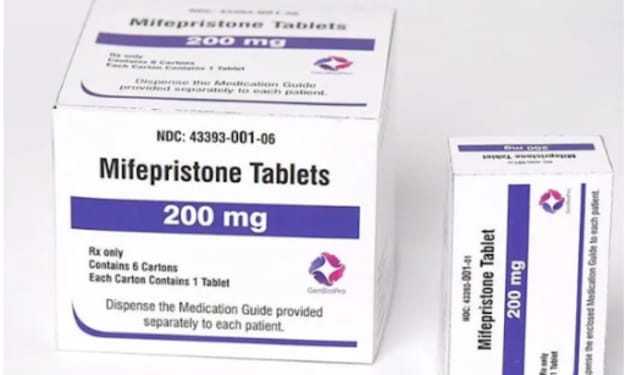
Pharmacological Overview of Mifepristone Tablets: Indications, Dosage, and Safety Aspects
Mifepristone tablets are widely used in clinical medicine for specific reproductive and endocrine indications. As a synthetic steroid compound, mifepristone acts primarily as an antagonist of the hormone progesterone. Because progesterone is essential for maintaining pregnancy and regulating certain hormonal processes, blocking its action leads to significant therapeutic effects. Since its introduction in medical practice, mifepristone has become an important medication in obstetrics and gynecology, as well as in selected endocrine treatments.
By Muhammad Hanzla16 days ago in Lifehack
Understanding Chronic Pain and Its Impact
10 Tips to Cope Up With Chronic Pain and Improve Quality of Life While acute pain for a short period is something easier to cope with, chronic pain requires better management. It is more than just a sharp pain that stays on a guest and is treatable. If you have lingering pain, which is usually for long-term or lifelong, it can disrupt your personal life and make even the simplest tasks difficult to perform.
By William Goodwin3 days ago in Lifehack
The Inbox
THE EMAIL AVALANCHE 📨 I used to have 10,247 unread emails in my inbox, a number I remember precisely because I screenshot it before beginning the process that would transform my relationship with email from a source of constant background anxiety into a system so efficient that my inbox contains zero messages at the end of every workday, and the psychological weight that lifted when I achieved this transformation was disproportionate to the practical significance because unread emails function as open loops in your cognitive system, each one representing an unresolved task or communication that your brain maintains awareness of even when you are not actively looking at your inbox, consuming cognitive resources that could otherwise be directed toward creative thinking, focused work, and present-moment engagement 🧠
By The Curious Writer6 days ago in Lifehack
The Cave Part 11
Darkness, and the countless points of light, as if the entire void beyond was filled with the fire of a million stars. I felt as if I was staring into the eternity of a night sky beyond those wooden doors, the place beyond the actual reality, while I stood behind a curtain of scenery, the mountain and sky a mere pretense. And in that void beyond of unfathomable space, there hung suspended a mighty shard of crystal floating in place, with hundreds of a far smaller chunks orbiting around it in balanced but intersecting circles, no two in the same path. These caught the light from the center, and sparkled with inner fire each.
By Jamye Sharp5 days ago in Chapters


Comments
There are no comments for this story
Be the first to respond and start the conversation.