
Emergency Prepping for Newbies: The First Supplies That Really Matter
Survival 101
When I first started learning about emergency preparedness, I made the same mistake a lot of beginners make: I looked at giant gear lists online and thought I needed to buy everything at once. I saw expensive survival tools, huge food buckets, tactical gadgets, and all kinds of “must-have” items. It made prepping seem like a hobby for people with lots of money, lots of storage space, and lots of free time.
But the more I learned, the more I realized that real preparedness is much simpler than that.
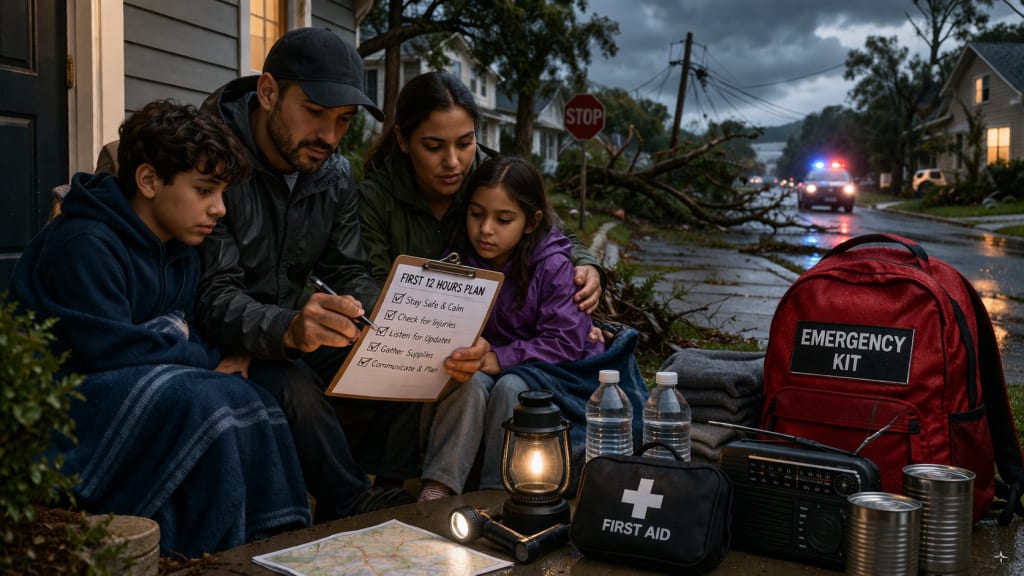
For most people, prepping starts with a plain question: What would I need if the power went out, the water stopped running, or I had to leave home fast? Government and relief groups such as Ready.gov, the CDC, and the American Red Cross all point to the same basics first: water, food, light, first aid, medications, important documents, and a way to get emergency information. They also stress that a simple plan matters just as much as supplies.
That is why I think beginner prepping should not start with fear. It should start with priorities.
Prepping is really about solving ordinary problems
When many people hear the word prepping, they picture a bunker full of supplies. I do not think that image helps beginners. Most emergencies are not movie scenes. They are much more ordinary. A storm knocks out power. Roads close. Stores sell out of bottled water. A family has to stay home for a few days. A parent cannot get a prescription refilled right away. A phone battery dies when updates matter most. Ready.gov and the Red Cross both frame preparedness around getting through common disasters safely at home or evacuating with an easy-to-carry kit if needed.
That means the smartest first purchases are the ones that solve the most likely problems. I always tell beginners to think in this order:
What keeps me alive?
What keeps me informed?
What keeps me healthy?
What helps me leave quickly if I need to?
If an item does not clearly help with one of those questions, it is probably not a first purchase.
Buy water first, because water is the true non-negotiable
If I were helping a beginner spend their first prep dollars today, I would start with water before anything else.
Ready.gov says to store at least one gallon of water per person per day for several days for drinking and sanitation. The CDC says to store at least one gallon per person per day for 3 days, and adds that trying for a 2-week supply is even better if possible. The CDC also notes that some people may need more, including pregnant people, people who are sick, people living in hot climates, and pets.
This is why my first advice is simple: buy or store water right away.
That does not have to mean fancy water systems. Beginners can start with store-bought bottled water, clean food-grade containers, or other safe stored water. The CDC also says stored water should be kept in a cool place, away from direct sunlight and away from toxic substances like gasoline or pesticides.
If money is tight, this is still the best first step. Water is more important than freeze-dried meals, camping gadgets, or anything tactical-looking.
Buy food you already eat, not food that looks dramatic
After water, I would buy a small supply of nonperishable food that my household already eats.
Ready.gov recommends at least a 3-day supply of non-perishable food, and the Red Cross gives similar guidance for basic emergency kits. The key word here is non-perishable, not special.
For beginners, I think the smartest foods are boring foods. Peanut butter. Crackers. Canned soup. Tuna. Beans. Rice. Pasta. Oatmeal. Applesauce. Shelf-stable milk. Granola bars. Foods that need little water, little cooking, and are familiar to the people in the home.
That matters because an emergency is the wrong time to discover that your family hates the expensive food you bought.
The USDA and CDC also remind people to think about food safety during outages. The refrigerator only stays safely cold for a limited time during a power loss, and it helps to have ready-to-eat foods that do not need cooking or refrigeration. The USDA says a refrigerator will keep food safely cold for about 4 hours if unopened, and a full freezer for about 48 hours if the door stays closed.
So when I say “buy food first,” I do not mean giant survival buckets. I mean dependable pantry food that works even if the lights go out.
Buy light and power next
One of the fastest ways an emergency feels scary is when the room goes dark and your phone is almost dead.
That is why I put flashlights, extra batteries, and backup charging high on a beginner list. Ready.gov and the Red Cross both include a flashlight and extra batteries in basic emergency supply lists, and Ready.gov also points people toward keeping phones charged as part of being ready during hazards.
My beginner setup would be very simple:
one reliable flashlight for each main area of the home
extra batteries
at least one power bank for phones
charging cables kept in the kit
Some people like lanterns too, and they can be useful, but I would still buy flashlights first. They are simpler, easier to store, and usually cheaper.
This is a good example of practical prepping. A flashlight is useful in a storm, a power outage, a broken fuse, a car problem, or even just finding something under a bed. That makes it a high-value first purchase.
Buy a radio or alert tool so you can know what is happening
A lot of beginners focus on supplies but forget information. I think that is a mistake.
If power or cell service is limited, getting updates can matter just as much as having canned food. Ready.gov, the CDC, and the Red Cross include a battery-powered or hand-crank radio in emergency kit guidance.
I do not think every beginner needs the fanciest radio on the market. I think beginners need a dependable way to hear alerts and instructions. That could be a battery-powered weather radio or a hand-crank model. The point is not style. The point is staying informed.
This is especially important because emergencies change quickly. A storm path can shift. A boil-water notice can be issued. An evacuation order can expand. A shelter location can change. The right information can save time, lower stress, and help families make better choices.
Buy first aid and medications before specialty survival gear
In many real emergencies, ordinary health needs become more important than dramatic tools.
The Red Cross says a first aid kit is a basic emergency item, and Ready.gov includes prescription medications and glasses on its checklists. The Red Cross also advises older adults and people with health needs to keep at least 30 days of medications when possible and to plan for backup power for devices if needed.
That is why I think beginners should buy or assemble:
a basic first aid kit
prescription medications, as allowed and practical
spare glasses or contacts if needed
any important medical supplies used regularly
pain relievers and basic hygiene items
This part of prepping is easy to overlook because it is not exciting. But it is one of the most useful parts. A person is much more likely to need bandages, backup medicine, or a spare pair of glasses than a giant survival knife.
Buy copies of important documents and some cash
This is one of the least flashy parts of preparedness, and one of the smartest.
Ready.gov says emergency kits should include important family documents such as copies of insurance policies, identification, and bank account records in a waterproof, portable container. FEMA guidance also recommends storing electronic copies in password-protected form and keeping paper copies in safe locations. Ready.gov checklists also mention cash and change.
If I were building a beginner prep folder, I would include copies of:
photo IDs
insurance cards and policies
medical information
prescriptions
emergency contacts
pet records if I had pets
home and vehicle records that matter most
I would also keep a small amount of cash. During outages, card machines and ATMs may not work normally. Cash is not the most exciting supply, but it can solve simple problems fast.
Buy for your pets and the people who depend on you
Preparedness is not only about one person. It is about the whole household.
Ready.gov says pet owners should think first about the basics for survival, such as food and water, and recommends having both a larger shelter-in-place kit and a lightweight go-kit. Pet supplies can include food, water, medications, records, and a crate or carrier.
So if I had a dog, cat, or other pet, I would not treat pet gear as an extra. I would treat it as part of the core kit.
The same idea applies to babies, older adults, and people with disabilities or health conditions. A household plan should match the real people in the home. FEMA and the Red Cross both emphasize tailoring supplies for medical, mobility, dietary, and personal needs.
This is one reason I do not like generic online prep lists. A perfect kit for one home may be the wrong kit for another.
Make a plan early, even if your supply kit is small
One of the biggest lessons I learned is that preparedness is not only about buying things. It is also about making decisions before stress hits.
The Red Cross recommends emergency contact cards for each household member and notes that a text message may go through when a phone call will not. It also advises choosing a meeting place and an out-of-town contact. Ready.gov’s guides say practicing your plan is important too.
That means beginners should do a few simple planning tasks right away:
pick two meeting places, one nearby and one outside the neighborhood
choose an out-of-town contact
write down phone numbers
decide what to grab if leaving in a hurry
learn local alerts and evacuation routes
I would rather see a beginner with a small water supply and a clear family plan than a garage full of random gear and no idea what to do.
What I would ignore at the beginning
Now for the part many beginners really want to know: what should I skip?
I would ignore anything that is expensive, specialized, or built more for fantasy than for likely emergencies. That does not mean such items are always useless. It means they are not first purchases.
I would ignore giant food stockpiles at the start
A massive freeze-dried food supply might look impressive, but it often costs a lot and may not match what a family actually eats. For beginners, a small working pantry is usually smarter. Ready.gov and the Red Cross focus first on a several-day supply of nonperishable food, not a warehouse of survival meals.
I would ignore fancy multi-tools and tactical gadgets
A well-made tool can be useful, but many beginners get pulled toward expensive “survival” gear before covering basics like water, medications, and documents. That is backwards. Emergency guidance from Ready.gov, CDC, and the Red Cross consistently starts with essentials, not gadgets.
I would ignore buying a generator too early unless there is a clear need
Generators can be important for some households, especially where medical devices, long outages, or major weather risks are involved. But they are not a casual beginner purchase. They cost more, require fuel planning, and can be deadly if used wrong. Ready.gov warns that generators, camp stoves, and charcoal grills should only be used outdoors and at least 20 feet away from windows, doors, and vents to avoid carbon monoxide poisoning.
So I would not put “buy generator now” on every beginner list. I would first ask: do I already have water, food, light, medicine, and a plan?
I would ignore matching aesthetic gear
This may sound funny, but I think it matters. A lot of beginner shoppers get pulled toward gear that looks prepared. Matching pouches. Branded survival axes. Premium backpacks with empty compartments. Those things can eat a budget fast.
Preparedness is not a costume. A simple tote, plastic bin, or ordinary backpack filled with the right items is more useful than a stylish bag filled with almost nothing.
I would ignore fear-based shopping
This may be the biggest thing to avoid. Fear-based shopping happens when people scroll through worst-case scenarios and start buying items because they feel scared, not because the item solves a likely problem.
I think beginner prepping should feel steady, not panicked. Ready.gov even has “low and no cost” preparedness messaging that points people toward using what they already have and knowing where those items are located if they cannot build a separate kit yet.
That is a powerful idea: sometimes the first step is not buying more. It is organizing better.
My simple beginner shopping list
If I had to build a starter kit from scratch, I would buy in this order:
First round
Water, a few days of easy nonperishable food, flashlight, batteries, first aid kit, needed medications, phone charger/power bank.
Second round
Battery-powered or hand-crank radio, hygiene supplies, copies of important documents, cash, extra pet supplies, blankets, and spare clothing.
Third round
Ways to improve comfort and backup options, such as more stored water, more pantry depth, cooler supplies for outages, and hazard-specific items for your area like winter car gear or storm supplies.
That is enough to move a person from “not ready at all” to “much better prepared” without wasting money on items they may not need.
The best prep is the prep you can actually maintain
One more thing I think beginners should remember: buying supplies is only part of the job. You also have to maintain them.
Water may need to be rotated depending on how it is stored. Food expires. Batteries die. Medications change. Family phone numbers change. Kids grow. Pets age. A good kit is not something you buy once and forget forever.
That is why smaller, realistic prepping often works better than huge one-time shopping trips. When a beginner starts with basic items they understand and use, it is easier to check the kit, replace old supplies, and build gradually over time.
Preparedness should fit into normal life. It should make life calmer, not more cluttered.
My final advice to beginners
If you are just getting started, I would tell you this: do not try to build the ultimate prep setup in one weekend. Build a useful one.
Start with water. Add simple food. Get light. Protect your health. Keep your documents safe. Make a plan. Think about pets and people with special needs. Then stop and check what problem each new purchase is solving.
That is how I would begin.
Because in the end, the smartest prep is not the most dramatic. It is the one that helps you get through the next real emergency with less fear, less confusion, and more control. And for most beginners, that means buying the basics first and ignoring the noise.
About the Creator
SurviveHack.com
Posting Stories on Survival, How To and Recipes.
Keep reading
More stories from SurviveHack.com and writers in Lifehack and other communities.
Laughing on the Road: The Hilarious Tale of the Nissan Altima!
Hey guys! Have you ever heard of a car that makes people laugh? No, it's not because it tells jokes or anything. It’s the Nissan Altima! People have so many funny things to say about this car, and today, we’re gonna talk all about it. So buckle up, because we’re going on a ride full of giggles and chuckles!
By SurviveHack.com3 years ago in Humor
Finding the Right Shoes for Spring: Comfort, Style, and Everyday Practicality
As winter loosens its grip and spring begins to take over, the shift isn’t just visible in blooming trees or longer days—it quietly reshapes our daily habits too. Layers get lighter, routines move outdoors, and somewhere along the way, footwear becomes more important than we expect.
By Teri Estesa day ago in Lifehack
Thirty (one) and Neither Flirty nor Thriving.
I'm thirty-one and orbiting the same few mistakes like they're landmarks. London is already awake before I am (or before I've slept) - sirens somewhere far enough to ignore, buses sighing at stops, people moving with purpose I can't quite borrow. I lie there for a bit, tasting last night at the back of my throat, trying to remember if I meant to drink that much or if it just...happened again.
By Stacey Vella4 days ago in Psyche




Comments
There are no comments for this story
Be the first to respond and start the conversation.