
Walking on 30,000 Years of Ice: What It's Actually Like to Trek Perito Moreno Glacier
Walking on 30,000 Years of Ice

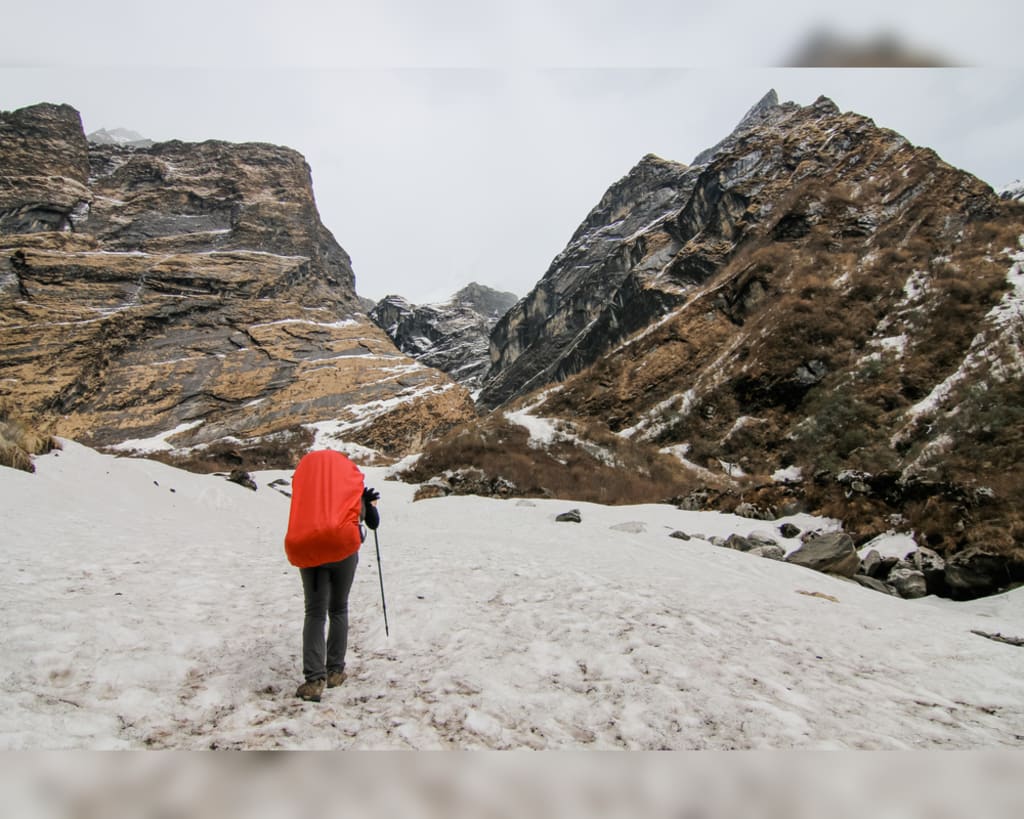
There's a moment, about twenty minutes into the trek, when the guide tells everyone to stop talking. Not because of danger. Because of sound.
You stand still on a field of ice that stretches to the horizon in every direction, and you hear it: a deep, almost geological groan coming from somewhere beneath your feet. The glacier is moving. Right now. While you're standing on it. And suddenly, everything you read about Perito Moreno being "one of the few advancing glaciers in the world" stops being a fun fact and becomes something you feel in your chest.
I've traveled to forty-something countries across five continents. I've done the Inca Trail, walked the Camino de Santiago, and hiked parts of the Appalachian. Perito Moreno was different. Not harder. Not more scenic, necessarily. Just more alive.
Getting There Is Part of the Story
El Calafate is a small town in southern Patagonia, Argentina, that exists almost entirely because of the glacier. It sits on the shore of Lago Argentino, surrounded by steppe — flat, windswept, and dry. The kind of landscape that makes you wonder if your GPS is broken.
Then you drive an hour into Los Glaciares National Park, the road curves through a lenga forest, and there it is: a wall of ice five kilometers wide and sixty meters tall, crashing into the lake in slow motion. Your brain genuinely struggles to process the scale. Photos don't prepare you.
Most visitors see the glacier from the network of walkways on the opposite shore. That experience alone is extraordinary — you can spend hours watching refrigerator-sized chunks of ice calve off the face and thunder into the turquoise water below. But the real experience, the one I keep telling people about years later, is getting on the ice itself.
Minitrekking vs. Big Ice: Choosing Your Adventure
There are two main glacier trekking experiences, and choosing between them matters more than most travel blogs let on.
Minitrekking is the accessible option. It's open to people aged 8 to 65, lasts about an hour and a half on the ice, and doesn't require previous hiking experience. You strap on crampons, learn the wide-legged walking technique, and follow a guide across the glacier's surface. You'll see crevasses, seracs, sinkholes filled with impossibly blue water, and ice formations that look like abstract sculptures. It's genuinely awe-inspiring, and it's the experience I'd recommend for most first-time visitors.
Big Ice is for those who want more. Restricted to ages 18 to 50 and requiring decent physical fitness, this trek covers significantly more ground — roughly three and a half hours on the ice. You go deeper into the glacier, reach higher elevations, and encounter terrain that feels genuinely remote. The formations are larger, the crevasses deeper, and the silence more absolute. If you have the fitness for it, Big Ice is a once-in-a-lifetime experience.
Both options include a boat crossing of the Brazo Rico arm of Lago Argentino and a guided walk through forest to reach the glacier's edge. And both end with something unexpectedly wonderful: a glass of whiskey poured over glacier ice that's been compressing for roughly 30,000 years. It tastes exactly like regular whiskey. But somehow also better.
What Nobody Tells You Before You Go
The wind is relentless. Patagonia's wind isn't a gentle breeze. It's a full-body experience that can make standing still feel like a workout. Layering isn't optional — it's survival strategy. A windproof outer shell is more important than a heavy coat.
Book ahead — way ahead. Glacier trekking slots sell out, especially during peak season from November through March. I've met travelers in El Calafate who arrived hoping to do the trek the next day, only to find everything booked for the rest of the week. Local operators like Calafate Tours can help lock in dates well in advance and bundle glacier treks with other excursions in the area, which tends to save both time and money.
The crampons change everything. The moment the metal spikes bite into the ice and you feel that grip, something shifts psychologically. You stop thinking about slipping and start actually looking around. The guides are experienced and patient — they've done this thousands of times and know exactly how to keep groups safe while making sure everyone absorbs the experience rather than just surviving it.
Your phone camera won't do it justice. The ice is so blue in some spots that photos look artificially saturated. The scale makes wide shots look flat. Bring your phone, take a few shots, then put it away and just be present. Trust me.
Beyond the Glacier
One mistake I see travelers make is flying into El Calafate, doing the glacier, and flying out. The region deserves more time. Lago Argentino boat excursions take you past the Upsala and Spegazzini glaciers — less famous than Perito Moreno but arguably more dramatic in their remoteness. Kayaking on the glacial lake, horseback riding across the steppe, or just spending an afternoon in town eating Patagonian lamb and drinking Malbec — all of it adds texture to the trip.
If you have extra days, El Chaltén is three hours north and offers some of the best trekking in South America, with views of Mount Fitz Roy that you've probably seen on the Patagonia clothing brand logo without even knowing it. The two towns pair naturally for a longer Patagonian itinerary.
Why This Glacier, Why Now
Perito Moreno is one of only three Patagonian glaciers that isn't retreating. Scientists aren't entirely sure why. It advances, meets the shore of the Magellan Peninsula, builds an ice dam, and eventually the pressure of trapped water causes a spectacular rupture. This cycle has been happening for decades, and watching a rupture event — if your timing is extraordinary — is considered one of nature's greatest spectacles.
But glaciers worldwide are disappearing. The ice fields that feed Perito Moreno are shrinking. Nobody can guarantee what this landscape will look like in fifty years. There's an urgency to visiting that doesn't feel manufactured — it feels honest.
Standing on that ice, listening to it crack and groan and shift, you're not just a tourist checking off a bucket list. You're a witness to something ancient, powerful, and possibly temporary. And that combination, for me, is what makes travel meaningful.
About the Creator
Sarah
With an experience of 10 years into blogging I have realised that writing is not just stitching words. It's about connecting the dots of millions & millions of unspoken words in the most creative manner possible.
Author’s Advice
If you would’ve asked me 20 years ago did I know I’d become a writer and an author, I would’ve said “nope, ain’t happening”. As fate would have it I did become an author and I can honestly say I’m loving it so far. It really does feel good to be a writer. I’ve learned a lot on this journey and I feel like with even me being as new to this world as I am, there’s some wisdom I need to share with every other aspiring author.
By Joe Patterson19 days ago in Journal
GRANDMA NELSON
Daddy pulled off the interstate, and I saw the all familiar red barn, and I knew we had arrived at Grandma Nelson's farm. I always had mixed feelings about seeing my Grandmother. It seemed she had as many Grandchildren as the old Mother in the shoe nursery rhyme. I saw her as different, but that is not why I hestiated. The truth be known I always got in trouble at her house, and ended up sitting in the car after I had been scolded.
By Susan Payton4 days ago in Fiction



Comments
There are no comments for this story
Be the first to respond and start the conversation.