
Vertical Farming Market Is Turning Empty Buildings Into the Farms of Tomorrow
How indoor agriculture went from experimental concept to a $18 billion industry reshaping where food comes from

Most people have a fairly clear picture of where their food comes from. Fields somewhere. Sunlight and rain. Tractors at harvest time. A supply chain that moves produce from farm to truck to distribution center to store shelf over the course of several days.
That picture is accurate for most of what people eat today. But it is quietly becoming less complete.
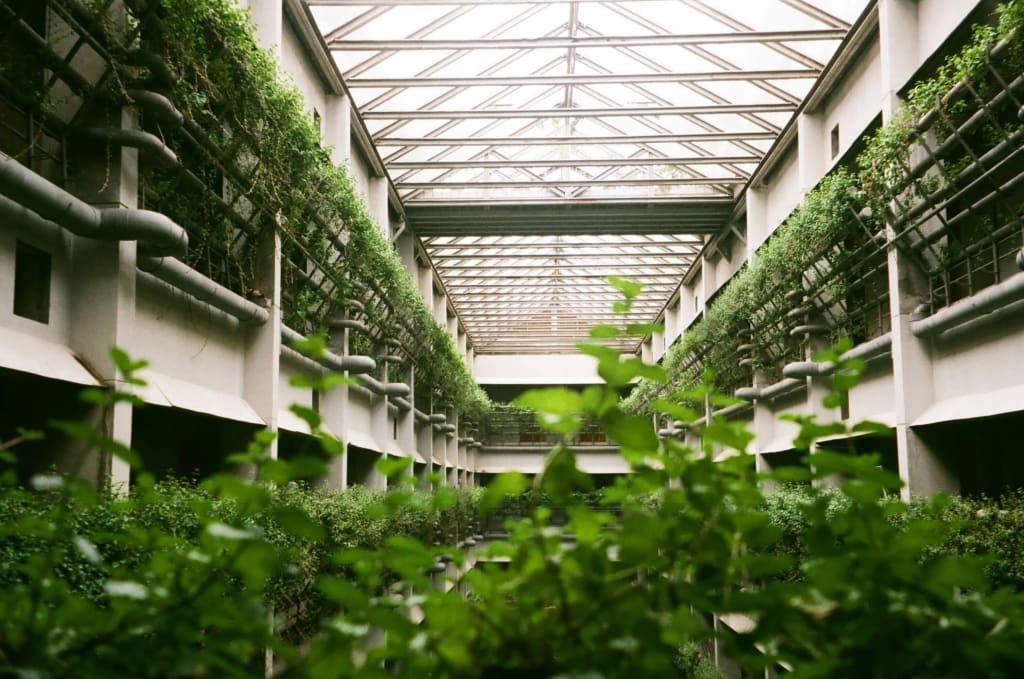
A different kind of farming is growing quite literally inside warehouses, repurposed factories, and purpose-built facilities in the middle of cities. No soil. No seasons. No weather. Rows of crops stacked vertically under precisely controlled light, temperature, and humidity are harvested and delivered to nearby retailers within hours.
According to Mordor Intelligence, the vertical farming market size is projected to grow from USD 6.27 billion in 2025 to USD 7.50 billion in 2026, reaching USD 18.40 billion by 2031 at a 19.66% CAGR. That is an unusually fast growth rate for an agricultural category, and understanding what is driving it says something important about the pressures building in the global food system.
Why Growing Food Indoors Is Starting to Make Economic Sense
Vertical farming is not a new idea. The concept of stacking crops in controlled indoor environments has been discussed for decades. What has changed recently is the economy.
Two costs have historically made vertical farming difficult to justify at scale: energy and labor. Growing crops indoors requires artificial light, which consumes significant electricity. And managing the planting, maintenance, and harvesting of densely stacked crops requires considerable human effort.
Both of those cost structures are shifting.
Horticultural lighting technology has improved substantially over the past decade, with modern LED systems delivering more light output per unit of energy than equipment from even five years ago. Artificial intelligence systems now adjust light spectrum and timing in real time based on crop growth data, reducing energy consumption further without compromising yield. Robotics for seeding, transplanting, and harvesting has reduced the labor intensity of indoor growing operations considerably.
The combined effect of these improvements has reduced the time it takes for a new vertical farming facility to recover its initial investment from around eight years in 2020 to closer to five years in 2026. That shift in payback period has changed how investors and retailers think about the category, moving it from speculative to increasingly practical.
The Problem That Made Indoor Farming Urgent
To understand why vertical farming is growing as fast as it is, it helps to look at what is happening to conventional outdoor agriculture.
Climate volatility is creating increasingly unpredictable growing conditions in regions that have historically been reliable food producers. Droughts, floods, and unseasonal temperature extremes are affecting yields and supply consistency in ways that ripple through food supply chains and retail pricing. When outdoor crops fail or come in short, the effects are felt at every point downstream.
Vertical farms are largely insulated from these pressures. They operate independently of the weather. They use a fraction of the water required for outdoor cultivation; some facilities use as little as five percent of the water that equivalent outdoor production would require. They produce consistent output regardless of what is happening outside their walls.
For retailers who have experienced the volatility of open-field supply chains, long-term supply agreements with indoor growing operations offer something genuinely valuable: predictability. Several major grocery retailers have already committed to multi-year offtake contracts with vertical farming operators, effectively guaranteeing purchase volumes in exchange for supply stability.
For urban consumers, vertical farming offers something different but equally appealing: produce that was grown nearby and arrived at the store within a day of harvest, rather than having traveled long distances over several days. That freshness translates to longer shelf life and, in many cases, better nutritional quality at the point of consumption.
Where Vertical Farms Are Actually Being Built
North America currently represents the largest share of vertical farming revenue, supported by expanding government insurance programs for controlled-environment crops and by the long-term retail agreements that have helped stabilize cash flows for operators in the region. Companies like Gotham Greens have built dense networks of facilities positioned strategically close to major retail distribution hubs, making the local supply chain argument tangible and commercially viable.
Asia-Pacific is growing the fastest and is projected to maintain that pace through 2031. The reasons vary by country but share a common thread: governments across the region have identified indoor agriculture as strategically important and are backing that position with significant funding.
Singapore has committed substantial government investment toward controlled-environment agriculture, with a stated goal of producing thirty percent of its nutritional needs domestically by 2030, a remarkable ambition for a city-state with extremely limited land. Japan has incorporated indoor farming into its national agricultural strategy, viewing it as a path toward reducing pesticide dependence and strengthening food security. China has allocated significant national funding toward urban agriculture infrastructure as part of broader food security planning.
Europe presents a more complicated picture. Indoor farming has grown steadily across the continent, but high electricity costs in many European markets create real profitability challenges. Some operators have found creative solutions. A Swedish facility offsets its heating costs by capturing waste heat from a neighboring data center. Nordic operators have benefited from government loans designed specifically to support sustainable agriculture investment.
The Middle East is deploying vertical farming as part of broader food self-sufficiency goals in environments where outdoor growing is severely constrained by heat and water scarcity. Facilities in the UAE are producing significant daily volumes of fresh greens using a fraction of the water that outdoor cultivation would require.
What Is Being Grown and What Comes Next
The current vertical farming industry is heavily concentrated in leafy greens. Lettuce, spinach, herbs, and microgreens are well-suited to indoor growing. They have short growing cycles, relatively modest light requirements, and strong demand from both retail and food service customers.
The commercial logic of leafy greens is well established. The next frontier is more challenging but potentially more valuable. Vertical farming operators are experimenting with berry production and cherry tomato crops that command higher retail prices and generate better returns per square meter of growing space. These crops have more complex growing requirements than leafy greens, but the economics are compelling enough that the industry is investing seriously in making them work at scale.
One unexpected development worth noting is the emerging relationship between vertical farms and data centers. Data centers generate significant waste heat as a byproduct of their computing operations. Vertical farms have significant heating requirements. Co-locating the two allows the waste heat from computing to substitute for energy the farm would otherwise need to generate a practical example of circular economy thinking that improves the economics of both operations simultaneously.
The Companies Building This Industry
The vertical farming market is moderately fragmented, with several well-known operators competing alongside a growing number of regional and specialist players.
AeroFarms, following a financial restructuring, has maintained a strong position in the microgreens segment. Gotham Greens operates through a network of facilities positioned close to retail partners. 80 Acres Farms has invested heavily in robotics to reduce labor costs as a share of overall operating expenses. Plenty Unlimited has attracted significant investment and is pursuing larger-scale production ambitions.
The funding environment for vertical farming tightened considerably in recent years, which forced a broad reckoning with unit economics across the industry. Operations that could not demonstrate a credible path to profitability found it significantly harder to raise capital. The companies that navigated this period most successfully are those that built their business models around genuine cost discipline rather than growth at any price.
Component suppliers, particularly LED lighting manufacturers and climate control software providers, have become increasingly important players in the value chain, capturing value through technology that improves growing efficiency across the industry as a whole.
A Closing Thought
Vertical farming will not replace conventional agriculture. The scale of global food production is far too large, and the economics of indoor growing are still best suited to specific high-value crops grown for urban markets.
But it does not need to replace conventional agriculture to matter. It needs to fill the gaps in supply reliability created by climate volatility, the freshness gaps created by long-distance supply chains, and the food security gaps faced by cities and countries with limited agricultural land.
With the market projected to reach USD 18.40 billion by 2031, vertical farming is moving from the margins of the food system toward something considerably more central. The building down the street from your apartment may one day be growing the lettuce on your dinner table.
That shift is already underway; most people just have not noticed it yet.
About the Creator
Keep reading
More stories from Harvey Specter and writers in Journal and other communities.
Fresh Vegetables Market Is Changing - and the Reasons Go Deeper Than You Might Expect
Fresh vegetables are not a glamorous topic. They do not generate the kind of cultural conversation that surrounds new technology products or luxury goods. They sit quietly in the produce section, priced by the kilogram, bought by habit, and rarely thought about in any serious way by the people who consume them several times a day.
By Harvey Spectera day ago in Journal
Author’s Advice
If you would’ve asked me 20 years ago did I know I’d become a writer and an author, I would’ve said “nope, ain’t happening”. As fate would have it I did become an author and I can honestly say I’m loving it so far. It really does feel good to be a writer. I’ve learned a lot on this journey and I feel like with even me being as new to this world as I am, there’s some wisdom I need to share with every other aspiring author.
By Joe Patterson7 days ago in Journal
How Modern Fintech Platforms Are Built: Architecture Behind Digital Finance
Abstract The rapid growth of financial technology has reshaped how digital financial services are designed and delivered. Modern fintech platforms must support secure transactions, real-time processing, regulatory compliance, and global scalability. This article explores fintech platform architecture and the technological foundations that support digital finance infrastructure. It analyzes microservices architecture in fintech applications, API driven banking systems, cloud-based fintech platforms, and scalable fintech systems that power modern financial services. By examining the fintech technology stack and financial software engineering practices behind these systems, this article provides an in-depth perspective on how modern fintech platforms are built to deliver reliable, secure, and efficient digital financial experiences.
By Lucas Wade6 days ago in Journal
History of The Three Stooges (Part I: The Beginnings and Columbia Pictures - 1920s-1936)
I have been itching to write about The Three Stooges on Vocal for close to two years, but I couldn't figure out how to do it. I wanted to do it by third Stooge, but that's a bit complicated. I know this much. I was about eight or nine years old when I first saw The Three Stooges. I remember one of my local channels had the Stooges on for hours, and I tried my damnedest to be up for those shorts. I remember that the Family Channel actually had an hour of the Stooges on from 11PM to midnight, and it was the entire library on during that time.
By Clyde E. Dawkins6 days ago in Geeks



Comments
There are no comments for this story
Be the first to respond and start the conversation.