
Project Hail Mary Movie Review & Ending Explained
Is Project Hail Mary a Good Film?

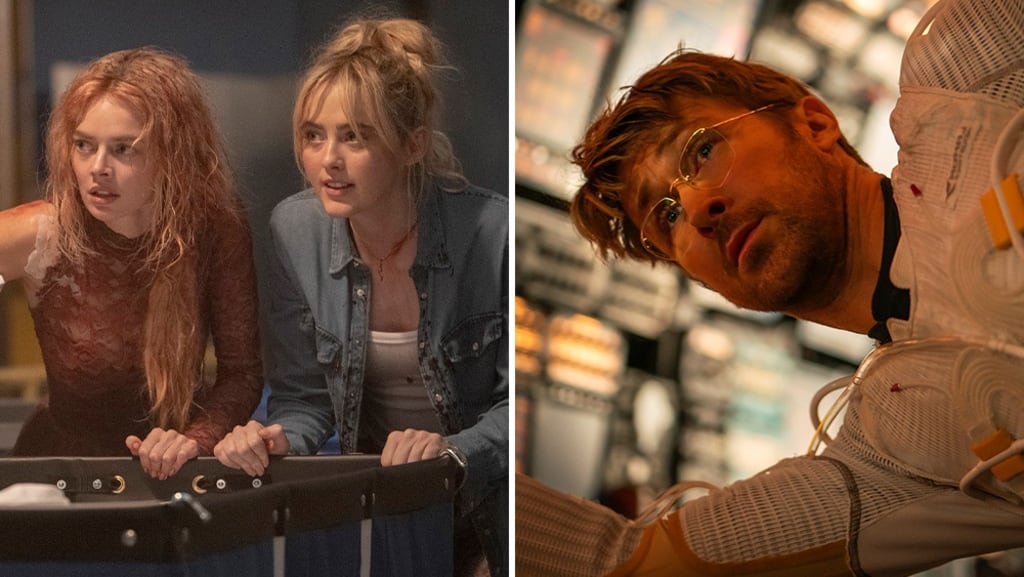
Let’s talk about the ending of Project Hail Mary—and more importantly, how the film adaptation tweaks key elements of the story.
There are a few major differences worth unpacking. Some are subtle. Others completely reshape the emotional weight of the ending. And by the time we’re done, you’ll have a clearer understanding of what the movie changes, what it keeps, and why it still works so well.
But first—this needs to be said.
This movie is phenomenal.
It hits that rare balance between classic, awe-filled science fiction and deeply human storytelling. Think the quiet vastness of 2001: A Space Odyssey mixed with the emotional connection of The Martian, Interstellar, and Arrival. There are even shades of Star Wars and Star Trek in how it blends wonder with warmth.
And anchoring it all is Ryan Gosling, delivering a performance that feels awards-worthy. It’s layered, emotional, and quietly powerful.
Everything fires on all cylinders. The science. The tension. The humor. And yes—the emotion.
The Core Threat: Astrophage and Humanity’s Deadline
At the center of the story is a terrifying idea.
A microorganism known as astrophage is slowly draining the sun’s energy. Scientists estimate that within a few decades, Earth will freeze, ecosystems will collapse, and life as we know it will end.
And it’s not just Earth.
This infection is spreading across the Milky Way—every star dimming… except one system: Tau Ceti.
That anomaly becomes humanity’s last hope.
Book vs Movie: A Matter of Detail
If you’ve read the novel by Andy Weir, you already know how deeply it leans into scientific detail.
The book is methodical. It carefully walks you through every discovery, every calculation, every engineering challenge. You even get diagrams of the Hail Mary spacecraft to visualize how it operates.
The movie, on the other hand, streamlines that process.
It still conveys complexity—but it trims the excess for pacing. Because let’s be honest, not everyone is signing up for a 10-hour physics lecture… even if some of us absolutely would.
Ryland Grace: A Story About Fear and Growth
At its heart, this isn’t just a story about saving Earth.
It’s a story about a man.
Ryland Grace wakes up alone, with no memory, slowly piecing together who he is. One of his earliest thoughts? Wanting to tell his students about what he’s experiencing.
Because that’s who he is—a teacher.
And that detail matters more than you might think.
Grace isn’t a traditional hero. He’s someone who avoided risk, who stepped back when things got hard, who chose safety over greatness. Teaching gave him control. It gave him comfort.
But his arc is about change.
It’s about learning that bravery isn’t something you just “have.”
It’s something you find—often because of someone else.
The Rocky Reveal: From Twist to Centerpiece
One of the biggest differences between the book and the film is how they handle Rocky.
In the novel, the existence of an alien is a complete surprise.
In the movie, that reveal comes earlier—especially in marketing.
And honestly? It works.
Because Rocky isn’t just a twist. He’s the heart of the story.
A scientist from another world, Rocky communicates through musical tones, perceiving reality through sound rather than sight. His species evolved in complete darkness, making his perspective fundamentally different—and fascinating.
Their friendship builds slowly.
Awkwardly.
Curiously.
Then deeply.
And before you realize it, this story about saving humanity becomes something else entirely.
Friendship Over Survival
Here’s where the story truly shifts.
After completing their mission, Grace and Rocky go their separate ways. Everything seems resolved—until Grace discovers a catastrophic issue.
Rocky’s ship is failing.
His entire species is at risk.
And suddenly, Grace faces a choice.
He can return home, a hero who saved Earth…
Or he can turn back—and save his friend.
This is the moment that defines everything.
Because earlier in the story, Grace was a man ruled by fear.
Now?
He chooses sacrifice.
He sends the solution back to Earth—ensuring humanity’s survival—but risks his own life to help Rocky.
Not for glory.
Not for recognition.
But because he can’t live with himself if he doesn’t.
The Beatles, Symbolism, and “Two of Us”
In a beautiful emotional beat, Grace sends probes back to Earth, naming them after members of The Beatles.
The moment is set to “Two of Us,” a song that perfectly mirrors the story.
Yes, it’s about the probes heading home.
But more importantly—it’s about Grace and Rocky.
Two travelers.
Two survivors.
Two friends.
The Movie’s Biggest Change: Showing Earth
One of the most significant differences comes at the very end.
The movie shows us Earth.
We see the aftermath. The struggle. The survival. And ultimately, hope.
The sun brightens again.
Humanity makes it.
In the book, this is left ambiguous. We only hear that the sun is recovering—never witnessing it ourselves.
That ambiguity leaves room for imagination.
The movie, however, chooses closure.
A New Life on an Alien World
Both versions end in a similar place—just with different tones.
Grace stays behind on Rocky’s planet, living inside a specially designed environment that keeps him alive.
And in a poetic full-circle moment…
He becomes a teacher again.
Only now, instead of teaching human children, he’s educating an alien species about Earth.
It’s quieter. Smaller. But somehow more meaningful.
Because for the first time, Grace isn’t running from who he is.
He’s embracing it.
The Darker Detail the Movie Leaves Out
The book includes one detail the movie wisely softens.
Grace survives by consuming lab-grown clones of himself.
Yes—really.
It’s a strange, unsettling concept that highlights the harsh reality of his situation. But it also shifts the tone into something far darker than the film aims for.
Leaving it out keeps the ending hopeful rather than disturbing.
Final Thoughts: Why the Ending Works
What makes Project Hail Mary so powerful isn’t just its science or its spectacle.
It’s its heart.
The climax isn’t about saving Earth.
It’s about saving a friend.
And in doing so, Grace finally becomes the person he was always capable of being.
Brave.
Selfless.
Human.
And maybe that’s why the story sticks with you.
Because in the end, it reminds us that even in the vast emptiness of space, the most important thing we can find…
is connection.
About the Creator
Bella Anderson
I love talking about what I do every day, about earning money online, etc. Follow me if you want to learn how to make easy money.
Keep reading
More stories from Bella Anderson and writers in Journal and other communities.
Hoppers Movie Review: Pixar’s Wild, Funny, and Surprisingly Dark New Adventure
There’s always something special about a brand-new Pixar movie hitting theaters. Whether you grew up watching their classics or discovered them later, Pixar has built a reputation for delivering emotional, creative, and unforgettable animated stories. Now, the studio is back with a fresh original film — Hoppers.
By Bella Anderson24 days ago in Journal
Author’s Advice
If you would’ve asked me 20 years ago did I know I’d become a writer and an author, I would’ve said “nope, ain’t happening”. As fate would have it I did become an author and I can honestly say I’m loving it so far. It really does feel good to be a writer. I’ve learned a lot on this journey and I feel like with even me being as new to this world as I am, there’s some wisdom I need to share with every other aspiring author.
By Joe Patterson19 days ago in Journal
How to Outsource Accounting Without Risk in 2026
Let’s be honest, handing over your financial work to someone outside your company isn’t an easy decision. You’ve built your business step by step. You know where every dollar comes from and where it goes. So naturally, trusting someone else with that responsibility can feel uncomfortable, almost like you’re giving up control.
By Lily Noblet7 days ago in Journal
Watching The End Of The World From The Diner
Introduction I am not sure how to approach this. Guy Peellaert was an amazing artist who created iconic fantasy images of famous people, usually musicians or politicians, as well as creating commissioned album covers such as "It's Only Rock'n'Roll" by The Rolling Stones and David Bowie's "Diamond Dogs" which you can read more about below.
By Mike Singleton 💜 Mikeydred 2 days ago in Art




Comments
There are no comments for this story
Be the first to respond and start the conversation.