
Planning Your Marrakech Adventure
A How-To on the City’s Top Experiences
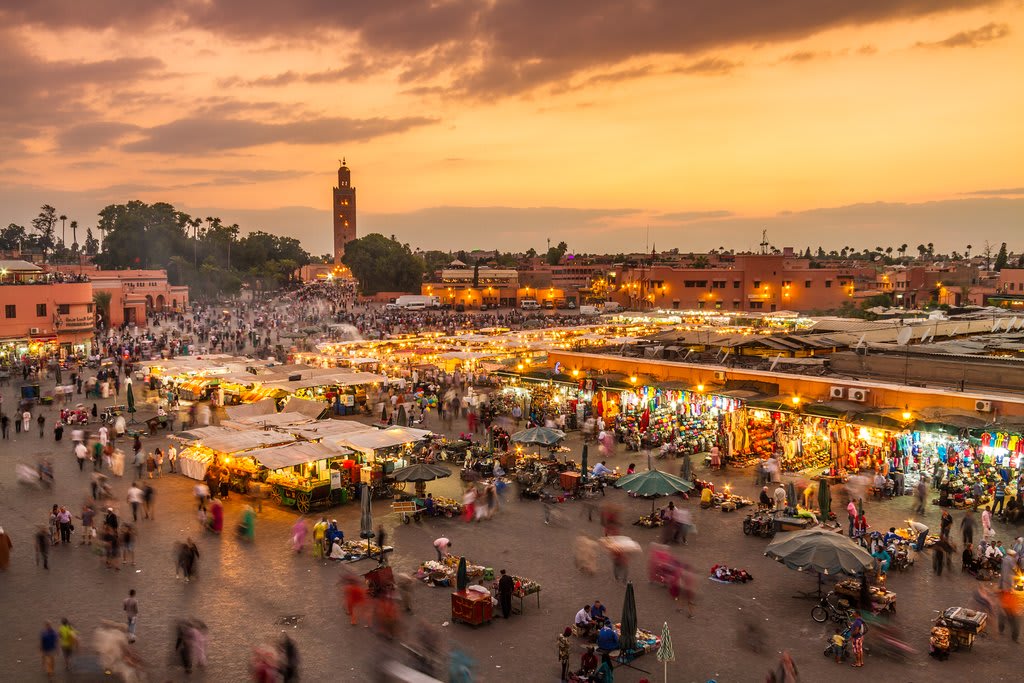
Marrakech is a city that overwhelms the senses in the best possible way. The call to prayer drifting over terracotta rooftops, the scent of spices hanging in the air, and the constant hum of voices and movement all hit at once. With the right approach, Marrakech becomes an immersive journey through history, culture, and colour that stays with you long after you leave.
Getting Lost in the Medina and Souks
The medina is the beating heart of Marrakech, a UNESCO World Heritage Site where life unfolds much as it has for centuries. Encircled by thick stone walls, its maze of alleyways leads past bakeries, workshops, hidden courtyards, and sudden bursts of colour. The best time to explore is early morning, when the air is cooler, and the streets feel more local than touristic. Near Jemaa el-Fna Square, the souks grow denser and louder. Rue Souk Smarine acts as the main spine, branching into specialised markets like Souk el Kebir for leather goods and Souk el Attarine for metalwork, ceramics, and lamps. Bargaining is expected here and is part of the experience rather than an awkward exchange. Prices are often inflated at first, so starting low and negotiating calmly usually leads to fair outcomes. Walking away politely can work wonders. The souks offer everything from hand-woven rugs to jewellery and fragrant spices. Getting lost is almost guaranteed, but that’s part of their charm. Asking shopkeepers for directions often leads to friendly conversations, especially when visitors show genuine interest in the craftsmanship. While there are countless things to do in Marrakech, Morocco, few experiences feel as immediate or authentic as wandering the souks and watching centuries-old trades continue in real time.
Jemaa el-Fna: Marrakech in Motion
Jemaa el-Fna changes character throughout the day. Mornings are relatively calm, with juice sellers lining the square and space to observe daily rhythms. By afternoon, performers arrive, including snake charmers, storytellers, and henna artists. After sunset, the square transforms completely. Food stalls appear almost overnight, filling the air with smoke and spice as tagines simmer and grills sizzle. Vendors call out to passers-by, creating a lively, chaotic atmosphere that defines Marrakech for many visitors. Choosing busy stalls where locals eat is the safest bet, both for flavour and hygiene. Freshly grilled meats, vegetable tagines, and the city’s famous snail soup are popular choices. Rooftop cafés around the square offer a welcome pause from the intensity below. Watching the sun set over the minarets while sipping mint tea provides a quieter perspective on the spectacle unfolding beneath.
Gardens, Palaces, and Quiet Corners
For moments of calm, Marrakech offers beautiful retreats. Jardin Majorelle is the city’s most famous garden, instantly recognisable by its bold cobalt blue structures. Created by Jacques Majorelle and later restored by Yves Saint Laurent, it combines exotic plant life with striking Art Deco design. The Berber Museum inside adds cultural depth, showcasing artefacts that trace Morocco’s indigenous heritage. Arriving early or booking tickets online helps avoid long queues. For a less crowded but equally impressive experience, the Bahia Palace is an excellent alternative. Its intricately decorated rooms and tranquil courtyards reveal the elegance of 19th-century Moroccan architecture. Nearby, the Saadian Tombs offer a peaceful glimpse into the city’s royal past, surrounded by lush gardens that feel worlds away from the medina’s energy. Staying at a traditional riad enhances this balance. Properties like Riad Elegancia, located near Bab Doukkala Mosque, place visitors within walking distance of major sights while offering quiet courtyards and rooftop pools.
Timing, Weather, and Practical Planning
Marrakech rewards travellers who plan around climate and crowds. Spring and autumn offer the most comfortable conditions, with warm days and cooler evenings. Summer heat can be intense, making early mornings and evenings the best times to explore; winter, on the other hand, brings milder temperatures and fewer visitors. A three-day stay allows enough time to experience the essentials without rushing. One day suits the medina and Jemaa el-Fna, another for gardens and palaces, and a third for day trips to the Atlas Mountains, Essaouira, or the Agafay Desert. Longer stays open the door to cooking classes, hammams, and deeper cultural exploration. A modest dress is appreciated, particularly in traditional areas, and sturdy footwear is essential for navigating uneven streets. Small considerations like these go a long way in ensuring a comfortable, respectful visit.
Marrakech isn’t a place to tick off and move on from. Its magic lies in the contrast between chaos and calm, tradition and modern life. The city reveals itself slowly, through conversations, flavours, and moments of stillness hidden behind ancient walls. Done right, Marrakech doesn’t just impress; it stays with you.
About the Creator
Keep reading
More stories from Jeewanthi Armstrong and writers in Journal and other communities.
How to Navigate Singapore’s MRT and Buses from Orchard Road
Singapore is known for having one of the most efficient public transport systems in the world. Its Mass Rapid Transit, commonly referred to as the MRT, and the extensive bus network make moving around the city convenient, affordable, and reliable. For visitors staying near Orchard Road, which is a central hub of shopping and leisure, learning how to use these systems saves both time and money. The area is well-connected, and from here you can reach almost every major attraction in the city without difficulty.
By Jeewanthi Armstrong2 days ago in Journal
Author’s Advice
If you would’ve asked me 20 years ago did I know I’d become a writer and an author, I would’ve said “nope, ain’t happening”. As fate would have it I did become an author and I can honestly say I’m loving it so far. It really does feel good to be a writer. I’ve learned a lot on this journey and I feel like with even me being as new to this world as I am, there’s some wisdom I need to share with every other aspiring author.
By Joe Patterson10 days ago in Journal




Comments
There are no comments for this story
Be the first to respond and start the conversation.