
Middle East and Ukraine: Why Russia and the US Hold the Keys to Each Other’s Deadlocks
(Strategic Analysis: The 2026 Landscape of the Ukrainian Conflict and Iranian Escalation)
Introduction: The Global Pendulum
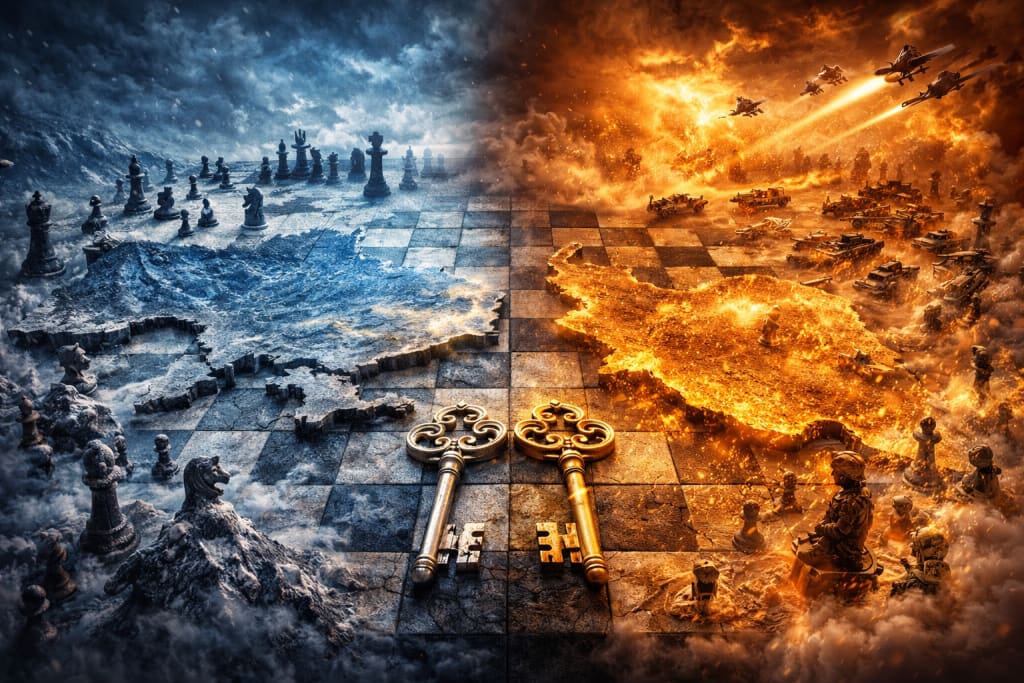
By 2026, the global geopolitical map has reached a paradoxical state. While the primary key to resolving the Ukrainian crisis increasingly lies in Washington’s policy decisions, the power to de-escalate the volatile situation with Iran is strategically centered in Moscow. We are witnessing a "Strategic Deadlock"—a geopolitical stalemate where two geographically distant conflicts have become inextricably linked through a complex web of energy, logistics, and military leverage. This interdependence suggests that a breakthrough in one theater may be impossible without a corresponding shift in the other.
1. Russia’s "Regional Game" vs. America’s "Expeditionary Burden"
The core of this strategic stalemate lies in the fundamental difference between the operational capabilities and political constraints of both great powers.
• Geographic Proximity and Endurance: Russia is operating on its immediate periphery. Its logistics rely on internal lines of communication, and its strategic endurance is calculated in decades rather than years. By successfully transitioning its economy to a "war footing" and securing its defense industrial base, Moscow has adapted to long-term Western pressure.
• The Tyranny of Distance: For the United States, managing a potential escalation with Iran is more than just a military challenge; it is a direct threat to the global financial system. Operating thousands of miles from the American mainland exhausts both economic capital and domestic political will. Current geopolitical assessments suggest Washington has entered a strategic trap: maintaining a massive naval and air presence in the Middle East is prohibitively expensive (estimated at $11–12 billion every two weeks), while a full withdrawal would signal a historic shift in global influence.
2. The "Iranian Factor" as a Financial Lifeline
Contrary to initial Western expectations, the heightening tensions in the Middle East have served as a vital financial "lifeboat" for the Kremlin. The instability in the Persian Gulf and the threat of a closed Strait of Hormuz keep energy markets in a state of constant anxiety.
• Oil Market Dynamics: The persistent Iran crisis has sustained elevated global oil prices (Brent consistently at $84+, with Urals maintaining $70+). This price floor provides the Russian treasury with the necessary liquidity to manage domestic economic stability while funding its military operations in Ukraine indefinitely.
• Resource Dilution: Furthermore, the necessity to protect Middle Eastern partners forces Washington to divert high-end military assets, such as "Patriot" air defense batteries and carrier strike groups, away from the European theater. This dilution of American military focus inevitably leaves Ukrainian defenses more vulnerable, gradually shifting the balance of power on the battlefield in Russia's favor.
3. The "Great Swap": Diplomatic Leverage and Logistics
As the U.S. risks becoming mired in a logistical and financial quagmire in the Middle East, Russia’s deep military and diplomatic ties with Tehran have positioned it as a critical mediator. This situation creates a historic opportunity for what analysts call the "Great Swap."
• The Logistics of Peace: If Washington seeks to avoid a global energy collapse and spiraling domestic inflation before key political cycles, it may be forced into a grand diplomatic bargain. This would involve Moscow utilizing its significant influence to pacify the Iranian front in exchange for Western concessions regarding Russia’s core security interests in the Ukrainian theater.
• Energy Corridors: In this scenario, transit projects like the "Golden Bridge" (connecting Central Asia via Iran and Türkiye to the EU) emerge not just as logistics routes, but as tools for regional stabilization. Integrating Iran into the global economy through such corridors offers a path toward de-escalation that satisfies the economic interests of all major players.
Conclusion: A New Eurasian Reality
Although the United States remains the world's preeminent military power, its capacity to sustain multiple "expeditionary wars" is eroding under the weight of domestic and economic pressures. Conversely, Russia’s proximity to its primary theater of operations allows it to endure a protracted conflict of attrition.
In this state of "Global Deadlock," the ultimate victor will be determined not just by raw military might, but by economic resilience and the ability to control critical transit corridors. The "Great Swap" remains the only viable path to resolving these interconnected crises, potentially redefining the map of Eurasia for the rest of the 21st century.
Author: Bahromjon Xursandovich Suvanov
This article was originally published by the author on Medium.
About the Creator
Reader insights
Good effort
You have potential. Keep practicing and don’t give up!
Top insight
Excellent storytelling
Original narrative & well developed characters
Keep reading
More stories from Бахромжон Суванов and writers in Journal and other communities.
#Geopolitics#Energy#CentralAsia#Iran#Logistics#GoldenBridge #Turkey#Eurasia
Analysis of the realities on the global political stage at the conclusion of the first quarter of the 21st century indicates that the modern system of international relations stands on the threshold of fundamental reforms and drastic shifts. Specifically, the ongoing armed conflicts driven by the clash of interests of Great Powers (Russia-Ukraine) and the subsequent sanctions have exerted a profound negative impact on the energy map of the Eurasian continent.
By Бахромжон Сувановabout a month ago in History
Author’s Advice
If you would’ve asked me 20 years ago did I know I’d become a writer and an author, I would’ve said “nope, ain’t happening”. As fate would have it I did become an author and I can honestly say I’m loving it so far. It really does feel good to be a writer. I’ve learned a lot on this journey and I feel like with even me being as new to this world as I am, there’s some wisdom I need to share with every other aspiring author.
By Joe Patterson20 days ago in Journal
Precision Viticulture Market Is Turning Vineyards Into Data-Driven Operations Worth Billion
Wine has been made largely the same way for thousands of years, vines planted in rows. Soil is worked by hand or machine. Grapes were harvested when a grower's experienced eye judged them ready. The accumulated wisdom of generations is passed down through observation and practice.
By Harvey Specter7 days ago in Journal
GRANDMA NELSON
Daddy pulled off the interstate, and I saw the all familiar red barn, and I knew we had arrived at Grandma Nelson's farm. I always had mixed feelings about seeing my Grandmother. It seemed she had as many Grandchildren as the old Mother in the shoe nursery rhyme. I saw her as different, but that is not why I hestiated. The truth be known I always got in trouble at her house, and ended up sitting in the car after I had been scolded.
By Susan Payton5 days ago in Fiction



Comments
There are no comments for this story
Be the first to respond and start the conversation.