
How to Explore Tea Plantations and Tranquil Views in Ella, Sri Lanka
Wander Through Scenic Tea Estates and Breathtaking Hill Country Views
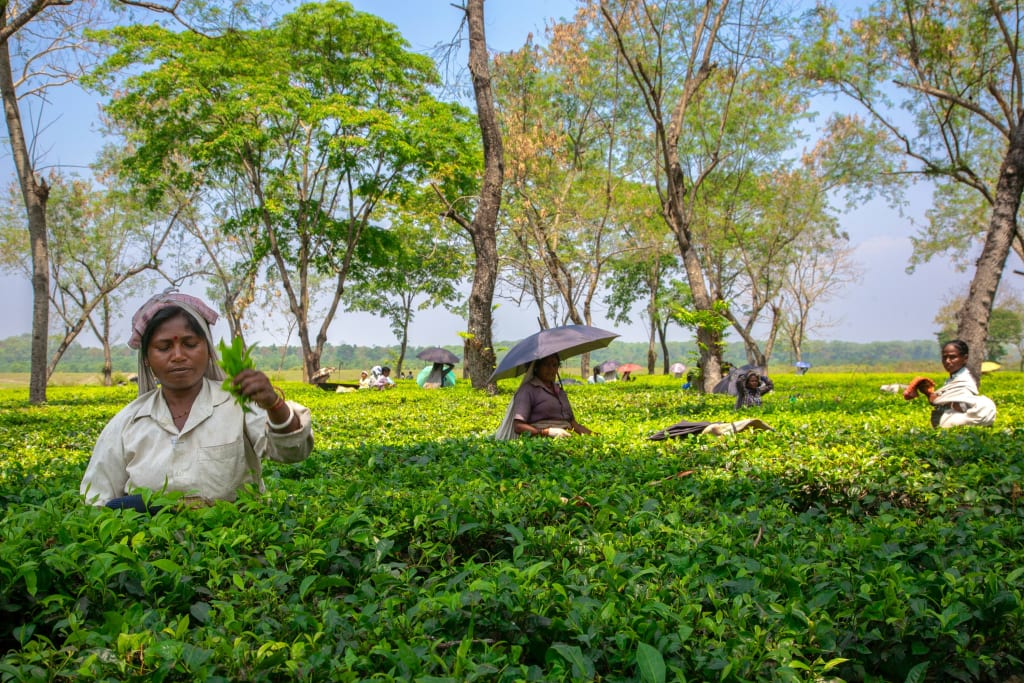
Ella is one of those places that feels gentler the longer you stay. Tucked into Sri Lanka’s hill country, this small mountain town is known for its rolling tea estates, shifting mist, and viewpoints that seem to change character by the hour. It is not loud or hurried. Ella invites you to slow down, to notice the landscape, and to move through it at its own pace.
Visit Working Tea Factories
To really understand Ceylon tea, it helps to see where it is made. Around Ella, several working factories continue daily production, and visitors are welcome to step inside. Guides walk guests through each stage of the process, from freshly plucked leaves to the final grading, explaining how traditional methods now sit alongside modern machinery. Inside the factories, the air is warm and heavy with the scent of tea. Workers sort leaves by hand, a task that takes years to master and is still central to quality control. Tours usually end with a tasting session, where subtle differences between grades become surprisingly clear. Outside, estates stretch across the hills, where tea pickers move steadily through the rows, their bright saris standing out against the deep green of the bushes. Many Ella resorts help organise these visits, making it easier to combine transport, guides, and background context into a single experience.
Trek Through Tea-Covered Hills
The landscape is what defines Ella. Trails weave through tea plantations, following narrow paths between rows of neatly clipped bushes. Workers pluck two leaves and a bud from each plant, repeating the motion with quiet precision as hikers pass by. Morning is the best time to walk. The air is cooler, and mist hangs low over the hills before slowly lifting with the sun. Little Adam’s Peak, just 1.5 kilometres from town, is a popular option for those wanting a gentle introduction to the area. The walk takes around 30 to 45 minutes each way and offers rewarding views without much strain. Ella Rock is more demanding. The route winds through forest patches and open estates, taking roughly three hours to complete. From the summit, the hills stretch endlessly, layered with tea fields and distant ridgelines. Paths can be slippery after rain, which is common in this region, so proper footwear matters. Water is essential too, as there are no facilities along the way. Above all, these are working landscapes. Staying on marked trails and giving workers space is part of walking responsibly here.
Stay Within a Tea Estate
Staying inside a working plantation offers a perspective that standard hotels simply cannot. Mornings begin with mist rising from the tea bushes, often before the rest of the valley wakes. There is a quiet intimacy to it. Hotels like 98 Acres Resort & Spa sit overlooking wide slopes of tea and distant mountains. From balconies and walkways, guests can watch morning plucking sessions unfold below and spot movement in the fields throughout the day. As evening approaches, the estate shifts again. Workers head home, and birds and small wildlife emerge from the forest edges nearby. Tea grown on the surrounding hills is served in on-site restaurants, and the resort’s elevated position catches cool breezes that make nights comfortable without air conditioning. Conversations with staff often reveal deeper stories, too. Many grew up in tea communities and are happy to share insight into cultivation, harvesting, and the traditions tied to plantation life.
Capture Peak Viewpoints
Ella’s setting creates natural viewpoints where tea estates meet dramatic mountain terrain. The town lies within Ella Gap, a break in the southern mountain range that opens onto layered valleys and distant peaks. The Nine Arch Bridge, about two kilometres from town, blends colonial-era railway design with the surrounding greenery. When a train crosses, the moment feels almost cinematic, especially against the backdrop of tea-covered hills. The Ella Swing offers a more adrenaline-focused experience, suspending riders over steep valleys, though it is less about reflection and more about the thrill. Ravana Falls, roughly eight kilometres away, shows another side of the region. During the monsoon months from May to September, the waterfall is at its most powerful, tumbling down rock faces framed by vegetation and higher-elevation tea estates. Each viewpoint reveals something different about how tea cultivation adapts to steep terrain and shifting weather.
Exploring Ella’s tea plantations turns a simple visit into something more grounded. Mist drifting through endless rows, the steady rhythm of plucking hands, and mountains fading into one another in the distance all leave a quiet impression. Ella connects visitors not only to the land, but to the generations who have shaped it. Sitting on a balcony as evening fog rolls in, tasting tea where it was grown, or watching sunrise turn the fields gold becomes less about sightseeing and more about presence. Ella reminds travellers that some places are best experienced slowly, allowing the landscape to speak in its own time.
About the Creator
Keep reading
More stories from Jeewanthi Armstrong and writers in Journal and other communities.
Why Choose Luang Prabang for a Spiritual Retreat?
Luang Prabang in Laos is a quiet city that is situated between the Mekong River and Nam Khan River. It is a UNESCO World Heritage town known for its beautiful temples and colonial era buildings. Luang Prabang has a peaceful atmosphere that makes it perfect for those looking for a mindful retreat away from the stresses of daily life.
By Jeewanthi Armstrong9 days ago in Journal
Author’s Advice
If you would’ve asked me 20 years ago did I know I’d become a writer and an author, I would’ve said “nope, ain’t happening”. As fate would have it I did become an author and I can honestly say I’m loving it so far. It really does feel good to be a writer. I’ve learned a lot on this journey and I feel like with even me being as new to this world as I am, there’s some wisdom I need to share with every other aspiring author.
By Joe Patterson19 days ago in Journal
The flames of war flared up in the Middle East: Trump’s adventures and Gulf contradictions have brought the world to a dangerous turning point
(Special Report: Journalist Malik Sarfaraz Hussain Awan) The Middle East is currently sitting on the worst and most dangerous gunpowder pile in history, where even a small spark can turn the peace and economy of the entire world into a pile of ashes. Donald Trump’s unpredictable foreign policy and American adventures in the Gulf region have so badly disturbed the traditional balance of the region that the flames of war are now crossing the borders and reaching the safest havens of the Gulf countries. The dramatic military and diplomatic developments in recent hours are clear evidence that this crisis is no longer just a regional conflict, but has emerged as a deadly poison for the global economy and security. The biggest and most horrific news has come from the United Arab Emirates, where the UAE Ministry of Defense has officially confirmed that its advanced air defense system destroyed 16 ballistic missiles and 42 drones launched by Iran in the air. Iran has mainly targeted industrial and military areas in Abu Dhabi and Dubai. Although the air defense prevented a major disaster by thwarting this major attack, debris and direct attacks have still caused heavy explosions in densely populated areas of Dubai and industrial zones in Abu Dhabi. Iran has specifically targeted the aluminum industry, damaging the Emirates Global Aluminum plant in Abu Dhabi and injuring employees working there. According to the Ministry of Defense, so far, two UAE military personnel, a Moroccan contractor working for the military, and eight civilians from Pakistan, Nepal, Bangladesh, Palestine, and India have been killed in these attacks, while a total of 178 people from different countries have been injured. The decision of Yemen’s Houthi rebels to enter regular war has added fuel to the fire. Houthi spokesman Yahya Saree confirmed in his official statement that they have fired drones, including ballistic and cruise missiles, targeting Israel’s southern and sensitive military sites. This move by the Houthis will expand the scope of this war to the strategic routes of the Red Sea and Bab al-Mandab. About 12 percent of the world’s trade passes through these sea routes. If the Houthis start targeting global shipping like in the past, the international energy market and supply chain will be completely paralyzed, resulting in exorbitant inflation and economic collapse on a global scale. If we look behind the scenes of all these serious military adventures, the biggest root is the open contradiction and double standards of the US Gulf policy. On the one hand, the US sings the tune of peace and security in the Middle East, and on the other hand, it keeps the region in a state of constant instability to protect its own economic and military interests. Due to this expediency, the Gulf countries are now realizing that the US umbrella is no longer a guarantee of their complete protection, and shells and missiles are now raining down on their own territory in the war for US interests. On the other hand, Israel and the US have not sat silent either. The Israeli Air Force has targeted and destroyed the Iranian Ministry of Defense factory in Tehran, which was manufacturing parts for ballistic missiles. In addition, Iran’s largest steel plants in Isfahan and Ahvaz have been bombed. The US Pentagon and the Israeli military are jointly targeting Iran’s defense and industrial infrastructure, and the US Air Force has carried out heavy bombing of Iranian coastal cities and naval installations near the Strait of Hormuz in the past 24 hours in an attempt to cut off Iran’s supply line. In view of this extremely worrying and terrifying situation, a very important four-nation emergency meeting has begun in the Pakistani capital, Islamabad. The foreign ministers of Pakistan, Saudi Arabia, Egypt and Turkey are sitting together in Islamabad to find a middle way to reduce the dangerous tension in the Middle East. Pakistan is currently trying to play the role of a bridge between the US and Iran through back-channel diplomacy, because Islamabad knows very well that if the fire of war spreads further in the Gulf and the Middle East, its heat will directly burn Pakistan’s fragile economy and energy needs to ashes. The bottom line is that Donald Trump's personal adventures and the US administration's contradictory Gulf policies are now becoming unbearable for the world. This contradiction is a stain on the forehead of the global economy and peace that is gradually pushing the entire world towards a great war. Now is the time for the international community to abandon its traditional silence and expediency and raise its voice against these contradictions, otherwise history is a witness that when economic and political greed exceeds limits, then nothing but destruction is achieved.
By Malik Sarfraz Hussain Awanabout 23 hours ago in Journal
Watching The End Of The World From The Diner
Introduction I am not sure how to approach this. Guy Peellaert was an amazing artist who created iconic fantasy images of famous people, usually musicians or politicians, as well as creating commissioned album covers such as "It's Only Rock'n'Roll" by The Rolling Stones and David Bowie's "Diamond Dogs" which you can read more about below.
By Mike Singleton 💜 Mikeydred 2 days ago in Art


Comments
There are no comments for this story
Be the first to respond and start the conversation.