
From Mall to Torture Site: Venezuela Debates El Helicoide Prison's Future
A futuristic dream turned into a symbol of fear now stands at the center of a national debate over justice, memory, and transformation
Introduction: A Building That Tells a Nation’s Story
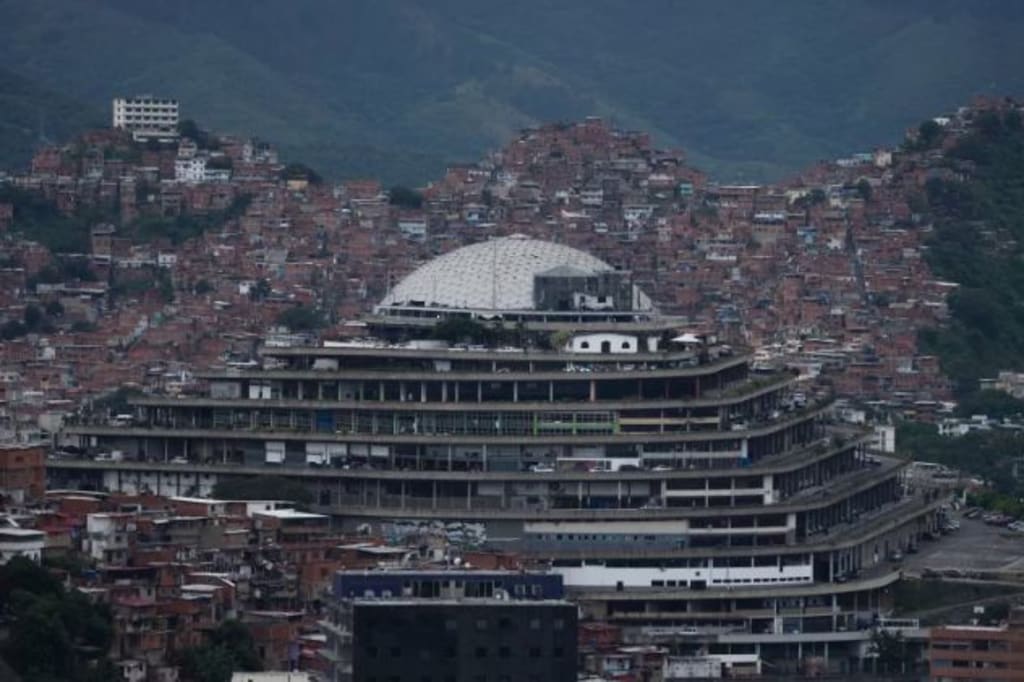
In the heart of Caracas rises a structure unlike any other—a spiraling concrete giant known as El Helicoide. Once imagined as a dazzling shopping destination, it has since become one of the most controversial sites in Venezuela’s modern history.
Today, this building is no longer just an abandoned architectural curiosity or a functioning detention center. It is at the center of a heated national conversation: what should be done with a place that symbolizes both ambition and suffering?
The Dream: Venezuela’s Modern Marvel That Never Was
Back in the 1950s, Venezuela was riding a wave of modernization and economic growth. El Helicoide was designed to be a revolutionary commercial complex—complete with a spiraling roadway allowing shoppers to drive directly to stores.
The vision was bold: a blend of innovation, luxury, and futuristic design. But political instability and economic shifts halted construction before completion.
Instead of becoming a hub of commerce, the structure remained unfinished—its promise frozen in time.
The Shift: From Commerce to Control
Years later, the Venezuelan government repurposed the building. What began as offices for state agencies eventually turned into something far more ominous.
Under the leadership of Hugo Chávez and later Nicolás Maduro, El Helicoide became a detention center—particularly for political prisoners.
Its spiral ramps and enclosed spaces were no longer pathways to shops, but corridors of confinement.
Dark Allegations: A Prison Feared by Many
Over time, El Helicoide gained a reputation that extended far beyond Venezuela’s borders.
Former detainees and human rights organizations have described harsh conditions inside the facility. Allegations include overcrowding, psychological pressure, and even torture. While authorities have denied many of these claims, the building has become widely associated with repression.
For many Venezuelans, just hearing the name “El Helicoide” evokes fear.
It is seen not just as a prison—but as a symbol of a system where dissent could be punished.
A Turning Point: Plans for Closure and Reinvention
In 2026, political shifts in Venezuela sparked renewed hope. Authorities announced plans to close El Helicoide as a prison and transform it into a public space—possibly a cultural, sports, or commercial center.
At the same time, a wave of political prisoner releases was reported, signaling what some viewed as a move toward reconciliation.
For families of detainees, this moment carried deep emotional weight. Reunions, long awaited, became possible.
But alongside hope came questions.
The Debate: Preserve or Rebuild?
The future of El Helicoide has sparked a powerful debate across Venezuela.
Option 1: Transformation and Renewal
Some believe the building should be repurposed into something positive—a place for community, creativity, and economic activity.
Turning a site of suffering into one of opportunity could symbolize a new beginning.
Option 2: Memory and Accountability
Others strongly disagree.
Human rights advocates argue that El Helicoide should be preserved as a memorial or museum. For them, the building is evidence of past abuses—and a reminder that such events must never be forgotten.
They warn that transforming it without acknowledgment risks erasing history.
Why This Debate Matters
This isn’t just about architecture or urban development. It’s about how a country deals with its past.
Around the world, nations emerging from periods of repression have faced similar decisions:
Should painful sites be destroyed to move on?
Or preserved to remember and educate future generations?
The answer often reflects deeper values—about justice, truth, and accountability.
The Bigger Picture: Justice Beyond the Building
The discussion surrounding El Helicoide is part of a broader issue in Venezuela: how to achieve meaningful justice.
While prisoner releases are a step forward, many activists argue that true progress requires more:
Acknowledgment of past abuses
Accountability for those responsible
Support and recognition for victims
Without these steps, critics say, reforms may feel incomplete.
A Symbol Still in Transition
Today, El Helicoide stands as a powerful symbol of contradiction.
It represents ambition and failure
Innovation and repression
Hope and pain
Its future remains uncertain, but its significance is undeniable.
Whatever decision Venezuela makes, it will send a message—not just to its citizens, but to the world—about how it chooses to confront its past.
Final Thoughts: More Than Just a Building
El Helicoide is more than concrete and steel. It is a reflection of Venezuela’s journey—its dreams, its struggles, and its search for a better future.
Transforming it could bring healing. Preserving it could bring truth.
Perhaps the real challenge is finding a way to do both.
Because moving forward doesn’t mean forgetting the past—it means understanding it, learning from it, and ensuring it is never repeated.
About the Creator
Author’s Advice
If you would’ve asked me 20 years ago did I know I’d become a writer and an author, I would’ve said “nope, ain’t happening”. As fate would have it I did become an author and I can honestly say I’m loving it so far. It really does feel good to be a writer. I’ve learned a lot on this journey and I feel like with even me being as new to this world as I am, there’s some wisdom I need to share with every other aspiring author.
By Joe Patterson19 days ago in Journal




Comments
There are no comments for this story
Be the first to respond and start the conversation.