
Why Romanians Travel to Germany for Strawberry Picking
Economic opportunity, higher wages, and the realities behind seasonal migration in Europe

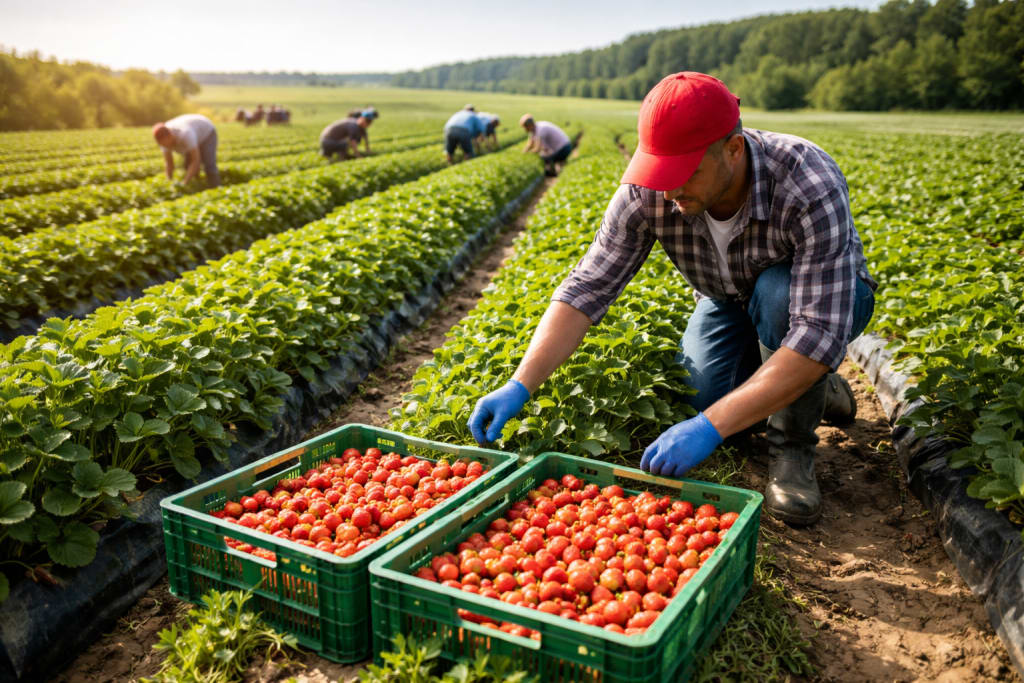
Every year, thousands of Romanians travel to Germany to work in agriculture, particularly during the strawberry harvesting season. This phenomenon has become a recognizable pattern within the broader context of labor migration in Europe. While it is often discussed in simple terms—people leaving to earn money abroad—the reality is more complex. Economic necessity, wage differences, employment opportunities, and personal aspirations all play a role in this decision. At the center of it all lies a fundamental question: why do so many Romanians choose to leave their country, even temporarily, to pick strawberries in Germany?
One of the main reasons is the significant wage gap between Romania and Germany. Even though Romania has experienced economic growth in recent years, salaries in many sectors remain relatively low compared to Western European standards. For many workers, especially those in rural areas or without specialized qualifications, local job opportunities are limited and often poorly paid. In contrast, seasonal agricultural work in Germany can offer earnings that, although considered modest by German standards, are highly attractive when converted into Romanian currency.
Strawberry picking is one of the most in-demand seasonal jobs. German farms rely heavily on foreign labor to harvest crops quickly and efficiently during a limited timeframe. Romanian workers have become a key part of this workforce due to their availability, work ethic, and willingness to travel. Recruitment agencies and farm owners often organize transportation, accommodation, and contracts, making the process relatively accessible even for those with little experience abroad.
From a financial perspective, the appeal is clear. A Romanian worker in Germany can earn in a few months what might take much longer to accumulate at home. Even after deducting expenses such as accommodation, food, and transport, the savings can be substantial. These earnings are often used to support families, pay debts, renovate homes, or invest in small businesses back in Romania. For many, this seasonal work is not just a temporary solution but a recurring strategy for improving their standard of living.
However, the reality of working in agriculture is far from easy. Strawberry picking is physically demanding and requires long hours of labor, often in varying weather conditions. Workers typically spend entire days bending over rows of plants, carefully selecting ripe fruit. Payment is sometimes based on productivity, meaning that faster workers earn more, while those who struggle may find it harder to reach their financial goals. Despite these challenges, many workers return year after year, motivated by the economic benefits.
Another important factor is the lack of stable employment opportunities in certain regions of Romania. In smaller towns and villages, jobs can be scarce, especially outside major industries or urban centers. For individuals without higher education or specialized skills, options may be limited to low-paying or irregular work. Seasonal migration offers an alternative that, while temporary, provides a more predictable and often higher income.
Social networks also play a significant role in this migration pattern. Many workers hear about opportunities in Germany through friends, relatives, or acquaintances who have already participated in seasonal work programs. These networks create a sense of trust and familiarity, reducing the perceived risks of traveling abroad. When someone from a community successfully works in Germany and returns with visible financial improvements, it often encourages others to follow the same path.
There is also a cultural dimension to consider. Over time, working abroad—whether in agriculture, construction, or other sectors—has become normalized in many parts of Romania. It is no longer seen as an unusual or risky decision, but rather as a practical step toward financial stability. For younger workers, it can also represent a chance to gain independence, experience a different country, and broaden their horizons.
Despite the benefits, this phenomenon raises important questions about long-term sustainability. The continuous outflow of workers can contribute to labor shortages in Romania, particularly in rural areas. It can also affect family structures, as individuals spend extended periods away from home. Children may grow up with one or both parents working abroad, which can have emotional and social implications.
At the same time, Germany’s reliance on foreign labor highlights structural issues within its own agricultural sector. Local workers are often unwilling to take on these physically demanding jobs for the wages offered, making migrant labor essential. This creates a mutually dependent relationship: German farms need workers, and Romanian workers need income opportunities.
In recent years, there has been increased attention on working conditions for seasonal laborers. Reports of overcrowded accommodation, long hours, and inadequate protections have led to calls for better regulation and oversight. While many farms provide fair conditions and respect labor laws, inconsistencies still exist. Ensuring that workers are treated fairly and paid properly remains an ongoing challenge.
Looking ahead, the dynamics of this migration may evolve. Economic development in Romania could gradually reduce the need for seasonal work abroad, especially if wages continue to rise and job opportunities expand. At the same time, changes in European labor markets, policies, and agricultural practices could influence demand for foreign workers.
In conclusion, the migration of Romanian workers to Germany for strawberry picking is driven by a combination of economic necessity, opportunity, and social factors. It reflects broader inequalities within Europe, as well as the adaptability and resilience of workers seeking better lives. While the work is demanding and not without challenges, it offers a tangible way for many Romanians to earn money and support their families. Understanding this phenomenon requires looking beyond stereotypes and recognizing the complex realities that shape these decisions.
Ultimately, for those who make the journey each year, it is not just about strawberries. It is about survival, ambition, and the pursuit of a better future.
About the Creator
End Times
Daniel 12:1-4 (NIV) 1 “At that time Michael, the great prince who protects your people, will arise. There will be a time of distress such as has not happened from the beginning of nations until then. But at that time your people — everyone whose name is found written in the book — will be delivered.
By Reborn Jem4 days ago in Humans




Comments
There are no comments for this story
Be the first to respond and start the conversation.