
Waldport’s Vanished
How a Coastal Town Lost Twenty People in a Single Night


On the Oregon coast, disappearances usually come with explanations. Sneaker waves when they turned their back for a split second. Rain, wind, and snow contribute to accidents. A hiking trip that took a wrong turn. In the fall of 1975, Waldport faced a different kind of loss. Twenty people didn't drown, crash, or wander off. They walked into a community meeting at the Bayshore Inn, listened to two strangers talk about UFOs and salvation, and by sunrise, they were gone. No goodbyes. No forwarding addresses. Just empty driveways, abandoned jobs, and families left staring at doors that never opened again.
The town called it a mass disappearance. Not to sensationalize, but because that's exactly what it was. One night, Waldport was whole. The next morning, it wasn't. The trail, the one police, reporters, and terrified parents followed, didn't lead to a crime scene. It led to a rising cult that would later become infamous under an unforgettable name: Heaven's Gate.
The Waldport vanishings weren't a footnote. They were the first major rupture in a movement that would eventually end in tragedy two decades later. In 1975, all anyone knew was that a quiet coastal town had just lost twenty people in a single night, and no one could explain why.
The Meeting That Set Everything In Motion

The Bayshore Inn wasn't built for revelations. It was a modest coastal lodge with thin walls, dated carpet, and a view of the dunes that always looked a little wind-blown. On September 14, 1975, it became the epicenter of something far stranger than the usual tourist traffic. Flyers had gone up around town advertising a talk about "human metamorphosis" and "UFOs as the next evolutionary step." In Waldport, where entertainment options were limited to fishing, church, or the local bar, curiosity was enough to fill a room.
About 150 people showed up...retirees, young couples, loggers, students, the spiritually restless, and the simply bored. The crowd expected a quirky lecture, maybe a harmless fringe idea to laugh about later. Instead, they got two people who spoke with the calm certainty of surgeons delivering a diagnosis. Marshall Applewhite and Bonnie Nettles didn't shout, didn't preach, didn't wave their arms or dance at the altar. They talked softly, almost clinically, about shedding earthly attachments, preparing for a higher existence, and boarding a spacecraft that would carry the chosen to the "Next Level."
It wasn't the content that hooked people. It was the tone. They didn't sound like prophets. They sounded like people who had already made the journey and were offering directions. For some in the room, it was nonsense. For others, it was unsettling. For a small group, the twenty who would vanish, it was a door they had been waiting for someone to open. Applewhite and Nettles told them that if they were ready to evolve, they needed to leave everything behind. Not gradually. Not thoughtfully. Immediately.
That's exactly what they did.
The Morning After

By dawn, Waldport felt hollow. The fishing boats still went out, the tide still rolled in, but something in the air had changed...a silence that didn't belong to the darkness. Neighbors knocked on doors that didn't open. Phones rang unanswered. The local postmaster noticed mail piling up for families that had never missed a delivery. By noon, the sheriff's office was fielding calls from frantic parents and employers, all describing the same thing: people gone without a trace.
The town's rumor mill churned fast. Some said the group had gone to the mountains to wait for a spaceship. Others whispered about mass suicide, government experiments, or alien abduction. Reporters descended on Waldport, turning its quiet streets into a stage for speculation. The truth was far stranger and much simpler. The missing had left willingly, following Applewhite and Nettles into the desert to prepare for what they believed was humanity's next step.
For those left behind, the disappearances felt like a haunting. Twenty lives were seemingly erased overnight, their absence echoing through the town's routines. Coffee cups sat untouched on the kitchen table. Fishing gear rusted in the sheds. The bridge, the same one that carried them out of town, became a symbol of departure, a line between the living and the lost.
The Search and the Spotlight
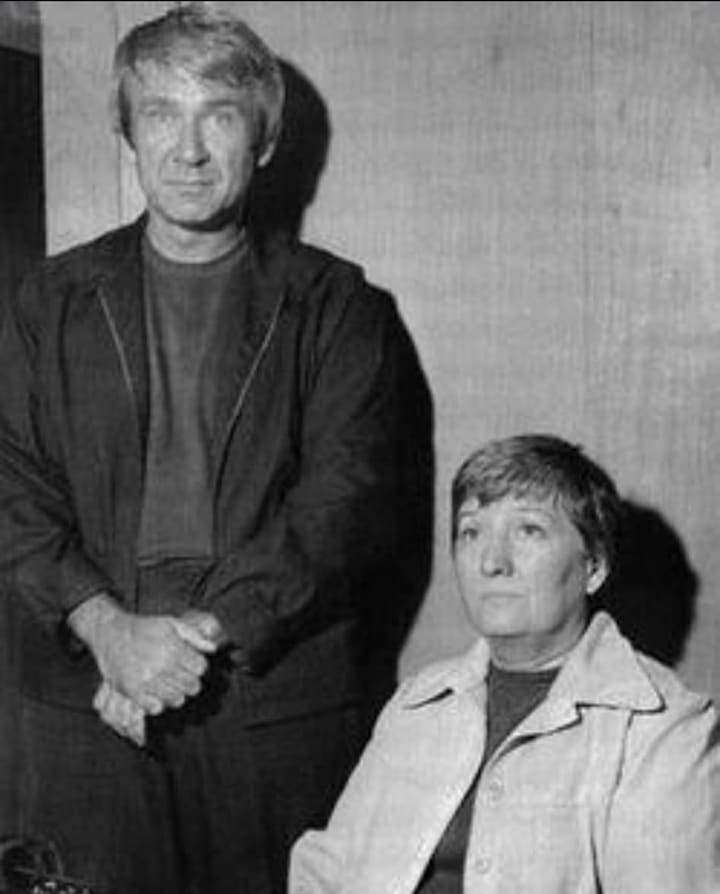
By the second day, Waldport was crawling with reporters. Satellite vans lined the highway shoulder, their antennas stabbing the sky like metal weeds. The Register-Guard ran the headline "Twenty Missing After UFO Meeting." National outlets followed, each twisting the story into something stranger. "Space Cult in Oregon," "The Vanished of Waldport," "The Two Who Took Twenty." The town's quiet rhythm was replaced by the hum of generators and the click of cameras.
Sheriff's deputies tried to treat it like a missing-person case. They checked motels, bus stations, and logging roads. They found nothing. Cars were left behind, homes locked, pets abandoned. It looked less like a disappearance and more like an evacuation. The only clue came from a few handwritten notes left on kitchen tables. "Gone to learn. Don't worry."
Within a week, the search stretched beyond Oregon. Investigators traced the vehicle registrations and credit card records, eventually finding the vanished in small clusters across the Southwest, Colorado, New Mexico, and Texas. They were alive, traveling with Applewhite and Nettles, now calling themselves "Bo and Peep." The group had renamed itself Human Individual Metamorphosis and was camping in the desert, preparing for what they described as "departure."
When the news broke that the missing were safe and had left willingly, the tone shifted. The search ended, but the frenzy didn't. Reporters followed the trail, interviewing bewildered families and skeptical locals. Waldport became shorthand for the kind of small-town vulnerability that cult recruiters dream about: isolated, curious, and aching for meaning.
For the people who stayed behind, the relief was complicated. Their loved ones weren't dead, but they were gone in a different way. They were unreachable, transformed, and convinced they had found something greater than Earth itself. Waldport's name faded from the headlines, but the story lingered like a fog over the bay: a reminder that belief can be as powerful, and as dangerous, as disappearance.
The Long Road to Rancho Santa Fe
For two decades after the Waldport vanishings, the people who left Oregon lived inside a world most outsiders couldn’t comprehend. They moved constantly, lived communally, cut ties with their families, and surrendered every piece of individuality they once had. What began as a desert‑camping, scripture‑rewriting, UFO‑awaiting experiment slowly hardened into a closed system with its own language, rules, and cosmology.
The Waldport recruits became some of the group’s earliest true believers. They described their departure not as abandonment but as liberation. In interviews years later, a few who eventually left the group said the same thing: “It felt like stepping out of a life that never fit.” They believed they were preparing for a transformation, a shedding of the human body like an old coat. Heaven’s Gate didn’t call it death. They called it “exit.”
Inside the group, preparation for that exit was methodical. Members shaved their heads, wore identical clothing, and lived under strict discipline. They practiced detachment from the physical world: no sex, no possessions, no personal identity. They trained themselves to see their bodies as temporary vehicles. By the mid‑1990s, Applewhite had reframed the upcoming “departure” as a necessary step to reach the "Next Level." When the Hale‑Bopp comet appeared in 1997, he told his followers it was the sign they’d been waiting for.
They believed him.
The Final Days
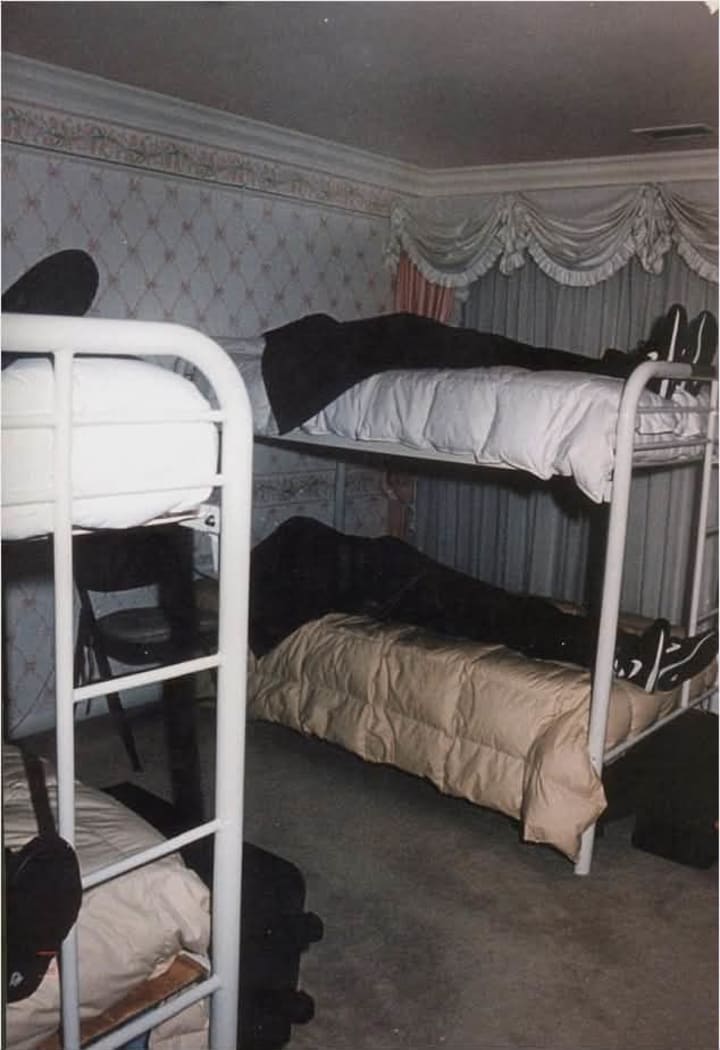
In March 1997, the group rented a mansion in Rancho Santa Fe, California. They recorded farewell videos: calm, smiling, certain. They prepared ritual meals. They laid out matching clothing and Nike shoes. They arranged their bunks with precision. And over three days, they carried out the mass suicide that would make Heaven’s Gate infamous.
Among the dead were several who had vanished from Waldport in 1975.
For the families back in Oregon, the news hit like a second disappearance...only this time, there was no hope of a phone call, no chance of a reunion. Some had spent years trying to reach their loved ones. Others had made peace with the distance. But the finality of the Rancho Santa Fe deaths reopened wounds that had never fully healed.
How Waldport Carried the Weight
In Waldport, the tragedy didn’t feel like a national headline. It felt like a ghost returning. Locals remembered the meeting at the Bayshore Inn, the sudden departures, the reporters swarming the town. They remembered the fear, the confusion, the sense that something had slipped through their fingers.
Some felt guilt, as if they should have seen the danger sooner. Others felt anger at Applewhite for manipulating people who had been searching for meaning. And some simply felt sadness, a quiet grief for neighbors who had walked out of town believing they were stepping into a higher existence.
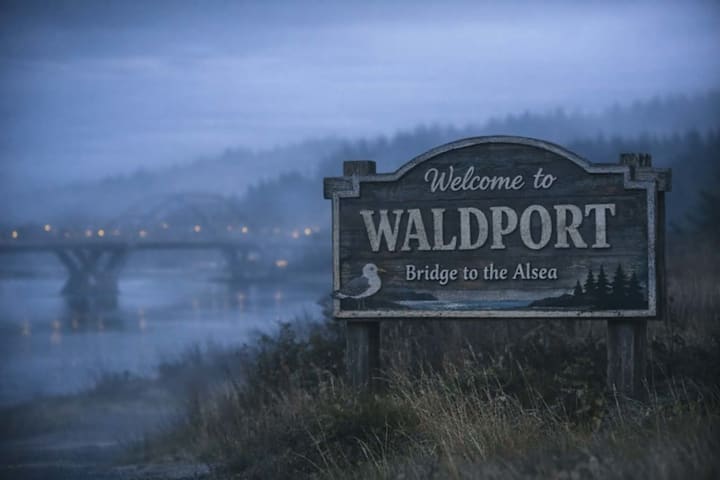
The bridge in Waldport, the same one the vanished crossed on their way out, became a symbol again. Not of mystery this time, but of the thin line between belonging and belief, between a life rooted in community and a life surrendered to something that promised transcendence.
The story of the Waldport twenty didn’t end in 1975. It ended in a California mansion two decades later, with matching shoes, covered faces, and a message recorded for a world they believed they were leaving behind.
The Legacy Waldport Never Escaped
The Waldport vanishings should have been a strange footnote in Oregon history. Just a bizarre weekend in 1975 when twenty people walked out of town chasing a promise. Instead, the story became a prologue to one of America’s most infamous cult tragedies. Every time Heaven’s Gate resurfaced in the news, Waldport’s name resurfaced with it, like a ghost tethered to the narrative.
For the families, the legacy is personal. They carry two timelines: the life before the meeting at the Bayshore Inn, and everything after. Some kept boxes of letters their loved ones sent from the road, each one drifting further into the group’s language. Others kept nothing, unable to reconcile the person they knew with the person who left. When the Rancho Santa Fe deaths were announced, it wasn’t just grief; it was the collapse of twenty years of waiting, hoping, bargaining.
For the town, the legacy is quieter but no less permanent. Waldport learned how quickly a community can fracture when meaning is offered in a new shape. It learned that disappearance doesn’t always look like danger; sometimes it looks like conviction. And it learned that even a place as small and remote as a coastal Oregon town can become the opening chapter of a national tragedy.
Today, the bridge still stands, the dunes still shift, and the Bayshore Inn is long gone. But the story lingers. Locals still talk about “the meeting,” still remember the faces of those who left, still feel the echo of that night when belief pulled twenty people out of their lives and into a future that ended in matching shoes and covered faces.
The legacy of Waldport isn’t just that people vanished. It’s that they vanished believing they were stepping into something transcendent, and that the town they left behind has spent decades trying to understand how ordinary lives can be rewritten by a single night, a single message, a single door opening into the unknown. In the end, Waldport didn’t lose twenty people in a single night. It lost them one belief at a time.
About the Creator
Phoenixx Fyre Dean
Phoenixx lives on the Oregon coast with her husband and children.
Author of Lexi and Blaze: Impetus, The Bloody Truth and Daddy's Brat. All three are available on Amazon in paperback format and Kindle in e-book format.
Keep reading
More stories from Phoenixx Fyre Dean and writers in Humans and other communities.
The Deathcare System
We live in a world where healthcare is commonly referred to as"deathcare" and patients have to fight for a medical professional to listen to them about their medical complaints. Women are told every day their pain is not pain, it's depression. Her pain isn't pain, it's because she's overweight, or she smokes, she doesn't exercise, or she doesn't drink enough water. The same tests are ordered for the same person ten times in a row with no variation in results. That usually results in the doctor throwing up his hands and declaring he or she doesn't know what's wrong but will give you expensive medication to treat four or five different things anyway. Our healthcare system in this country is rated 11th in the world for its standard of healthcare, behind Taiwan, South Korea, and Singapore. Oregon is ranked 28th for healthcare access and 28th for healthcare quality, according to US News. Healthcare has become a nightmare for far too many. Nobody should have to fight to get quality medical care, ever!
By Phoenixx Fyre Deanabout a year ago in Humans
12 Life Lessons The Golden Girls Taught Us
Picture it: Miami, 1985. Four middle-aged actresses agree to play the characters of Blanche, Rose, Dorothy, and Sophia who share a home in a TV sitcom called The Golden Girls, unaware at the time of the kind of impact the show would leave on its adoring fans. The show aired until 1992, ending with a one-season spinoff called Golden Palace. The seven years we were graced with The Golden Girls on our television screens made its mark. More than three decades after Susan Harris’ imagination sparked the creation of these iconic characters, fans from around the world still watch reruns of The Golden Girls, spend time discussing the show on social media in Facebook groups like The Golden Girls Fanatics, carry Sophia-inspired handbags and relate to the episodes in their daily lives.
By Criminal Matters2 days ago in Humans
Kusliga Vista
“I told you we were going too far off trail,” said Clark. “I thought Ammon said he could read a compass,” said Kit. “Guys, it’s easy, we just need to find a river or stream and follow it. Those things always lead to civilization,” Ammon said and pushed through thick patch of bushes.
By Amos Gladeabout 22 hours ago in Horror




Comments
There are no comments for this story
Be the first to respond and start the conversation.