
Rita Coolidge and the Stolen Coda: How “Layla” Erased a Woman Who Wrote Its Most Famous Moment

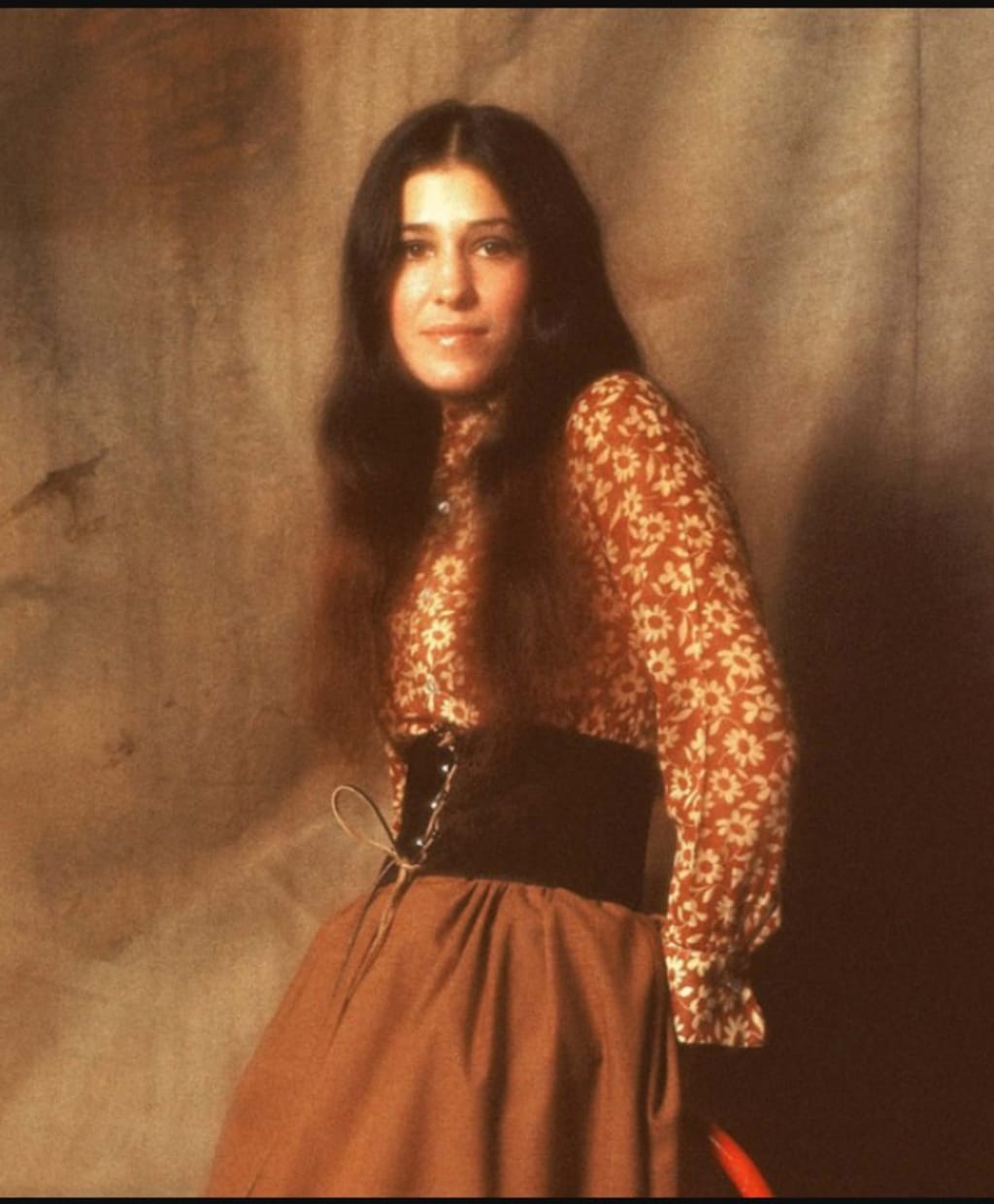
Rita Coolidge has spent more than half a century living with a truth the music industry refused to acknowledge, a truth she carried quietly because she understood exactly how the business worked and who it worked for. The most famous passage of “Layla,” the long, aching piano coda that transforms the song from a desperate guitar anthem into something cinematic and unforgettable, was taken from a piece of music she co‑wrote. She wrote it with her then‑boyfriend, drummer Jim Gordon, during a period when they were collaborating closely, writing songs, touring, and trying to carve out a creative life together. The melody was hers, the progression was hers, and the emotional architecture of the piece was hers. Yet when the song was released, Gordon alone received credit for the coda, and Coolidge was erased entirely. This is not speculation. It is documented in her memoir Delta Lady (Coolidge & Ritz, 2016), in interviews with Guitar Player (Guitar Player Magazine, 2022), Yahoo Entertainment (Yahoo Entertainment, 2022), and The Hollywood Reporter (THR, 2016), and in recollections from musicians who were present in that era.
Before the theft, Coolidge was already a respected figure in the world of rock and soul. She had toured with Delaney & Bonnie, sung on Joe Cocker’s Mad Dogs & Englishmen tour, and worked with Leon Russell, Stephen Stills, and Eric Clapton. She was not an ingénue or a muse; she was a working musician with a growing reputation, a woman whose voice and musical instincts were sought after by some of the biggest names of the era. She and Gordon were romantically involved, but they were also collaborators. One night, in a quiet moment away from the chaos of touring, they wrote a song called “Time (Don’t Get In Our Way).” Coolidge has described the scene many times: she sat at the piano, playing a descending, lyrical progression she had been developing, and Gordon joined her, adding rhythmic structure and helping shape the melody. They wrote lyrics. They made a demo. They believed in the song. The piano progression they created together would later become the foundation of the Layla coda (Coolidge, Delta Lady; THR, 2016).
The next part of the story is not ambiguous. Coolidge and Gordon visited Eric Clapton at Olympic Studios in London. They brought the demo tape. Coolidge played the piano part for Clapton in person. She left the cassette behind, hoping he might want to record the song. This is documented in her memoir and in multiple interviews, including a detailed account in Guitar Player (2022). Clapton heard the piece. He had the tape. He knew exactly where the music came from. And then Coolidge heard nothing.
Months later, she was in Miami for a photoshoot at Criteria Studios, where Derek and the Dominos were recording. She walked through the building, familiar with the place and the people. Music drifted from the control room — a piano part, slow, emotional, unmistakable. Her piano part. She froze, listening, realizing that the music she had written was now being recorded by Clapton’s band. The melody was the same. The progression was the same. The emotional arc was the same. The only thing missing was her name. This moment is described in Guitar Player (2022) and in Yahoo Entertainment’s coverage of the resurfaced story (2022).
Gordon had not told her he had given the piece to Clapton. He had not asked for her permission. He had not insisted on her credit. He had simply taken the music they wrote together and presented it as his own. Coolidge confronted him. He brushed her off. She confronted Clapton’s manager, Robert Stigwood, expecting at least a conversation about credit. Instead, he dismissed her with a single sentence she has repeated in interviews and in her memoir: “You’re a girl. You don’t have the money to fight this.” This quote appears in Delta Lady and was repeated in Yahoo Entertainment’s interview (2022).
It was not subtle. It was not coded. It was not a misunderstanding. It was the old‑boys network speaking plainly. Stigwood was telling her that she was right, that she would lose anyway, that the men involved would protect each other, that her gender made her expendable, and that her lack of financial power made her irrelevant. This was not a legal argument. It was a cultural one. And it worked.
Gordon took sole credit for the coda. Clapton accepted it. The label accepted it. The lawyers accepted it. The publishers accepted it. Not one man in the chain of power asked where the music came from, whether Gordon had written it alone, or whether Coolidge should be credited. They didn’t ask because they didn’t want to know. The coda was beautiful. It elevated the song. It gave Layla its emotional weight. And it came from a woman who had no leverage in a system designed to erase her.
Coolidge went on to have a successful solo career. She recorded hits. She won two Grammys. She became a respected figure in American music. But the Layla coda remained a ghost in her story — a piece of her artistry that lived in the world without her name attached. She has said that every time she heard the song, she felt a pang of recognition mixed with resignation. The music was hers. The credit was not. For decades, she did not speak publicly about the theft. Not because she doubted herself, but because she knew the industry would not listen. This perspective is echoed in her memoir and in her interviews with Guitar Player and Yahoo Entertainment.
Any discussion of Gordon must be handled with care. He was a gifted drummer whose mental health deteriorated severely in the years after Layla. He was later diagnosed with schizophrenia and spent the rest of his life in prison after committing a violent crime during a psychotic break. Coolidge has always been clear: his illness does not excuse what he did to her professionally. But it does complicate the narrative. He was a man in crisis long before the world knew it. Still, the fact remains: he took credit for music he did not write alone, and the industry let him. This context is covered in Rolling Stone’s reporting on Gordon’s life and decline (Rolling Stone, 2014).
In recent years, Coolidge’s story has resurfaced through her memoir, interviews with Guitar Player, a widely shared TikTok clip summarizing the story, and coverage by Yahoo Entertainment and The Hollywood Reporter. Musicians and historians have revisited the evidence. The conclusion is consistent: Rita Coolidge co‑wrote the piano coda to “Layla.” She was denied credit because she was a woman. The men involved knew it and let it happen. This is not revisionism. It is correction.
In the music industry, credit is not just ego. It is income. It is legacy. It is the difference between being a footnote and being a foundational voice. If Coolidge had been credited, she would have earned royalties for decades, her name would be attached to one of the most iconic recordings in rock history, and her influence would be recognized in textbooks, documentaries, and retrospectives. Instead, she was erased. And the industry moved on.
Coolidge’s story is not unique. Women in music — especially in the 1960s and 1970s — were routinely denied songwriting credit, paid less, excluded from publishing deals, treated as muses rather than creators, and told they were lucky to be in the room. The Layla coda is a case study in how the system worked: a woman writes something, a man takes it, the industry protects him, she is told to be quiet, and history records the man as the genius. Coolidge’s story is powerful because she refused to stay quiet forever.
The emotional truth is simple: she was dismissed because she was a woman. She was told she didn’t matter. She was told she couldn’t win. She was told the men would close ranks, and they did. But she also knew who she was. She knew what she had written. She knew the music was hers. And she knew that someday, the truth would surface.
When she finally told the story publicly, she did it without bitterness. She did it with clarity, ballast, and the calm authority of someone who has lived long enough to understand that the truth does not disappear just because powerful men ignore it. She did not demand reparations. She did not ask for retroactive credit. She simply told the truth. And the world listened.
Today, when musicians and historians talk about the Layla coda, Coolidge’s name is no longer absent. It appears in articles, interviews, and discussions about the song’s creation. Younger musicians, especially women, cite her story as an example of how the industry has treated female creators and why credit matters. Her account has become part of the historical record, not because the industry corrected itself, but because she refused to let the truth die with her silence.
The coda remains one of the most beloved passages in rock music — aching, cinematic, unforgettable. And it was written by a woman who was told she didn’t matter. But she did. And the record is finally catching up.
About the Creator
Julie O'Hara - Author, Poet and Spiritual Warrior
Thank you for reading my work. Feel free to contact me with your thoughts or if you want to chat. [email protected]
Keep reading
More stories from Julie O'Hara - Author, Poet and Spiritual Warrior and writers in Humans and other communities.
Transdimensional Intelligence And The Physics Of Information: A Unified Framework
Modern physics has reached a strange and beautiful point in its evolution, a point where the boundaries between matter, information, and consciousness have begun to blur. The classical world, with its solid objects and predictable laws, has given way to a universe that behaves more like a web of probabilities than a machine. In this landscape, the idea of transdimensional beings no longer belongs solely to mythology or mysticism. Instead, it becomes a legitimate question about the structure of reality itself. This article explores how contemporary physics, when taken seriously and followed to its logical conclusions, creates conceptual space for the existence of higher‑order intelligences without violating any known laws. It does so by examining the role of information in thermodynamics, the observer in quantum mechanics, and the possibility of dimensions beyond the familiar four. The goal is not to prove that such beings exist, but to show that their existence is compatible with the deepest principles of modern science.
By Julie O'Hara - Author, Poet and Spiritual Warrior13 days ago in Humans
Why Wiked: For Good is Undeservingly the ‘worse movie’
So… off the bat, we’re about to delve into something ridiculous. Just so we’re clear on that, ok? The first thing anyone that knows a thing about these dual movies… knows… is the original movie and sequel were shot together.
By Gabriel Shames3 days ago in Humans




Comments
There are no comments for this story
Be the first to respond and start the conversation.