
From Shenzhen Speed to Guizhou Slow
Moving from Shenzhen to Guizhou: A year later, I realized it wasn't a change of address, but a change of soul.

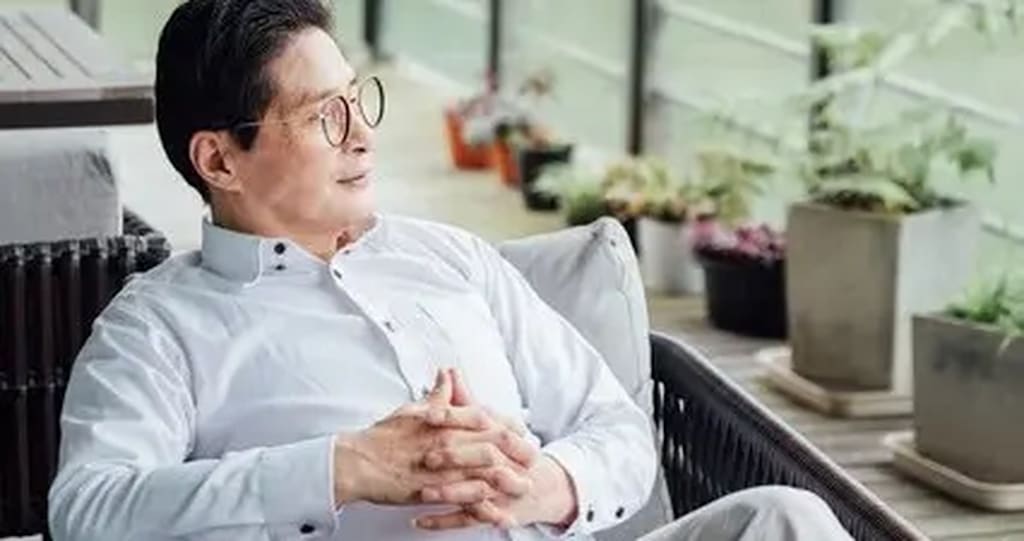
This time last year, I was standing in my apartment in Nanshan District, Shenzhen—an elevator building I’d called home for fifteen years—watching movers haul the last few cardboard boxes onto a truck.
My wife sat on the old living room sofa, the foam padding poking through the worn fabric, her eyes rimmed with red. I knew she couldn't bear to let go. The apartment wasn't huge—about ninety square meters—but it had witnessed every milestone, from our son’s high school days to his wedding. On the balcony, the bougainvillea she had tended for a decade was in full, riotous bloom.
"Are we really leaving?" she asked, looking up at me with a hint of lingering reluctance.
I didn't answer. To be honest, I was feeling pretty unsettled myself.
I had spent thirty-four years in Shenzhen. I’d arrived as a headstrong kid in my early twenties and ground my way into a nearly sixty-year-old man. I went from minding a stall in Huaqiangbei to running my own small electronics factory, and finally, to retirement. This city gave me everything—the house, the car, the bankroll, and the mianzi (social status). But it also took things from me—things I didn't truly realize were gone until the moment I left.
Our son works in Guiyang. He was promoted to department manager last year and has been busy beyond belief. My daughter-in-law is pregnant with their second child, due this March. My wife, worried that there would be no one to help with the grandson, kept nudging me to move. "You’re just idling in Shenzhen anyway," she’d say. "If you’re not on your phone, you’re watching TV. You might as well go to Guiyang and be useful."
I agreed out loud, but my heart was drumming with doubt.
Truthfully, my impression of Guizhou wasn't great. It’s not that the province is "bad," I just didn't know the first thing about it. In my mind, Guizhou was nothing but mountains, poverty, and isolation. Even though I’d heard people rave about its rapid development and seen Guiyang’s housing prices climb past 10,000 yuan per square meter, I still felt that moving from Shenzhen to Guizhou was a "step backward."
When my old buddies found out I was leaving, their reactions were identical.
"Old Chen, have you lost your mind?"
"What’s wrong with Shenzhen? The healthcare is top-tier, the transport is great, everything is convenient."
"Guizhou? It’s freezing in the winter and damp in the summer. You really think you can hack it?"
The more they talked, the more I wavered. But the word was out, the house was listed, and there was no turning back.
At the end of last March, we rented out our Shenzhen apartment, packed three large suitcases, and boarded the high-speed rail to Guiyang.
For the first two months, every day felt like a year.
First, there was the climate. In March, Shenzhen is already "short-sleeve weather," but in Guiyang, you still need a down jacket. It’s not the dry cold of the North; it’s a "piercing cold"—a damp, bone-chilling humidity. Every morning, the first thing I did was flip on the electric heater and huddle under the covers until the room warmed up.
Then, there was the food. In Shenzhen, you can find any cuisine, and I was used to my morning cheung fen (rice noodle rolls) and afternoon dim sum. Guiyang’s streets are lined with lamb noodle soup, beef noodles, and Sour Fish Soup. It’s not that it tastes bad, it’s just... unfamiliar. Especially that zheergen (fish mint). I took one bite and nearly gagged; it tasted like eating a raw, muddy fish.
The worst part, though, was the loneliness.
My son worked all day, and my daughter-in-law was resting at home with her belly growing. I was a grown man who couldn't cook, didn't know how to mind a baby, and couldn't even figure out the apartment complex’s intercom system. I’d spend my days sitting in the living room, staring blankly at the mountains outside.
In Shenzhen, my window looked out onto a forest of skyscrapers and a river of traffic. In Guiyang, the view is endless rolling hills, covered in trees so green they look black. It’s fine during the day, but at night, the silence is absolute. You can’t even hear a car horn. That kind of quiet made me anxious, like I’d been dropped into a vacuum.
I started questioning everything. Had I made a mistake? Should I have stayed in Shenzhen? Even if I were alone there, at least there would be a cheung fen shop downstairs, my old friends, and everything I knew.
The turning point came in May.
I was strolling through the complex when I saw an old gentleman crouching by a flower bed, loosening the soil with a small trowel. He looked up and asked in thick, local Guiyang dialect, "New here?"
I nodded.
"Where from?"
"Shenzhen."
His eyes lit up. "Oh ho! A big city man."
That’s how I met Old Zhou. A local who retired from the Power Bureau, two years my senior. He told me there were plenty of retirees like me in the neighborhood—people from Beijing and Shanghai who moved to be near their children.
"No one is used to it at first. Give it a few months," Old Zhou said, handing me a cigarette. "Things are slow here. You have to learn to adapt to the 'slow.'"
To me, "slow" used to mean "backward." But after living in Guizhou for a year, I finally understood that this "slow" was exactly what I had lost over the last thirty years.
In June, my granddaughter was born—six pounds, eight ounces, with a cry like a trumpet. My wife and I were run off our feet; my back ached constantly, but my heart was full.
Caring for a baby sounds simple, but it’s an exhausting art form. Changing diapers, feeding, soothing, bathing—it’s all technical. I was clumsy at first, terrified of even holding her for fear I’d drop her. Slowly, I learned the right temperature for the formula, the rhythm for burping her, and how to hum a tuneless "Little Swallow" when she cried.
One night, while my daughter-in-law was out for a postpartum treatment and my son was working late, it was just me and the little one. She lay in her crib, her dark eyes fixed on me, and suddenly, she smiled.
In that moment, something hit me hard.
When I lived in Shenzhen, I missed so many moments like that. When my son was small, I was obsessed with making money. I left before dawn and came home after dark; I didn't even know when he took his first steps or said his first words. As he grew, I was too busy with business banquets to attend his parent-teacher meetings. Later, when he went to university and moved to Guiyang, the words between us grew sparse.
I always thought that for a man, providing for the family was the ultimate responsibility. But that night, holding my granddaughter, I realized there are things money simply cannot buy.
In July, Old Zhou took me to a nongjiale (a rural farmhouse restaurant) in the Huaxi District. It was really just a family serving food in their own courtyard. Grapes and luffa vines climbed the trellises, and an old woman in her eighties was napping on a vintage bamboo lounger.
Old Zhou was a regular. He grabbed a couple of stools and made himself at home. The owner, a dark-skinned man in his forties with a bright, toothy grin, brought us a pot of Sour Fish Soup, a spicy dipping bowl, and a carafe of rice wine.
"Eat!" Old Zhou urged, plopping a large chunk of fish into my bowl.
I ate until I was stuffed. It was strange—I actually found the Sour Fish Soup delicious. The broth was sour and spicy, warming me to the core.
Old Zhou took a sip of rice wine and said leisurely, "Old Chen, do you know the biggest difference between you Shenzhen people and us Guizhou people?"
I shook my head.
"You chase 'fast,' we enjoy 'slow.' You think time is money; we think time is life. You can never finish making money, but you will definitely finish living your life."
I froze. It was a blunt way of putting it, but the logic was sound.
In Shenzhen, I walked like the wind, ate like I was in a battle, and even checked my phone on the toilet. I always felt that if I was one second slow, I’d be left behind. But now? I’m retired. I’m not making money anymore. What’s the rush?
By August, I started doing things I would never have dreamed of in Shenzhen.
I went fishing with Old Zhou by the river. We’d sit there all day, sometimes catching absolutely nothing, but I didn't feel a shred of frustration. The river breeze was cool, the water was clear enough to see the stones at the bottom, and occasionally an egret would glide overhead. I’d lie on the grass, watch the clouds drift from one peak to another, and drift off to sleep.
I started going to the wet market with my wife. Not a supermarket—a real, open-air market with damp floors and the constant roar of vendors. The vegetable lady has a voice so loud you can hear her three alleys away. The shoppers aren't in a hurry; they pick through the greens, haggle, and spend ten minutes debating over a few cents.
I even learned to cook a few Guizhou dishes. My specialty is Spicy Chicken (Lazi Ji). It’s not as good as the restaurants, but my wife and son say it tastes like home. I’ve started to understand why Guizhou people take meals so seriously—it’s not just about filling your stomach; it’s about the time a family spends together.
In Shenzhen, we rarely ate together. I was busy, my son was busy, even my wife was busy. Even if we did sit down, we’d be on our phones. The table was as quiet as a boardroom.
Now, it’s different. Every evening, my son comes home on time. We gather around a solid wood table we bought at a second-hand market and talk about the day. Sometimes the granddaughter babbles along, making us all burst into laughter.
I never imagined this kind of life. I didn't dare to.
In October, my old buddies from Shenzhen called. They wanted to visit.
Four of them drove ten hours to Guiyang. I took them for Sour Fish Soup, went to the ancient town of Qingyan, and climbed Qianling Mountain to see the monkeys.
They were stunned. "Old Chen, you’ve changed."
"How?"
"You used to talk so fast, so sharp. Now you’ve slowed down. Also... you’ve put on weight."
I had indeed gained nearly ten pounds. It wasn't just the food; it was the sleep. In Shenzhen, I suffered from chronic insomnia and needed two sedatives a night to crash. In Guizhou, whether it’s the air or the state of mind, I’m drowsy by ten, sleep until dawn, and don't even dream.
One friend pulled me aside and said, "I can see you’re doing well here. Your qise (complexion/vitality) is much better than it was in Shenzhen."
I just smiled.
I knew it wasn't just my complexion. I finally felt like a living human being.
In Shenzhen, I lived to make money, and made money to stay alive—a total closed loop. In Guizhou, I discovered that living can take many forms. You can fish, plant flowers, climb mountains, or play chess with a neighbor. You can spend an afternoon slowly simmering a pot of soup, sit on the balcony for an hour watching the sunset, or walk hand-in-hand with your wife by the river.
These things don't cost money, and they don't make money, but they make you feel like today was worth it.
This March marks exactly one year since I moved to Guizhou.
The other evening, I was holding my granddaughter on the balcony, looking at the distant mountains. The setting sun painted the peaks gold, the air smelled of soil and blossoms, and the sounds of children playing drifted up from below.
She fell asleep in my arms, her little mouth slightly open, her breathing steady.
I suddenly remembered how much I had agonized over this move a year ago. I was afraid of change, afraid of the unknown, afraid of losing everything I had built in Shenzhen.
But now I know. I haven't lost anything. I’ve just changed the way I live.
As Old Zhou says: "You Shenzhen people live like wound-up clocks. We Guizhou people live like trees on the mountain. The clock keeps perfect time, but the tree lives longer."
I wake up at 6:00 AM now and take a walk to breathe the fresh air. Then I come home and make breakfast. My wife says my cheung fen is better than the stuff in Shenzhen—though I know she’s just humoring me. In the morning, I either fish with Old Zhou or stay home with the baby. I take a nap in the afternoon, read a bit, or listen to some opera. After dinner, the whole family takes a stroll through the complex.
The days are slow, but they feel grounded.
I still think of Shenzhen occasionally. I remember the throngs of people in Huaqiangbei, the neon lights of Shennan Avenue, and the business dinners where I drank until I was sick just to land an order. Those memories are like old, yellowed photographs—faded, but still clear.
I don't regret those years in Shenzhen. Without that struggle, I wouldn't have the choices I have today. But I am even more grateful that I chose to leave while I still had time.
Leaving isn't an escape; it’s finally seeing what you truly need.
A while ago, my son asked, "Dad, do you want to go back to Shenzhen to stay for a bit?"
I thought about it and said, "No. I’ll go back once in a while to see old friends. But this... this is home now."
When I said that, I felt a profound peace. It wasn't about giving up; it was about "owning it"—owning what I really wanted for myself.
Guizhou isn't paradise. It has its issues—the cold winters, the damp summers, the mosquitoes, and healthcare that doesn't quite match Shenzhen’s. But it has something Shenzhen could never give me:
That feeling of not being in a rush, of not needing to compete, of simply, peacefully, living out the days.
In Shenzhen, I became a "success" in the eyes of others. In Guizhou, I finally became myself.
This year has taught me that moving from Shenzhen to Guizhou wasn't just a change of address; it was a change of soul. This way of life doesn't require a fortune, a mansion, or the envy of others. It only requires a heart that is willing to slow down.
The bougainvillea on my balcony is blooming. It grew from a cutting I took from the plant in Shenzhen. In the Guizhou sun and rain, it’s blooming even better than it did back there.
I suppose people are the same way.
About the Creator
Water&Well&Page
I think to write, I write to think
Keep reading
More stories from Water&Well&Page and writers in Humans and other communities.
Worth It: Finding Home in a Second Marriage
My name is Zhao Dezhu, and I’m 31 years old. I say 31, but I actually just got married around this time last year. In my village, if you aren't married by this age, you’re already considered an "old bachelor"—a leftover.
By Water&Well&Pageabout 24 hours ago in Humans


Comments
There are no comments for this story
Be the first to respond and start the conversation.