
Behind the Iron Bars: Huddling for Warmth
Stop Guessing: How Men Handle Their Desires Behind Bars—An Insider Finally Tears Down the Paper Screen

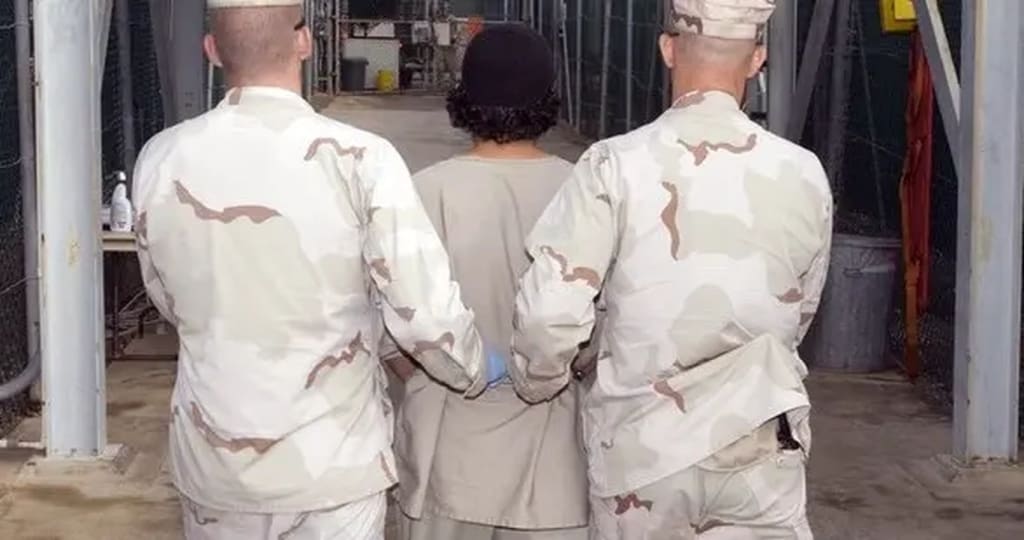
My name is Lao Zhou. I spent eight long years in a prison in Northern China. It wasn’t for some heinous crime—just a moment of youthful impulse. I’ve paid my debt to society, every last cent of it. Since my release, people always corner me with the same question: "Lao Zhou, those years inside... how did you handle that? You know, your needs?"
They stammer, eyes darting away as if the very question is taboo. I know everyone is curious. The internet is full of noise about it—some make it sound like some dark mystery, others make it sound revolting. Very few people speaking actually know the reality of life behind those walls.
Today, I’m going to lay it all out. Not for any grand reason, but just so people stop guessing. I’m tearing down the paper screen.
When I first went in, I was twenty-five—prime years, full of fire. To say I didn’t think about it would be a lie. The first three months were the hardest. I’d toss and turn at night, my mind playing movies on a loop, images flashing vividly. It felt like a ball of fire trapped in my chest, burning with a restlessness that could drive a man mad.
But what is a prison? It’s four high walls, iron gates, barred windows, and 24-hour surveillance. Someone is watching even when you use the latrine. Where can your mind go? Where can you go?
The first time I heard movement from a cellmate in the middle of the night, I thought a fight had broken out. Later, I realized someone was just "taking care of business" under the covers. Inside, we call this da shouchong (hand-cranking) or pao ma (the running horse). It’s the most common, safest way. No one mocks it; it’s an unspoken understanding. We’re all men here—no use pretending.
But that’s far from enough.
Humans aren't livestock. You don’t just satisfy a physical urge and call it a day. The most agonizing part of prison isn't the physical deprivation; it’s the hollow ache in the soul.
It’s the kind of emptiness where you work all day until your back won't straighten, yet you lie down at night unable to sleep. You stare at a crack in the ceiling and trace every memory from your childhood to the present, picturing the face of every family member. It’s the feeling of being in a room full of people yet being more alone than ever. It’s hearing the New Year’s fireworks outside and remembering old times drinking and boasting with your brothers, until tears you can't control start to fall.
In those moments, a person desperate to grasp onto something.
In eight years, I saw all kinds of people and all sorts of strange "partnerships." Some found cellmates to help each other out; some passed notes through the bars to the next cell over; others tried to get on the good side of a guard just to pass a message or an object. There are a thousand "tricks of the trade," but it all boils down to one thing: life is too bitter, and people need a little bit of human warmth.
I knew a man, let’s call him Old Chen. He was a dozen years older than me, serving a life sentence. His wife divorced him, and his kids disowned him. He’d been in for ten years, and not a single soul had come to visit. During the holidays, when others had family visits—even if it was just a few minutes talking through glass—they had something to look forward to. Old Chen had nothing. He’d just sit in the corner, flipping through tattered magazines over and over again.
Later, Old Chen got "close" with a young lad who had just arrived. It wasn't some grand romance; Old Chen just took care of him—saved him a bit of hot food, taught him how to handle inspections, and patted his back when the kid had nightmares. The kid was terrified and knew nothing; Old Chen protected him like a big brother.
Was it love? Certainly not. Was it just lust? Not entirely.
I’ve thought about it a lot, and I think it was more like "huddling for warmth" (baotuan qunuan). Two people discarded by the world, leaning against each other inside cold iron bars just to block the wind.
This kind of thing isn't rare in prison, but nobody talks about it. The guards usually turn a blind eye—as long as things don't get out of hand or cause trouble, they act like they don't see. After all, you can lock up a body, but you can’t lock up a heart. A prisoner still has the same "Seven Emotions and Six Desires" as anyone else. If you try to suppress them completely, you'll drive them insane, and then you’re the one who has to deal with the fallout.
There’s another way to cope that many might find hard to believe: talking.
Yes, just talking. After being inside for a while, you realize that conversation is more effective than anything else.
After work and dinner, during the "airing out" time, a group of us would squat in the corner, soaking up what little sun we could get, and just talk. We talked about life outside, about women, about home, about what we’d do when we got out. Some bragged, some stayed silent, some listened until they cried.
I remember once, a kid in his early twenties who was in for robbery. He was squatting on the ground, drawing circles with a twig, when he suddenly blurted out: "I’ve never even been in love."
The five or six grown men around him went dead silent. After a long while, a guy in his forties spoke up: "When you get out, turn your life around. I’ll introduce you to someone."
The kid didn't say a word. He kept his head down, his shoulders shaking.
In that moment, I realized the thing most lacking in prison isn't women or sex—it’s hope. It’s the belief that "I can still live a normal life." Without that, a man is just a walking corpse. With it, no matter how bitter or hard it gets, you can grit your teeth and endure.
My biggest takeaway from those eight years is that human needs have levels. The bottom layer—eating, drinking, sleeping, sex—does need to be addressed. But the things that truly kill you are the layers above: the need to be needed, to be understood, to be seen.
Why do some people go back in right after they get out? "Recidivists" are everywhere. People outside can't wrap their heads around it: prison conditions are so bad, why would they want to go back?
I’ll tell you why. For some, prison is actually the "warmest" place they’ve ever known. Inside, someone talks to them. Someone eats from the same bowl. Someone hears them snore or talk in their sleep at night. They might be murderers, robbers, or thieves, but they are people—living, breathing, warm-blooded kin.
Compared to a cold world outside where no one notices or cares about them, the meager "human touch" (renqing wei) in prison becomes an addiction they can’t quit.
It’s a cruel thing to say, but it’s the truth.
Back to the physical needs—prison is actually quite strict. If you’re caught, there are punishments: points deducted, solitary confinement, or lost chances for a sentence reduction. So most people are stealthy, like thieves. In some strictly managed cells, you even have to report just to use the bathroom at night. In those cases, you can forget about it; you just have to hold it in.
What happens when you hold it in too long? People become volatile and irritable. I once saw a man who’d been suppressed for three months flip a heavy bench onto someone's head just because they accidentally stepped on his foot. Luckily, they were pulled apart before anything fatal happened.
Later, the instructor talked to him. He squatted on the floor with his head in his hands, sobbing: "I couldn't help it. My whole body felt wrong. I didn't know how else to let it out."
The instructor was an old guard in his forties. He sighed, handed him a cigarette, and said: "I know it’s hard. But you have to learn to redirect your attention. Go work, go run, go read, go write. Put your energy there. It’s better than anything else."
It sounds like a cliché, but it actually works. I eventually picked up a running habit inside. I’d run dozens of laps around the exercise yard every day until I was drenched in sweat and my mind was blank. Then I’d go back and crash. During those times, I felt my life was "clean" and grounded.
Others chose to write—letters, diaries, poems. In my cell, there was a man who hadn't even finished primary school. After he came in, he started learning to write, stroke by stroke, to send letters to his daughter. Over three years, he wrote a thick stack of them. He told me, "Lao Zhou, I’ve put everything I wanted to say into these. It’s as good as talking to her."
I asked him if he thought about those things. He paused and said, "I do. But as soon as I think of my daughter, those thoughts feel dirty."
I went silent. That hit me right in the chest.
At the end of the day, physical needs in prison are no different than those outside. We are all humans with the same desires. But in the outside world, you can pursue love, marriage, and fulfillment openly. Inside, all of that is stripped away. You are forced to face it in your own way—clumsily, cautiously, even pathetically.
Some rely on their hands, some on other people, some on sheer endurance, some on willpower. But whatever the method, the core is always the same: loneliness.
That kind of loneliness is something those who haven't been "inside" will never truly grasp.
It’s not just a word. It’s not just "being alone." It’s waking up at 3:00 AM, hearing the rise and fall of snores around you, not even daring to turn over too loudly for fear of waking someone. It’s staring at the moon through that tiny iron-barred window and remembering your mother’s braised pork, or the way your ex-girlfriend used to laugh, or the dog you used to have. You want to cry, but you can’t, because you’re a man and you can’t lose face here.
So you close your eyes, grit your teeth, and tell yourself: Get through it. Get through today, and tomorrow there will be one less day left.
You endure day by day, year by year. Eventually, you realize those so-called physical needs are the least important thing. What matters more is whether you can hold on until the day you walk out—and whether you’ll still be a human being when you do.
I’m out now, starting my life over. Sometimes I still can't sleep at night, and I think of those days. I think of Old Chen, that young kid, and the father writing to his daughter.
I don't know how they are now. Old Chen is likely still inside; his life sentence was commuted, but he still has years to go. The kid should be out by now; I wonder if he’s found a girlfriend. And the father—I heard his daughter finally wrote back once. He held that letter and cried for the whole afternoon.
That is the story of prison. It’s not juicy gossip or a freak show. It’s just a group of people who made mistakes, trying to find a way to survive in a place without freedom.
Their ways might not be dignified, and they might not be understood, but that is their reality.
Don't guess anymore. There's nothing to guess.
The paper screen is torn. Behind it, you’ll find this: bitterness, loneliness, and a tiny, flickering spark of humanity that refuses to go out.
About the Creator
Water&Well&Page
I think to write, I write to think
Keep reading
More stories from Water&Well&Page and writers in Humans and other communities.
Thirty, Five Men, and the Art of Not Settling
My name is Chen Xiaohe, and I just turned thirty. You might not believe it, but in the six years between twenty-four and thirty, I lived with five different men. These weren’t messy flings; they were "proper" relationships—dating, moving in, breaking up—repeated five times over.
By Water&Well&Pageabout 24 hours ago in Humans
A Second Chance.
When Olabisi Adekunle left her home for a short weekend trip, she had no idea her life was about to fracture into a “before” and “after.” A woman in her mid‑thirties with a steady job, a quick laugh, and a reputation among friends for always choosing the safest route, she had lived cautiously. But caution was no match for the masked men who intercepted her vehicle on a lonely stretch of the Kaduna–Birnin Gwari road.
By Oluremi Adeoye 5 days ago in Humans
The Irony of Flying While We Bomb the "World's Greatest Terror Regime"
Ah, the irony of flying at this moment in time as the United States is simultaneously bombing Iran - the nation officials have insisted for decades is "The World's Greatest Terror Regime" - while the TSA is on a go-slow, courtesy of a funding squeeze that's left its officers unpaid, quitting in droves, and turning checkpoints into something like slow-moving bread lines.
By Scott Christenson🌴7 days ago in Humor



Comments
There are no comments for this story
Be the first to respond and start the conversation.