
The Face of Another by Kōbō Abe
Why It's a Masterpiece (Week 108)

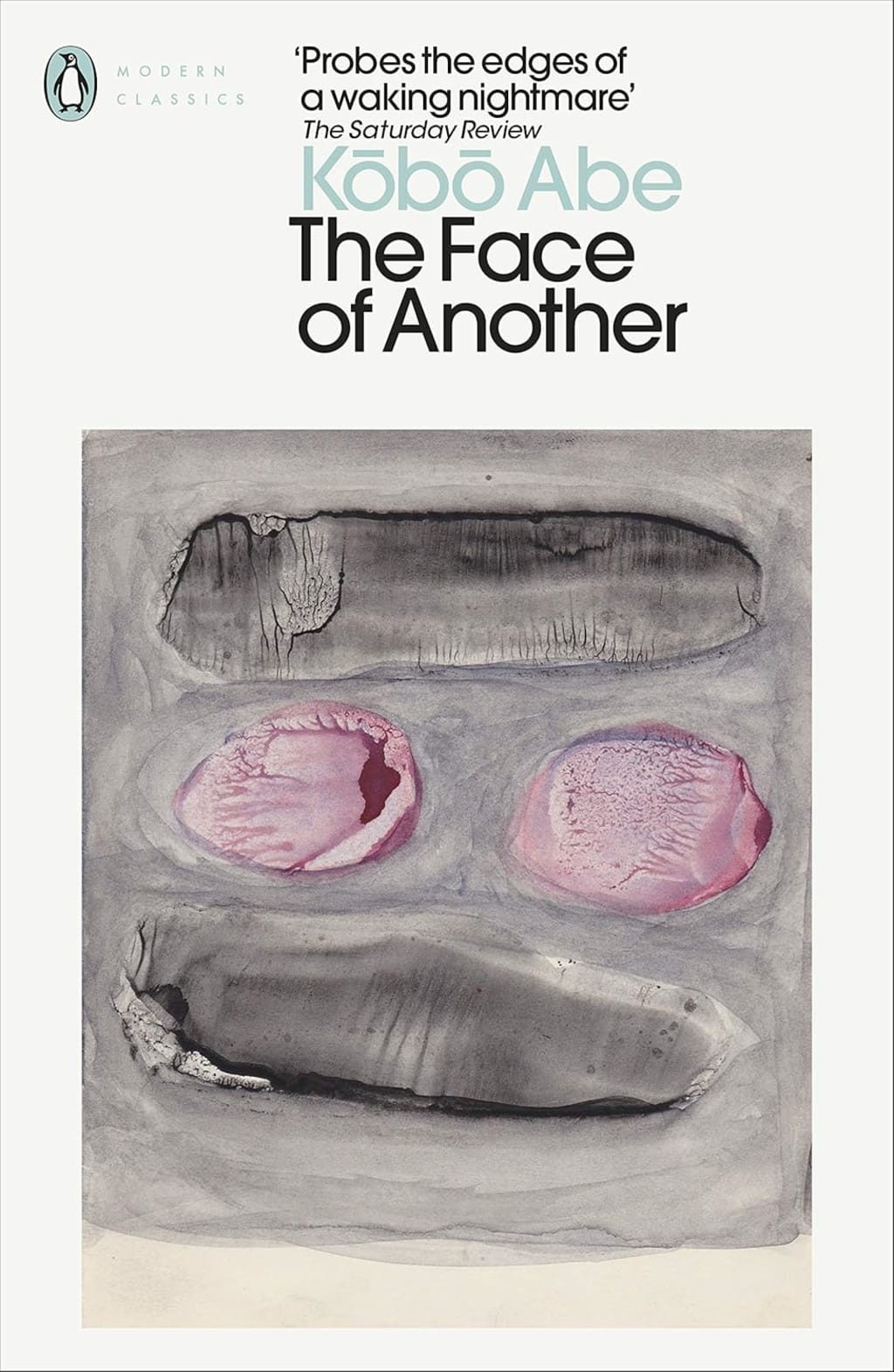
The Face of Another was first published in 1964 and hearkens back to the themes and ideas once presented by Franz Kafka, especially when it comes to the book's theories of identity and the self. Samuel Beckett is another writer the author is often compared to since the novel blends absurdity and existentialism with these strange and sideways explorations of human nature and how we become slowly alienated from our true purpose.
Written during the post-war period, it reflects the facelessness Japan was facing since everything was industrialised and modernised on a scale the country had not seen before. The progress of course brought a lot of jobs and happinesses, but it also produced a massively impersonal society - something like what the Western world has today (and you can argue that Japan still has it). The author enriches this with deep themes and symbols regarding the corresponding philosophies.
Plot
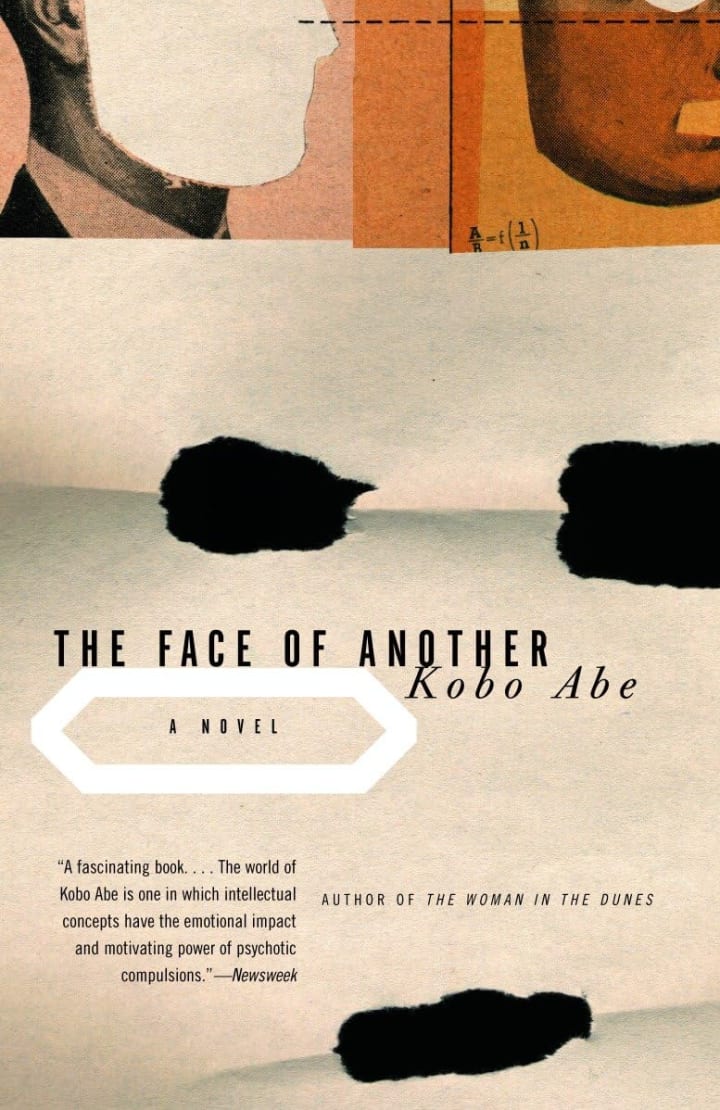
The novel is narrated by an unnamed scientist who suffers a severe facial disfigurement after an industrial accident. His face, now covered in horrific burns and scars, renders him a social outcast. People recoil at his appearance, and he becomes increasingly alienated from society and even from his wife, whose affection for him seems to wane as his disfigurement defines their relationship.
Determined to regain a sense of normalcy, he develops a meticulously designed mask: a perfect, lifelike artificial face that he hopes will allow him to reintegrate into the world. However, as he dons the mask, he finds himself slipping into a new persona, one unburdened by his past identity. The mask gives him confidence and anonymity, freeing him from the constraints of his former self.
The scientist begins to experiment with his newfound identity, eventually using the mask to seduce his own wife without revealing who he truly is. This act is both a test of her loyalty and an assertion of his control over his lost identity. However, as he becomes increasingly consumed by his dual existence, he spirals into paranoia and moral decay. The novel culminates in a chilling realisation: by creating a new face, he may have lost his original self entirely. It is horrific as it is predictable - which ironically makes it even more frightening.
Into the Book
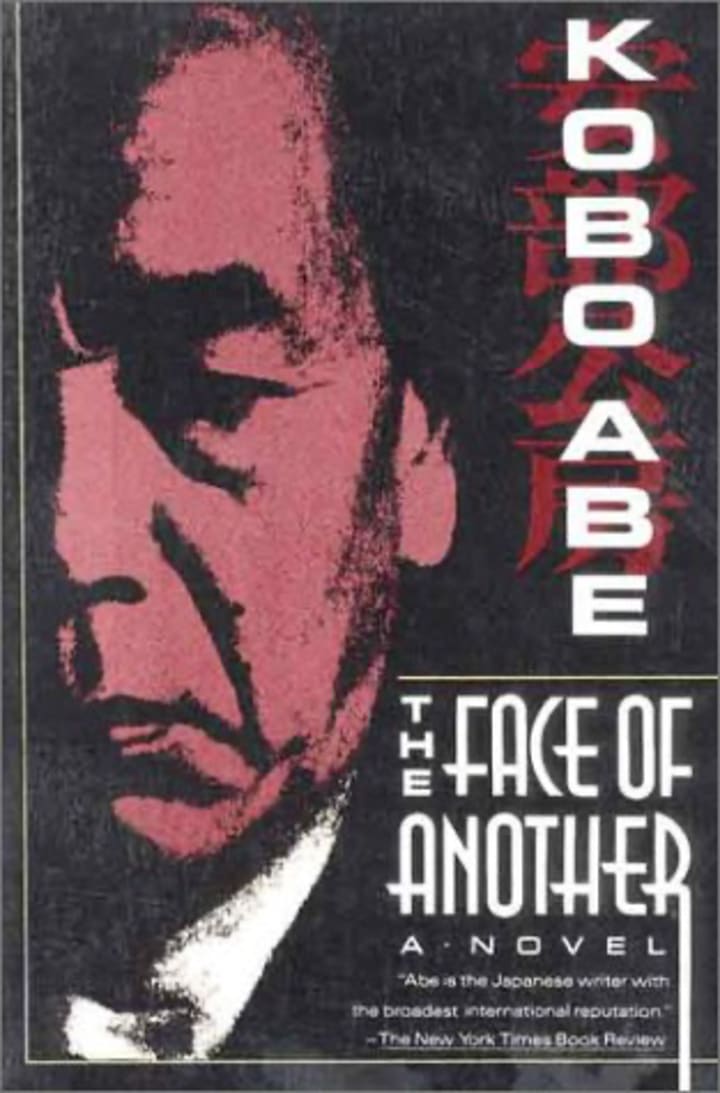
Identity is Not Fixed:
The Face of Another explores the idea that identity is not fixed but malleable, shaped by both internal perception and external recognition. The protagonist initially believes that his disfigurement has erased his identity, reducing him to a grotesque object of pity and revulsion. However, once he constructs a mask (a seemingly perfect face) he realises that identity is something that can be created, manipulated, and even entirely reinvented.
Throughout the novel, the narrator struggles with the question: is identity something intrinsic, or is it merely a reflection of how others see us? His physical disfigurement causes him to experience an existential crisis, as he finds himself not only rejected by society but also disconnected from his own sense of self.
The mask provides him with a way to navigate the world once again, but it also introduces a disturbing realisation, by adopting a new face, he is also adopting a new personality. This echoes the idea that identity is, at least in part, performative. If we change the way we appear, do we not also change the way we behave?
However, the novel also suggests that the more one tries to manipulate identity, the more unstable it becomes. The narrator’s increasing paranoia stems from the fear that the mask is not simply a disguise, but a rival self, one that may eventually replace him. By the end, he is left wondering whether he has lost himself entirely
"If my face is merely a surface for others to see, then what am I beneath it?"
- The Face of Another by Kōbō Abe
Isolation:
Abe paints a bleak portrait of isolation, particularly in the modern, industrialised world. From the moment his face is disfigured, the protagonist experiences a profound form of social exile: people recoil at his appearance, conversations become awkward, and he is no longer treated as an equal. He realises that so much of human interaction depends on physical appearance, and without a "normal" face, he is essentially invisible.
His disfigurement creates a barrier between himself and his wife, who, despite her efforts to remain loyal, grows increasingly distant. This physical and emotional isolation pushes him towards an extreme solution just so he can feel like a participant in the world again.
Yet, the novel suggests that even with a new face, true connection remains elusive. While the mask allows him to re-enter society, it also makes his interactions feel artificial. His attempt to seduce his own wife while wearing the mask is a desperate test: does she love him (the person beneath the skin) or does she love the idea of a face, an illusion of normalcy?
The answer is unsettling, as he finds that relationships are deeply tied to external appearances, exacerbating his alienation.
"I was no longer a man, but an object that inspired pity and disgust."
- The Face of Another by Kōbō Abe
Ethical and Philosophical Questions:
The novel raises profound ethical questions about deception, manipulation, and the psychological power of masks. The protagonist’s experiment is not just about reconstructing his identity, it is also an experiment in power. By wearing the mask, he gains the ability to move through society unnoticed, to test the reactions of others, and, ultimately, to deceive those closest to him.
His seduction of his wife under the guise of another man is the most striking example of this. It is not merely an act of deception but of control. He wishes to see whether she can love him again, but he goes about it in a deeply unethical way, turning their relationship into a cruel psychological experiment. He justifies his actions with cold logic.
But his logic is flawed. The novel suggests that love, attraction, and trust are all inextricably linked to identity and perception. The mask does not simply deceive others, it deceives the wearer as well. As he becomes increasingly absorbed in his masked persona, he loses sight of the moral implications of his actions.
"If love is more than skin deep, she should recognise me beneath any face."
- The Face of Another by Kōbō Abe
Why It's a Masterpiece
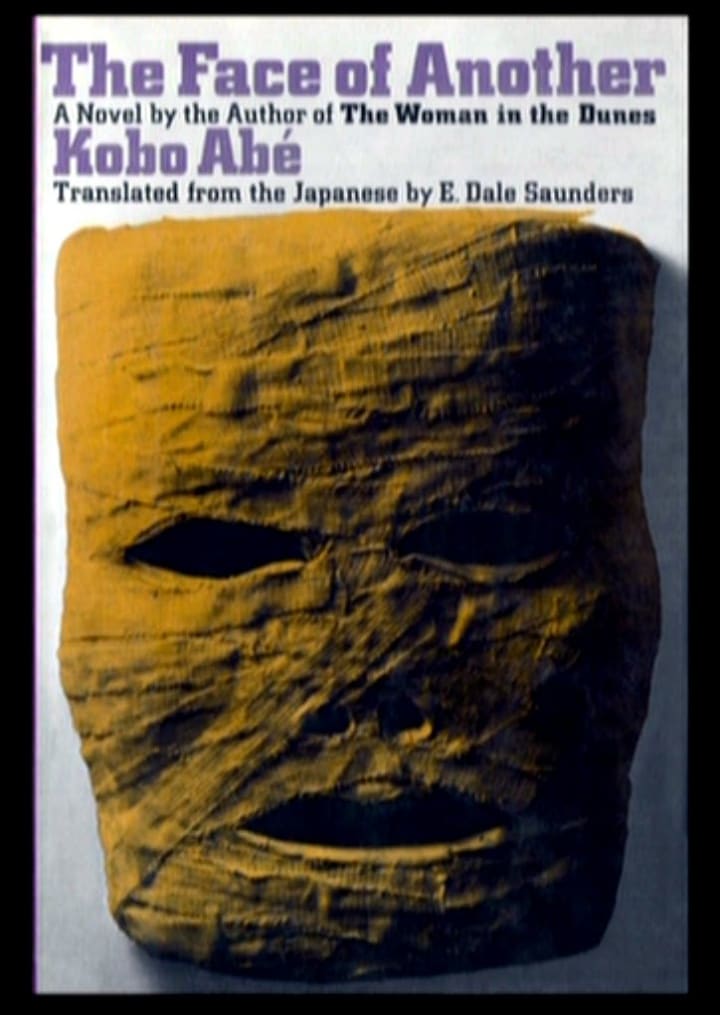
What makes The Face of Another so compelling is its ability to make the reader question their own sense of self. If we were to wear a mask, free from the constraints of our past, would we remain the same person? Or would we become something else entirely? Abe suggests that identity is a fragile illusion, one that can be easily altered or even destroyed.
His prose is cold. His philosophies are cynical. His detached language definitely heightens the way the reader responds to the book with existential terror. It paints a deeply disturbing portrait of loneliness and paranoia and how this makes us more self-centred and less moral. As we begin to see the morphing of faces in Hollywood and online, as we see the digital horrors of deepfakes and artificial intelligence, I fear we have surpassed this novel - not heeding its warning and falling into the deep pit of despair from which we will never recover.
Conclusion
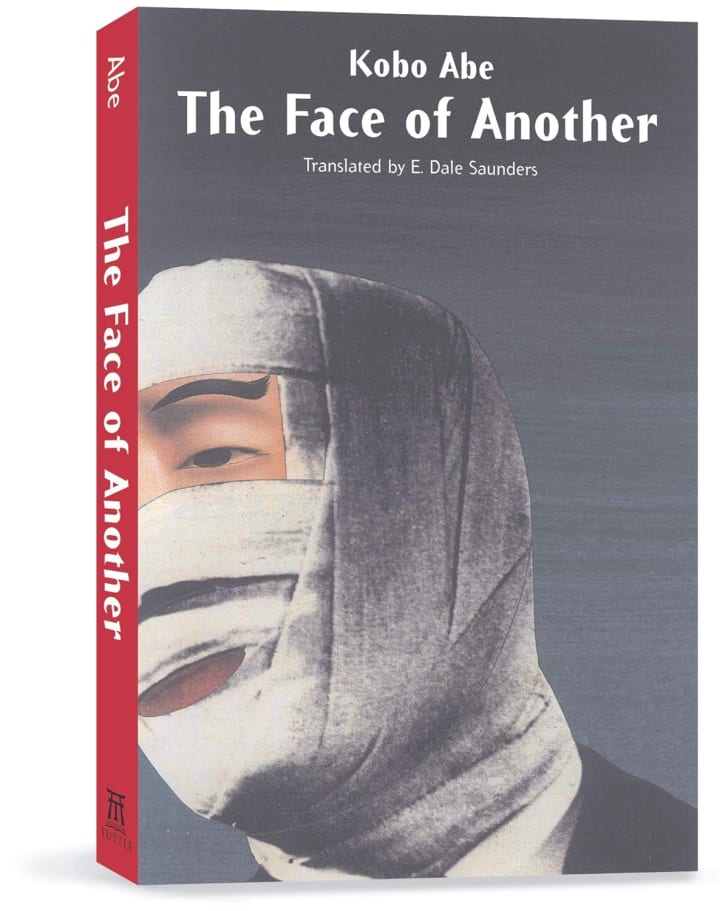
Speculative fiction may not be the most popular genre but if you haven't read this book then I would recommend it. The Face of Another is more important than ever and looks chiefly at the ethical consequences of deception and how, with the changes we make, we lose ourselves. The uncomfortable truth is that nobody will feel these emotions but you and on the whole, nobody else will care. External perception shapes us yes, but falling into the hole of changing yourself to suit it in ways that are unnatural is definitely an issue that will make you no longer recognise yourself. This non-recognition, these philosophical questions and existential terrors will be only known to you since, as in the novel, there is very little attention paid to people who do not stand out in society.
Next Week: Northanger Abbey by Jane Austen
About the Creator
Annie Kapur
I am:
🙋🏽♀️ Annie
📚 Avid Reader
📝 Reviewer and Commentator
🎓 Post-Grad Millennial (M.A)
***
I have:
📖 300K+ reads on Vocal
🫶🏼 Love for reading & research
🦋/X @AnnieWithBooks
***
🏡 UK
Keep reading
More stories from Annie Kapur and writers in Geeks and other communities.
Book Review: "Parade's End" by Ford Madox Ford (Pt. 4)
Rating: 5/5 - what a fitting end to such a heartfelt novel of war! *** This volume is set on a single June day in the years after the First World War. While the earlier volumes charted the approach to and experience of war, this instalment turns to its aftermath. Here is Ford commenting on a society stripped of its old certainties and confronting the psychological and moral wreckage left behind. It feels more like the ideas presented by an Evelyn Waugh novel. Is it really time to let go of the past? Yes, yes it is.
By Annie Kapur4 days ago in Geeks
History of The Three Stooges (Part I: The Beginnings and Columbia Pictures - 1920s-1936)
I have been itching to write about The Three Stooges on Vocal for close to two years, but I couldn't figure out how to do it. I wanted to do it by third Stooge, but that's a bit complicated. I know this much. I was about eight or nine years old when I first saw The Three Stooges. I remember one of my local channels had the Stooges on for hours, and I tried my damnedest to be up for those shorts. I remember that the Family Channel actually had an hour of the Stooges on from 11PM to midnight, and it was the entire library on during that time.
By Clyde E. Dawkins13 days ago in Geeks
Beyond Gear 5: Why Elbaf is the "Haki and Tech" Renaissance for the Straw Hats
The "Mid-Tier" No More The Egghead Island incident was a masterclass in chaos, but it left fans asking one question: Can the rest of the Straw Hats actually survive a final war against the Gorosei and the Holy Knights?
By Abhijeet Singhabout 5 hours ago in Geeks



Comments (1)
It was very odd to read Mr. Abe's work in Japan (The Woman in the Dunes; The Box)...and then it made a great deal of sense when I considered my place in that culture. I have not read this one, but he is a presence I admire and respect more and more as I look at how we interpret each other and live in this very disconnected world. Thank you, Ms. Kapur.