
How Did People Borrow Money Before FICO, And Why FICO
Understanding finances is interesting, and if you didn't know, the current ways aren't that old.


There was a point when learning financial literacy should have been mandatory, so that a person could progress in life with all the tools they needed. It’s not that hard to learn about finances. No, not the beginning of finances, the beginning of what we know today. There’s no reason to waste time understanding the dawn of time, and trading food to get horse, or gold to get threads.
Everybody understands the goods-for-services model of making money. You do a task, or render a service, and you get goods. In this case, that’s money. Money is what you’ll pay for your rent or mortgage, grocery bill, fuel bill, medical expenses, and use to buy things you need. And, if you have enough of it, you might have some fun.
People can borrow money they don’t have if they have a good enough credit score. It used to be simpler than that, before the credit score. When was that? Most of you reading this were young when the credit scores first became a common practice, or your parents were young. Some of you might remember the change.
Before Credit Scores
Before your credit scores of today, getting someone to loan you money was very different. Banks looked at such novel things as your reputation, your payment history, your character, and would generally check you out. There was more of a face-to-face requirement before credit scores, and you could sit down and convince the bank you were trustworthy and would likely pay them back.
But, like many of the old ways, people found the process to be tedious and filled with problems. The decision depended on things like who you knew, your social status, and yes, race and gender were taken into account. It made the system of financing things unfair for many people.
Looking back, the first time I tried to get a loan was for a financial opportunity. Granted, I was young at the time. However, I’d stumbled into a mint condition Trans Am. It was the Smokey and the Bandit model. In my mind, and after looking at what collectors were paying for that car, had I gotten the 2700 dollar loan, I was going to sell the Trans Am off for double that within just a couple of months.
But at 17, who wants to hear a good idea from us?
Why Was The Credit Score Created
When credit scores first came to be, they were meant to solve problems in the lending world. Some of those were:
Getting Rid of Personal Bias: It was meant to stop the old ways of checking your worthiness, based on personal relationships, social class, race, and gender. Scoring systems were made to induce a more fair and standard system of checks.
Expediency: Things took time when they were done by hand, and it cost a fortune in manpower hours. Automatic score systems allowed banks and financial institutions to process applications much quicker and for fractions of what it once cost.
Extending Credit to More People: With standard rules, more people could theoretically get loans, even those who might have been denied before.
Better Risk Management: The credit score was believed a better tool to guess if someone might not pay back their loan, leading to smarter lending choices and decreasing losses each year.
FICO Scores
It was less than forty years ago, and the FICO Score was born. The first score was put out in 1989.
Most people know that the score ranges from 300 to 850. The higher the number, the better your ability to pay back loans. This is the industry standard used today.
Why’s it called the FICO Score?
The company that created the FICO Score, that thing that tells you if you can buy the home of your dreams, or that new car, is the Fair Isaac Corporation. The score is named after the company that created it. It was first created in the 50s, and has a current stock valuation of 127.00, trending downward like a lot of stocks are in this volatile climate.
Takeaways
It wasn’t always as easy as it is today. There was a time when it would take a person several days from applying for a loan to getting an answer. The instant availability of credit took more than just filling out some paperwork.
People would go out and do legwork. There would be references, almost like when you looked for that first job. There would be a lot of questions about your character, a look at how you chose to live (home visit, or drive by), and banks would put work into deciding if you were a good risk.
Today’s version is much more simplified and faster, allowing people to apply and find out in a short amount of time, sometimes within hours, sometimes within minutes if you’re applying for a credit card or a small revolving credit line. This version’s only been the standard for less than 40 years. So, it’s still relatively new in the history of credit, since credit has been being reported since the early 1800s, and the history of borrowing has been there a long time.
About the Creator
The Man Behind The Mask
From fiction to reality there’s tons to share about this crazy life. From being a single father, an officer, and having had many insane adventures while I learned about the world, my imagination runs wild with ideas.
Keep reading
More stories from The Man Behind The Mask and writers in FYI and other communities.
How To Gain Some Unique Perspective About What You See
Why is it time to put on your thinking caps? Is it really that hard to put it on and figure things out? If you spend any time paying attention to the world, and you pay any attention to the social media buzz, for many this is still hard to figure out. Most of them, probably aren't in school anymore, and are living life on autopilot. Maybe it's time to put your thinking caps back on, and examine the way the world looks from a broader perspective.
By The Man Behind The Maskabout 9 hours ago in FYI
Why the United States Remote Patient Monitoring Market Is Expanding Beyond Traditional Care
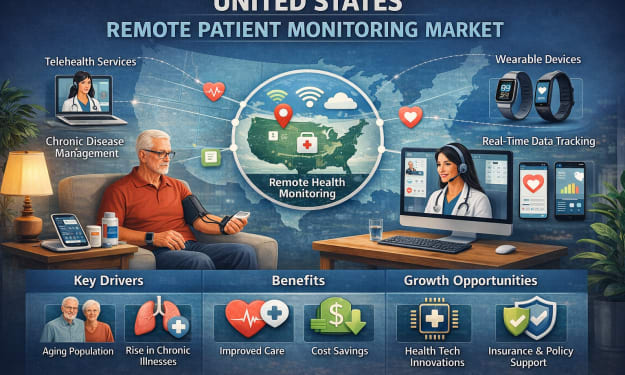
In many ways‚ the U․S․ healthcare system is moving slowly in the right direction‚ with more care coming outside of hospitals and clinics․ Remote patient monitoring is one of the clearest examples of the trend․ In addition to office visits‚ remote patient monitoring of vital signs (blood pressure‚ oxygenation‚ heart rate‚ weight‚ electrocardiogram‚ etc․) can be done by healthcare providers‚ allowing for care that is more continuous‚ more proactive‚ and more convenient for patients and providers in many cases․
By michael matthewa day ago in FYI
Why Custom Software Development Solutions Matter More Than Ever
There was a time when most businesses relied on standard tools to manage their daily operations. These tools were easy to access and quick to implement, but they often came with limitations. As businesses grew and their needs became more specific, these limitations started to show.
By sakshi gehlot7 days ago in FYI



Comments
There are no comments for this story
Be the first to respond and start the conversation.