
Smart Card Market Trends: Contactless Payments, Security Innovations & Forecast to 2033
Rising adoption of contactless payments, increasing demand for secure authentication, and government-backed digital ID programs are driving growth in the global Smart Card Market.

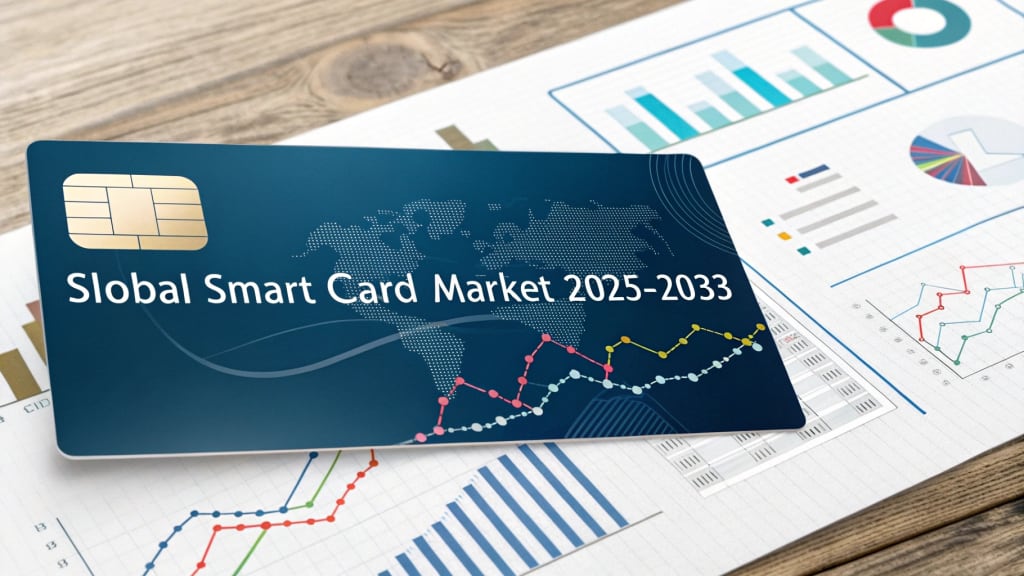
Growing demand for secure digital transactions, government-led identification programs, and the rapid shift toward contactless payments are collectively pushing the smart card industry into a new phase of expansion. According to IMARC Group's latest data, the global smart card market size reached USD 10.2 Billion in 2024. Looking forward, IMARC Group estimates the market to reach USD 14.0 Billion by 2033, exhibiting a CAGR of 3.6% during 2025-2033. Asia Pacific currently dominates the market, driven by growing population, rapid urbanization, and economic development.
Smart cards are no longer just plastic payment tools. Today they serve as the backbone of identity verification, access control, public transport, healthcare records, and SIM-based telecom authentication. From India's Aadhaar biometric ID program — one of the largest smart card initiatives ever executed — to EMV chip adoption replacing magnetic stripe cards across banking networks globally, the technology is deeply embedded in everyday infrastructure. The surge in e-commerce, digital banking, and government e-services is adding further layers of sustained demand, making this a market with both breadth and durability.
Get a Sample Report for Actionable Market Insights
Smart Card Market Growth Drivers:
• Rising Demand for Secure and Contactless Payment Systems
Payment fraud and cyberattacks are forcing banks and retailers to retire magnetic stripe technology in favour of EMV chip-based smart cards, which use encryption and dynamic authentication to make card cloning far harder. The push accelerated sharply post-pandemic, as consumers actively sought touch-free payment methods. Today, contactless transactions represent a dominant share of in-store payments across Europe and Asia Pacific, and this momentum is spreading into emerging markets. Every new EMV card issuance, every transit tap-to-ride deployment, and every contactless POS terminal installation represents fresh demand for smart card solutions.
• Government-Mandated Identity and e-Passport Programs
Governments across the world are mandating smart card-embedded national IDs, e-passports, driver's licenses, and social welfare cards. India's Aadhaar scheme, which links biometric data to a smart card-based digital identity, covers over a billion citizens and remains one of the most ambitious government ID programs globally. The EU has similarly pushed biometric residence permits and electronic travel documents, while GCC countries are rolling out smart national ID cards as part of broader digital government agendas. These mandated, large-scale rollouts create reliable, policy-driven demand that isn't dependent on consumer preference cycles.
• Integration of Smart Cards into Mobile Devices and Wearables
NFC-enabled smart card technology is now embedded in smartphones, smartwatches, and fitness bands, letting users pay, authenticate, and access controlled areas without carrying a physical card. This integration is reshaping how smart card solutions are deployed and consumed. A single smartphone can now carry the equivalent of a payment card, transit pass, office access credential, and loyalty card simultaneously. As mobile device penetration continues to climb — particularly in Asia Pacific, where hundreds of millions of new smartphone users are entering the market each year — the underlying smart card technology powering these functions scales with it.
Smart Card Market Trends:
• Accelerating Shift from Contact-Based to Dual Interface Cards
Contact-based smart cards still hold the largest market share, but the industry is clearly moving toward dual-interface cards that work both physically and contactlessly. Banks, transit authorities, and governments are increasingly issuing dual-interface cards so users can tap or insert depending on the terminal available. This transition is particularly visible in mass-transit networks across Asia and Europe, where contactless gating is becoming standard. CPI Card Group's launch of a new generation of dual-interface cards with higher data storage and improved encryption illustrates how manufacturers are actively responding to this migration, building future-ready products that don't force users to choose.
• Telecom Sector Driving Consistent High-Volume Smart Card Demand
The telecom sector holds the largest end-user share in the smart card market, and that position looks durable. Every mobile subscription requires a SIM card — itself a form of smart card — for authentication, encryption, and network access. With global mobile subscriptions running into the billions and ongoing device upgrades, replacement, and new activations, telecom remains a high-volume baseline for smart card manufacturers. The transition to eSIM technology adds a software dimension, but physical SIM smart cards continue to dominate across most developing markets where eSIM infrastructure is still being built out, ensuring steady near-term demand.
• Sustainability Entering Smart Card Manufacturing
Environmental pressure is beginning to reshape how smart cards are produced. IDEMIA's agreement with Jyske Bank — Denmark's second-largest domestically owned bank — to introduce the country's first recycled plastic payment card signals a meaningful shift. Card manufacturers are exploring bio-sourced PVC, recycled ocean plastic, and carbon-neutral production processes in response to both consumer preferences and tightening EU packaging regulations. While sustainability doesn't yet drive purchasing decisions the way functionality and security do, it is fast becoming a differentiator in banking and government card tenders, particularly across Europe where procurement criteria increasingly include environmental standards alongside technical specifications.
Recent News and Developments in the Smart Card Market
• Recent Development – Samsung Electronics: Samsung introduced its latest Secure Element (SE) chip, delivering enhanced hardware-level security for smart card applications in mobile devices. The SE chip strengthens encryption and authentication capabilities, reinforcing Samsung's position as a key supplier of smart card technology embedded in consumer electronics.
• Recent Development – CPI Card Group: CPI Card Group launched a new generation of dual-interface smart cards featuring increased data storage capacity and improved encryption algorithms. The launch targets financial institutions transitioning from contact-only issuance to contactless-ready card programs, addressing both security upgrade needs and evolving consumer payment preferences.
• Recent Development – IDEMIA: IDEMIA signed a four-year agreement with Jyske Bank, the second-largest Danish-owned bank, to introduce Denmark's first recycled plastic payment card. The partnership reflects growing momentum around sustainable card manufacturing in European banking, where environmental commitments are increasingly influencing procurement decisions alongside traditional performance criteria.
• Recent Development – HID Global: HID Global continued expanding its physical and digital access control smart card portfolio, targeting enterprise and government clients seeking unified identity management platforms. The company's solutions now support multi-technology credentials allowing organisations to migrate from legacy card systems to modern contactless and mobile-based access without replacing existing infrastructure overnight.
• Recent Development – Giesecke+Devrient (G+D): G+D advanced its eSIM and embedded secure element technology, bridging physical smart cards with digital credential management. The company's work with telecom operators and device manufacturers focuses on enabling seamless switching between physical SIM and eSIM environments, reflecting the evolving boundary between traditional smart card hardware and software-defined identity.
Note: If you require specific details, data, or insights that are not currently included in the scope of this report, we are happy to accommodate your request. As part of our customization service, we will gather and provide the additional information you need, tailored to your specific requirements. Please let us know your exact needs, and we will ensure the report is updated accordingly to meet your expectations.
About the Creator
Rahul Pal
Market research professional with expertise in analyzing trends, consumer behavior, and market dynamics. Skilled in delivering actionable insights to support strategic decision-making and drive business growth across diverse industries.
How machines can learn from human behaviour
In order to understand where we are and where we are going, we need to understand where we were first. - Susan Fourtane Could a human behaviour simulator be embedded into a robot or online avatar to the point that it’s hard to distinguish between a real person or artificial intelligence? Scientists have been upping the stakes in this “Turing test” for years, to the point that human-mimicking programmes are ready to answer tricky questions, assist people with online shopping or be companions.
By Susan Fourtané 12 days ago in Futurism
AI in Audit Market Projected to Reach USD 11.7 Billion By 2033
According to the latest Market.us industry insights, the AI in Audit market is projected to reach approximately USD 11.7 Billion by 2033, rising from USD 1.0 Billion in 2023, at a CAGR of 27.9% during the forecast period. This expansion reflects the growing adoption of artificial intelligence technologies to enhance audit quality, reduce manual effort, and improve compliance. Organizations are increasingly integrating AI into auditing workflows to manage complex financial data and regulatory requirements.
By Roberto Crum6 days ago in Futurism



Comments
There are no comments for this story
Be the first to respond and start the conversation.