
Saudi Arabia Biodegradable Packaging Market: Sustainable Solutions, Regulatory Push & Eco-Friendly Innovation
Increasing environmental awareness, regulatory support, and demand for sustainable alternatives are transforming the Saudi Arabia biodegradable packaging market, driving innovation in eco-friendly materials, circular economy practices, and responsible packaging solutions.

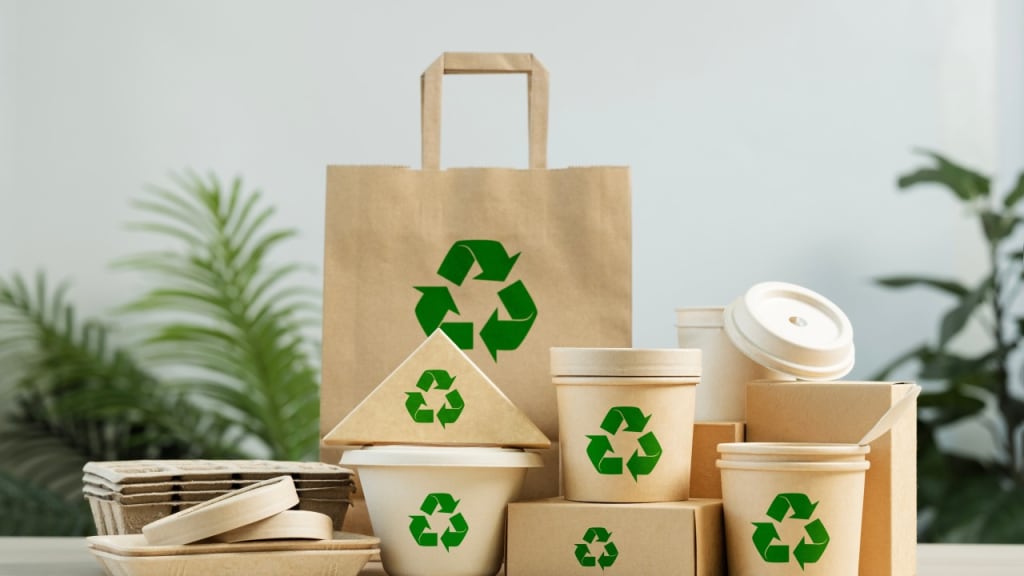
The Saudi Arabia biodegradable packaging market size was valued at USD 1,048.7 Million in 2025 and is projected to reach USD 1,619.9 Million by 2034, growing at a compound annual growth rate of 4.95% from 2026-2034. The sector is experiencing sustained growth as the Kingdom advances its environmental sustainability agenda alongside rapid retail modernization and evolving consumer preferences, driven by comprehensive regulatory frameworks targeting single-use plastic reduction, Vision 2030 circular economy initiatives, and growing preference for eco-conscious products across urban centres.
Paper dominates the market with a share of 57.96% in 2025, benefiting from established manufacturing infrastructure and cost competitiveness. Food packaging leads application with a share of 42.93% in 2025, propelled by stringent food safety requirements and the expanding quick-service restaurant sector. The Northern and Central Region represents the largest segment at 28% market share in 2025, anchored by Riyadh's concentration of manufacturing facilities and distribution networks.
Saudi Arabia's biodegradable packaging story is fundamentally a regulatory story — and the regulatory framework here has more teeth than almost anywhere else in the GCC. SASO's Technical Regulation for Biodegradable Plastic Products has mandated oxo-biodegradable masterbatch in all polypropylene and polyethylene products since 2017, covering everything from shopping bags to food packaging films. The Ministry of Environment, Water and Agriculture followed that up in September 2025 with new packaging and labelling rules specifically for fruits and vegetables, requiring transparent, sustainable formats across the entire fresh produce supply chain.
Saudi Arabia Biodegradable Packaging Market Growth Drivers:
- SASO Mandates and Vision 2030 Circular Economy Policies Forcing Market Transition
SASO's phased Technical Regulation for Biodegradable Plastic Products — covering shopping bags, food packaging films, stretch wrap, shrink films, and dozens of other PE and PP formats — has made biodegradable compliance a non-negotiable procurement condition for Saudi retailers, importers, and manufacturers alike. The National Center for Waste Management (MWAN) reported 1,348 licensed entities in the sector alongside 145 active recycling plant permits, with investment projections reaching SAR 420 billion (USD 112 billion) by 2040. In September 2025, MEWA introduced new packaging and labelling rules for fresh produce that explicitly require sustainable packaging methods — extending mandatory biodegradable standards further into the fresh food supply chain.
- Food Packaging Demand Fuelled by QSR Expansion and Cloud Kitchen Growth
Food packaging commands 42.93% of Saudi Arabia's biodegradable packaging market — and that leadership position is structural, not coincidental. Saudi Arabia's quick-service restaurant sector is expanding rapidly, with over 11,000 QSR outlets nationally and a food delivery market valued at USD 9.45 billion. Cloud kitchen operators — who rely entirely on delivery-optimised packaging — are among the most active adopters of certified compostable containers, kraft board boxes, and PLA cups. Major international F&B brands operating across Riyadh, Jeddah, and Dammam have adopted group-wide sustainability commitments that require certified biodegradable or compostable food service packaging, directly compounding demand volumes across the kingdom's largest application segment.
- Luxury Hospitality Megaprojects Setting Premium Sustainability Standards
Saudi Arabia's giga-project hospitality pipeline is creating a high-visibility market for premium biodegradable packaging that sets standards other operators progressively follow. NEOM's sustainability mandate, Red Sea Global's strict eco-credentials for all 50 hotels under development across 16 islands, and AMAALA's ultra-luxury wellness positioning all require certified compostable or biodegradable packaging across food service, retail, and in-room applications. The Sustainable Packaging market in Saudi Arabia was valued at USD 2.02 billion, with these flagship projects functioning as live demonstrations of large-scale biodegradable packaging deployment that directly shapes procurement expectations among mainstream hotel operators and retail developers entering the market.
Saudi Arabia Biodegradable Packaging Market Trends:
- Paper Dominance Reinforced by Local Manufacturing Investment and Import Substitution
Paper and paper-based packaging holds a 57.96% market share in Saudi Arabia's biodegradable packaging segment — and that dominance is being actively reinforced through domestic manufacturing investment. Paper's proven recyclability infrastructure, wide consumer familiarity, and cost competitiveness over emerging bioplastic alternatives make it the default choice across food service, retail, and e-commerce applications. Companies like Napco National are producing Gaia-branded biodegradable paper bags and plant-based barrier coatings specifically for the GCC food industry, while Al Bayader International manufactures sugarcane bagasse compostable tableware locally — both reducing import dependency and meeting the localisation expectations embedded in Vision 2030 procurement frameworks.
- Bioplastics Innovation: PLA, PHA, and Date Palm Biomass Feedstocks Gaining Ground
Beyond paper, Saudi Arabia's biodegradable packaging market is seeing meaningful innovation in next-generation bioplastics. PLA packaging — increasingly replacing conventional PET and PS across cups, trays, and transparent food films — is growing rapidly, supported by BASF supplying ecovio biopolymer resins to local manufacturers. More distinctively Saudi, KAUST startup Polymeron is converting date palm agricultural waste — Saudi Arabia is the world's second-largest date producer — and poultry residues into high-quality biodegradable plastics, creating a genuinely circular, locally-sourced feedstock model. The PHA segment, while smaller, is projecting the fastest regional growth rate as regulatory pressure on single-use plastics intensifies and end-of-life composting infrastructure gradually matures.
- GCC Regulatory Harmonization and Climate-Adapted Certification Standards
One of the more practical market developments underway is SASO's alignment with GCC-wide biodegradability certification protocols that eliminate conflicting national standards and simplify cross-border trade. Critically, Saudi regulators and industry stakeholders are jointly developing testing methodologies specific to the Kingdom's arid climate — recognising that European composting standards calibrated for temperate, high-moisture environments may fundamentally misrepresent how materials actually decompose in Saudi Arabia's hot, low-humidity waste streams. This climate-adapted certification approach will eventually allow Saudi-produced biodegradable packaging to carry internationally credible credentials while being genuinely validated for local environmental conditions — a meaningful differentiator for manufacturers eyeing GCC export markets.
Recent News and Developments in Saudi Arabia Biodegradable Packaging Market:
- March 2026: Middle East compostable packaging market surges with Saudi adoption of agricultural waste, seaweed, and mycelium-based innovations, aligning with Vision 2030's push for sustainable materials and reducing single-use plastic reliance effectively.
- February 2026: Strict GCC regulations, including single-use plastic bans exempting certified compostables, accelerate biodegradable packaging shift in Saudi Arabia, boosting eco-friendly alternatives in food and retail sectors nationwide.
- January 2026: Polymeron startup from KAUST converts date palm and agricultural waste into high-quality biodegradable plastics, supporting localized production and advancing national sustainability goals through innovative biorefinery techniques.
- December 2025: Vision 2030 and Saudi Green Initiative drive massive investments in biodegradable material development, targeting 94 percent waste diversion from Riyadh landfills via industrial composting and green packaging solutions.
- November 2025: Biopolymer-based packaging gains traction for extreme temperature resistance, with companies investing in compostable films and containers to meet regulatory demands and consumer preferences for durable, eco-friendly options.
Note: If you require specific details, data, or insights that are not currently included in the scope of this report, we are happy to accommodate your request. As part of our customization service, we will gather and provide the additional information you need, tailored to your specific requirements. Please let us know your exact needs, and we will ensure the report is updated accordingly to meet your expectations.
About the Creator
Kishan Kumar
My name is Kishan Roy and I am a market analyst having 5 years of experience and a skilled researcher with a keen eye for consumer trends and data-driven insights.
Keep reading
More stories from Kishan Kumar and writers in Futurism and other communities.
Wood Pellets Market in Saudi Arabia: Clean Energy Adoption, Biomass Demand & Growth Outlook
The Saudi Arabia wood pellets market size was valued at USD 0.13 Billion in 2024. Looking forward, IMARC Group estimates the market to reach USD 0.21 Billion by 2033, exhibiting a CAGR of 5.70% from 2025-2033. The market is driven by increased energy diversification, government initiatives toward renewable energy, favorable policy frameworks, rising environmental awareness, and investments in sustainable biomass technologies. Expansion of industrial applications and efforts to reduce fossil fuel reliance also contribute to market growth.
By Kishan Kumar8 days ago in Futurism
How machines can learn from human behaviour
In order to understand where we are and where we are going, we need to understand where we were first. - Susan Fourtane Could a human behaviour simulator be embedded into a robot or online avatar to the point that it’s hard to distinguish between a real person or artificial intelligence? Scientists have been upping the stakes in this “Turing test” for years, to the point that human-mimicking programmes are ready to answer tricky questions, assist people with online shopping or be companions.
By Susan Fourtané 12 days ago in Futurism
Your Private Zoom Call is Now an AI Podcast: The Rise of Shadow Recording
1. The Hook: Your Unseen Audience Have you ever had that nagging, prickling sensation in the back of your neck during a private video call? That brief, flickering moment of digital paranoia where you wonder if, despite the "Private" room setting and the invite-only link, someone—or something—is listening? For most of us, this is just a symptom of the "Zoom fatigue" era, a psychological byproduct of living our lives through a webcam. We dismiss it as irrational. We check the participant list, see only our colleagues or friends, and proceed to discuss our medical histories, our trade secrets, and our deepest anxieties.
By Tech Horizons6 days ago in Futurism



Comments
There are no comments for this story
Be the first to respond and start the conversation.