
Whispers in the Fog: A Town That Never Sleeps
In a quiet town cloaked in mist, secrets burn hotter than fire—some doors should never be opened.

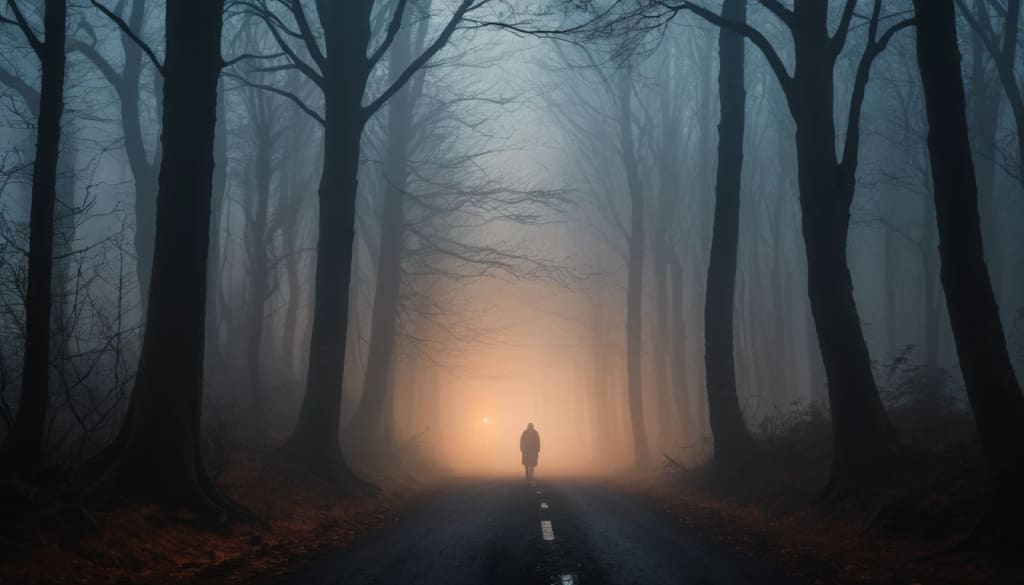
The town lay under a velvet fog that never fully lifted, its streets slick with damp and silence. Even the neon of the diner flickered with hesitation, as if unsure it should illuminate the night. The air carried a weight, a subtle hum that tugged at the edges of the mind—a whisper of things best left unspoken.
A stranger arrived just past midnight, drawn by a rumor half-remembered from the radio: tales of disappearances, strange lights in the woods, and laughter that seemed to come from everywhere and nowhere at once. The mist clung to the stranger’s coat as footsteps pressed into the wet pavement, each step pulling the world closer, observing, waiting.
A neon sign buzzed weakly above a closed motel. Its letters spelled “WELCOME,” yet the glow was fractured, uneven—more a warning than a greeting. From somewhere deep in the fog, a fire flared—not in the trees, not in buildings—but in the air itself, flickering orange and dancing with impossible speed.
Voices drifted on the wind, impossible to interpret: some arguing, others whispering secrets old and bitter, raw and urgent. They wrapped around the trees like smoke, curling into shapes that suggested faces—faces the stranger could almost see, almost recognize. The stranger tried to look away, but curiosity held firm, an invisible tether to the mysteries of the night.
Then, at the edge of the fog, a figure appeared. Tall, thin, unnervingly still, with only flickers of amber where eyes should have been. The ground beneath the figure seemed alive, vibrating like the fire that burned cold and whispered promises the stranger could not name.
Compelled beyond reason, the stranger followed, moving deeper into the fog where reality softened at the edges and shadows shifted with intent. The trees bent away as if parting for a stage, revealing a place where time itself warped. There, in the center, stood a door—blackened and scorched, yet oddly inviting. Smoke curled lazily from its frame, carrying a faint, melodic humming that slithered under the stranger’s skin.
The figure vanished. The hum grew louder, warmer, almost tactile. Danger coiled like a living thing, but the door called anyway. When the stranger’s fingers brushed the scorched wood, the fog thickened, senses fractured, and visions flickered: twisted faces, laughter and tears entwined, and at the heart of it all, a fire that burned not for warmth, but for truth.
The stranger could step back, return to the empty streets, and leave the night’s mysteries behind. Yet something strange whispered that curiosity tasted this fire, and once tasted, it never let go.
The fog seemed to follow the stranger even after leaving the door behind. Each street was transformed: lampposts elongated into grotesque shapes, store windows reflected more than reality, and the usual quiet was punctuated by whispers that came from the mist itself. Somewhere a dog barked—or was it a scream? The stranger could not tell.
In the diner, the few patrons left moved in slow, ritualistic patterns. A waitress with a faint, unnatural smile poured coffee with precision, eyes never leaving her customers. Their conversations hummed around the stranger, yet no words could be made out—only the emotion: tension, fear, longing, and secrets. One man, hunched over a newspaper, lifted his head just enough for the stranger to notice his eyes—deep hollows that seemed to absorb the light, yet reflect something else entirely.
Outside, the fog thickened. The stranger’s footsteps were muffled, absorbed by the mist, yet every sound felt amplified in the mind. A neon sign in the distance flickered in staccato bursts, spelling messages that almost made sense: “NOTHING IS SAFE,” “LEAVE BEFORE IT SEES.”
Drawn toward these messages, the stranger found himself at the edge of the woods, where the fire first appeared. The trees were taller here, unnaturally so, their trunks blackened and bark peeling as though scorched from a flame that never consumed. The fire hovered in midair, a flickering orange presence that illuminated fleeting shapes—faces twisted in silent screams, figures walking just beyond perception.
The stranger remembered stories told in whispers: about those who entered the woods and never returned, about townsfolk who vanished for years only to reappear changed, hollow-eyed and silent. Every story had been dismissed as folklore, a warning to children, yet the fire seemed to confirm them all.
A figure emerged again, gliding between trees, barely visible, its presence marked by the subtle distortion of the air. Amber eyes glimmered, and a voice whispered directly into the stranger’s mind: “You sought the fire. Now it seeks you.”
The ground trembled. The mist coalesced into shapes: doors, mirrors, stairways that led nowhere. The stranger felt reality bend, and for a moment, the world seemed entirely liquid, flowing around them. Time lost meaning. They could feel the fire in their chest, not on their skin, a heat that burned knowledge and fear into their bones simultaneously.
Then came the visions. Not dreams, not hallucinations—but memories that weren’t theirs. Faces of children laughing and disappearing. A woman in a red dress standing at a window, her reflection gone when looked at directly. A man staring into a mirror that only reflected fire. Each vision flashed for a heartbeat, then vanished like smoke.
The figure approached. It stopped just short of the stranger. The amber eyes burned brighter, and in a whisper that carried through the mind, it said: “Some doors are not meant to open. Some fires are meant to consume.”
The stranger knew the choice: step through the unseen door that flickered in the fire’s glow or retreat into the fog, never knowing what could have been. Curiosity warred with fear. Every instinct screamed to leave, yet every sense burned to move forward.
A hand reached toward the fire. Time fractured. The stranger felt himself split between the world he knew and the one just beyond perception. And then, silence.
The mist cleared enough to reveal the town as it should have been—or as it had always been. Lights glimmered in windows, the diner hummed softly, and the streets were empty. But something lingered: the whisper of the fire in the mind, the feeling that the door remained just beyond sight, and the knowledge that the town—though familiar—was not what it seemed.
Walking back through the streets, the stranger noticed subtle changes. Signs were slightly off, conversations overheard on the radio contained words they had not spoken aloud, and reflections in windows did not always match movement. It was as if the fire had left a mark—a lingering question in the bones and mind, a pull toward the impossible.
In the following days, the stranger saw others affected. A man muttering about flames and doors in hushed tones. Even the diner waitress seemed different, her movements slightly out of sync with reality. The town continued, outwardly normal, yet invisible threads bound it all together: fire, fog, whispers, and the unseen door that always called.
Some nights, the stranger would hear it again—the soft hum, the flicker of amber in the darkness, and the memory of curiosity tasting fire. And always, always, the knowledge that there were doors better left unopened, and fires that burned far beyond the reach of reason.
Even now, if one walked the streets at midnight, through fog thick enough to hide everything familiar, they might glimpse a flicker of orange between the trees. If one were curious enough to follow, they would find themselves at the edge of the impossible, caught between what is and what never should have been. The town waits, silent but vigilant, and the fire—ever patient—still waits.
About the Creator
Algieba
Curious observer of the world, exploring the latest ideas, trends, and stories that shape our lives. A thoughtful writer who seeks to make sense of complex topics and share insights that inform, inspire, and engage readers.
YNs
1989 Blue and yellow made green. The Glad baggies carried the product. Nadine Horford, 19, bagged up the work at the Marriot. Two Uzis tucked behind her, embracing her waistline. She stood at five foot four inches. Her cocoa butter brown skin and her soft features could lure any man. She had to handle the work with one eye shut. Everything she did contributed to the care and precision she used with the scale. Flaky and white, the cocaine seemed like fishscale. Zatavian Acton, 22, cooked the product in Pyrex on the stove in the suite. He possessed two 44 magnum pistols behind him, too. He was five foot eleven inches and had the skin color of burnt toast. By standing over the stove and forming it into tiny morsels, it seemed like he prepared quiches for a bake sale, he brought the heat to the baking soda infused product. The ready rock hung to dry and she coupled the pigeons in the refrigerator. Once she finished up on the last baggie, she licked her thumbs. They had a system.
By Skyler Saunders6 days ago in Fiction
The Irony of Flying While We Bomb the "World's Greatest Terror Regime"
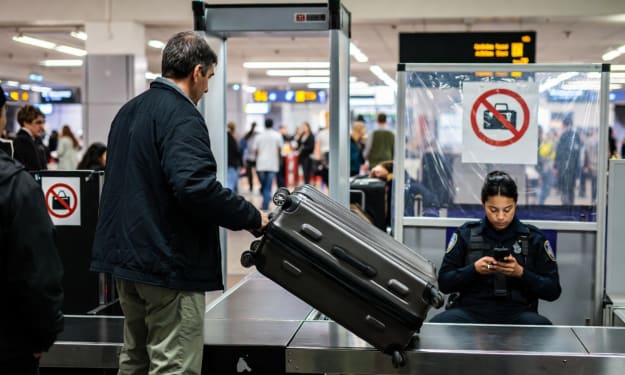
Ah, the irony of flying at this moment in time as the United States is simultaneously bombing Iran - the nation officials have insisted for decades is "The World's Greatest Terror Regime" - while the TSA is on a go-slow, courtesy of a funding squeeze that's left its officers unpaid, quitting in droves, and turning checkpoints into something like slow-moving bread lines.
By Scott Christenson🌴7 days ago in Humor


Comments
There are no comments for this story
Be the first to respond and start the conversation.