
THE GILDER’S LEDGER
Chapter 1 — The Case in the Shed
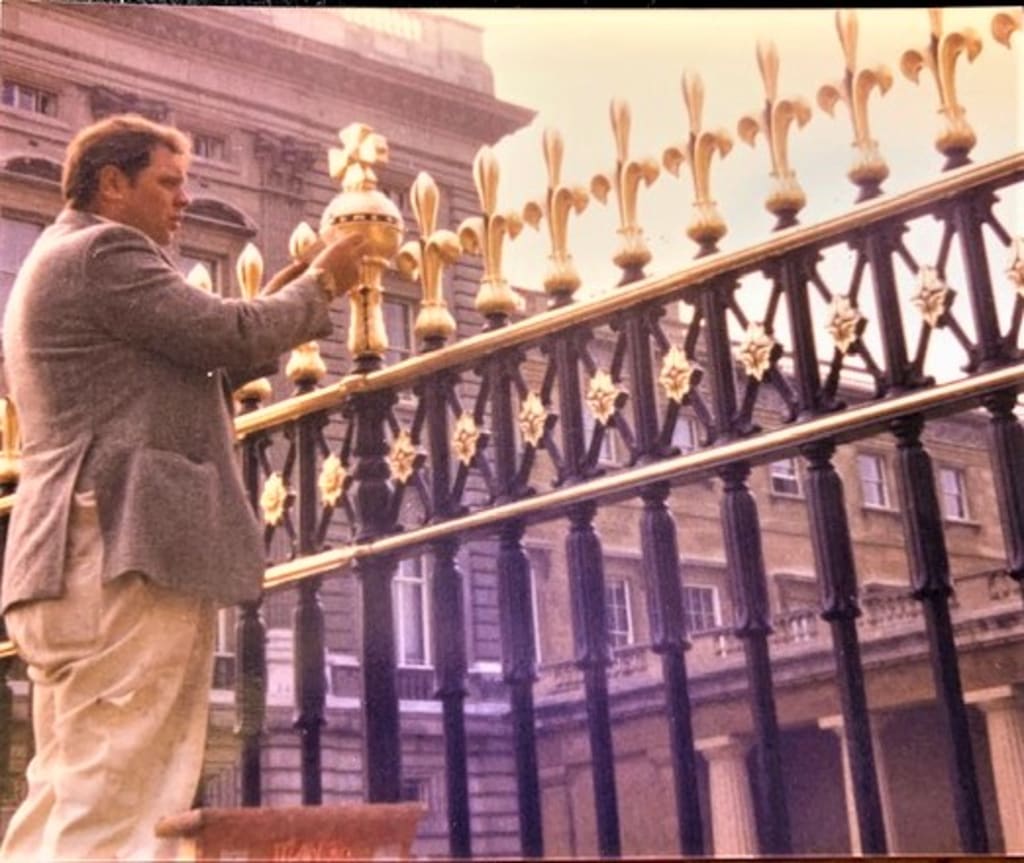
THE GILDER’S LEDGER: Chapter 1 — The Case in the Shed
March 26, 2026
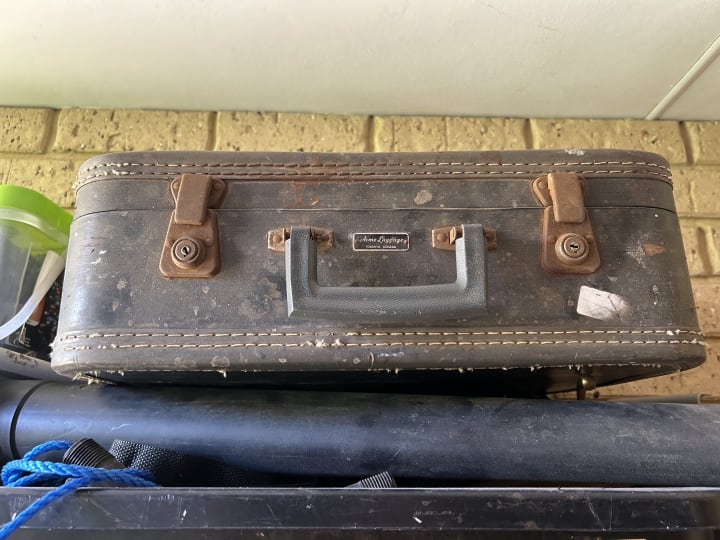
This morning, I felt a pull to share some of the lesser-known truths about Gold Leaf. That thought led me straight to my old Gilder’s Case, which has sat locked away in the stillness of my brick shed for over twenty years.
This Travelling-Luggage case has been my constant companion across the globe. It carries the weight of history and the ghosts of the places it’s been. Pulling it from the shadows today, I saw a sorry sight; it is in desperate need of some major TLC.
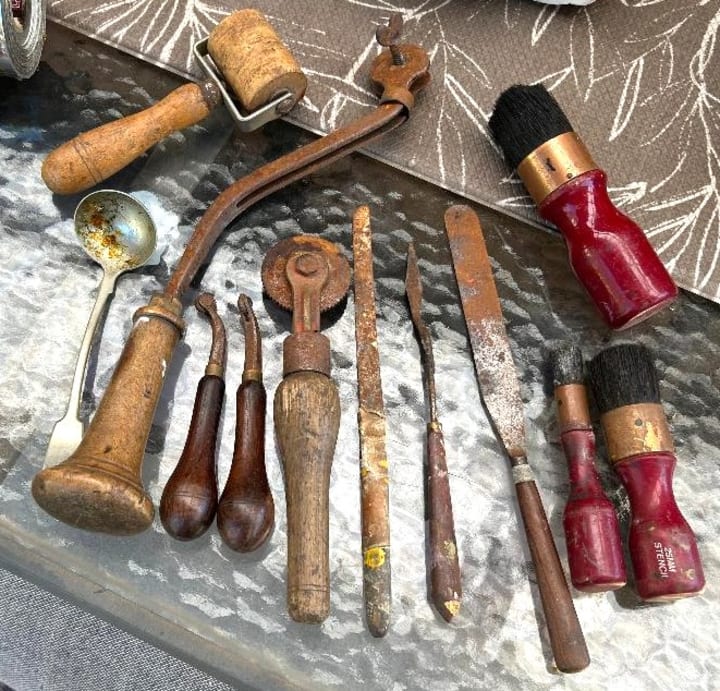
Opening the latches, I laid out the tools of my trade. It’s a mixed kit—not everything here is for Gilding
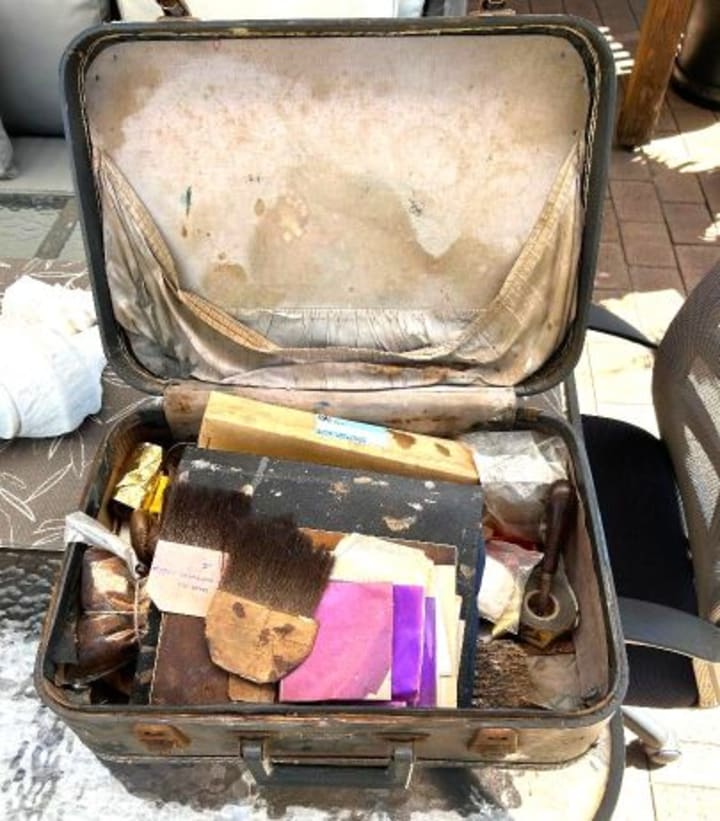
The first four tools with the sturdy wooden handles are for leather tooling. I used those to press 24ct gold foil patterns into the leather tops of home and office desks.
Beside them lie my gilder’s knives, once used for the precision cutting of leaf on the cushion. Time in the shed hasn't been kind to them; the steel blades are pitted now. Even with a cleaning, they’ve likely lost the mirror-smooth edge required for such delicate work.
In my career, the work was not just one thing. My hands have been called to do it all: hand-printed wallpaper, marbling, graining, glass gilding, and faux finishes. Looking at the photos of my old squirrel hair tips resting on the gilder’s pad, my mind drifts back to the Palace of Congress in Kuwait.
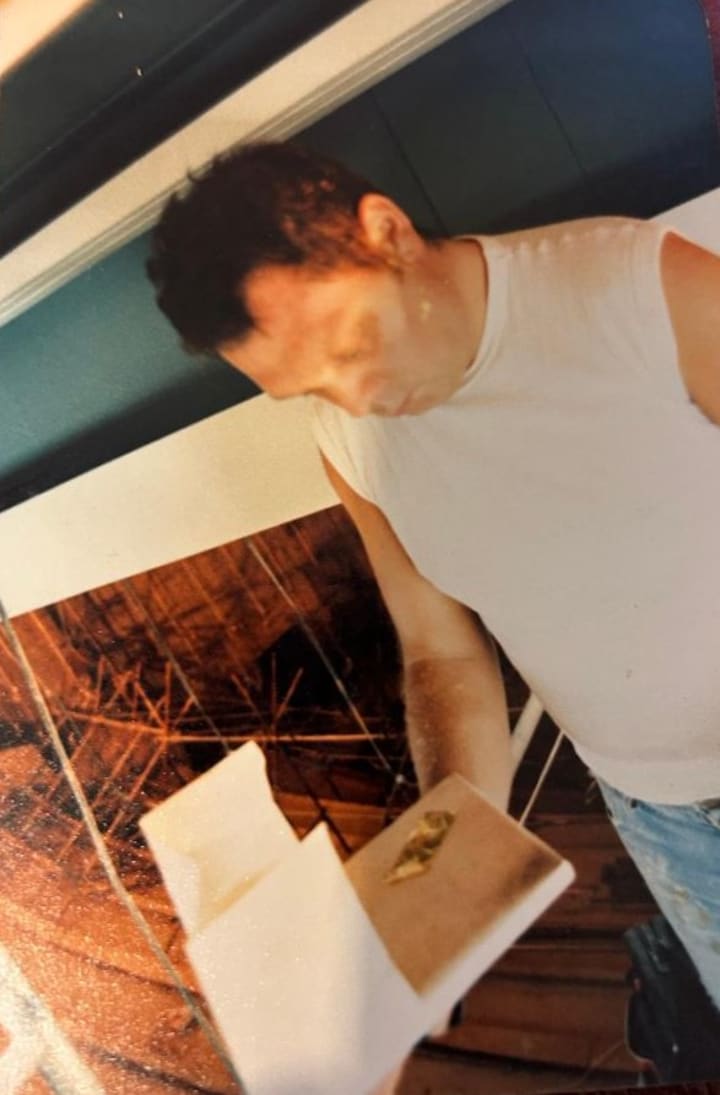
In my old photos, you can see me standing amidst a forest of scaffolding, holding the world’s most temperamental material. You can see the focus in my eyes; when you're working with gold beaten to 0.10 microns, you only get one chance. One sneeze, one heavy breath, and that floating gold is gone forever.
To understand the magic of it, consider this: if you took a gold nugget the size of a golf ball and placed it in the center of a Wimbledon doubles court, a gold beater could beat that metal out until it covered the entire court.
Imagine that scale. It is so light it actually floats; you cannot touch it with your bare hands, or it simply vanishes. When you pick it up with the tip, you get exactly one chance to put it where it needs to go.
This unforgiving nature of the leaf is a lesson I learned early. My mind often drifts back to where it all began: One of my first jobs, standing within the high, grey stone walls of St Giles Cathedral on the Royal Mile in Edinburgh. I remember the damp Scottish air clinging to the stone and the daunting scale of the building around me. I was just a lad, yet I was entrusted to watch the masters work, learning that the wind was our greatest enemy. Even behind those thick medieval walls, a stray draft through a heavy oak door could send a week's wages fluttering into the rafters like a golden ghost.
In those early days, I wasn't allowed to touch the gold. My job was preparation—the endless, invisible work of sanding and sizing that ensures the leaf has a home to cling to. I watched the craftsmen with reverence as they "charged" their squirrel-hair brushes by rubbing them against their own hair, using static electricity to breathe life into the tools. This did not always work and there was a trick they had in using Vaseline very lightly on the back of the hand to assist in picking up the 24ct Gold Leaf. It was there, amidst the echoes of history and the sharp scent of rabbit-skin glue, that I realized gilding isn't just a trade; it’s a quiet conversation between the craftsman and the metal.
I’ll be spending some time cleaning up these old friends. In the next chapter, I’ll take you back to where it all began: my first job at age eleven, and the high walls of Edinburgh Castle.
Stay safe, everyone.
This is an original work of fiction by Sandy Burnside.
________________________________________
About the Creator
Alexander Burnside
I started as a paperboy passing the gilded crest at Edinburgh Castle and ended up gilding for Buckingham Palace and The Ritz. Join me for the stories behind the gold leaf and a complete start-to-finish video series.
Keep reading
More stories from writers in Fiction and other communities.
Parting is such sweet and salty sorrow...
Dear Wife— At first, I hesitated to go forward with this resolution. But after your recent late-night binges scarfing down bags of chicharrónes—those pork rinds you dip in butter and the god-awful crunch they make, I knew I could no longer reach you.
By Lamar Wiggins5 days ago in Fiction
The Prince and the Pizza
‘You could at least look at me while you’re dumping me!’ Jason leaned across the table in the spacious pizzeria where Sarah had suggested they eat that evening. She’d thought it would be a big and impersonal enough venue for her to tell Jason she thought they should go their separate ways after six months of dating. Now she wished she’d just called him and done the deed over the phone, or at least somewhere private. She’d hoped doing it in public might lessen the chance of him creating a drama, but the plan seemed to have failed. Jason, a would-be actor, loved a drama.
By Matthew Batham3 days ago in Fiction




Comments
There are no comments for this story
Be the first to respond and start the conversation.