
Alternative Milk Options in Japan
Soy, almond, oat, and A2
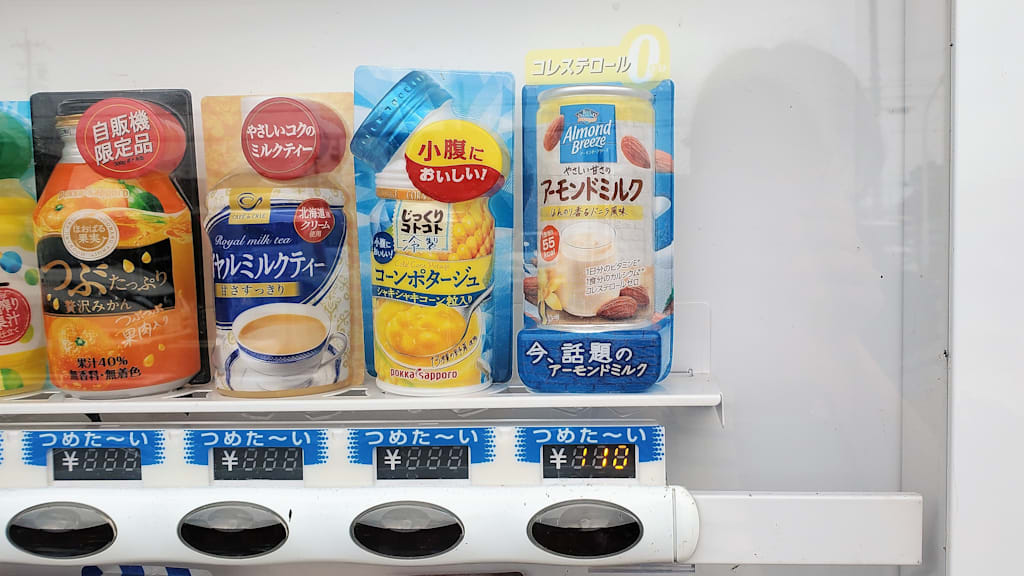
Not sure if anyone here would be interested in hearing about the miscellaneous milk options available in Japan, but I thought I'd throw this out there anyway, just in case.
When I was in the U.S., I’d heard a statistic that most Asians are lactose intolerant. As such, I was somewhat surprised to find that milk and dairy products are in fact pretty common in Japan, and most Japanese people I’ve met have no issue eating ice cream or adding milk or creamer to their coffee.
However, the longer I stay here, the more I wonder if it’s not so much that no one has lactose intolerance, just that no one talks about it in terms of “having” it. I think part of it is that it's just not considered polite conversation, or not wanting to be seen as the odd one out. People can be very weird about allergies, no matter where you are in the world, so I guess that shouldn't be a surprise.
Even my husband, who I’m pretty sure is lactose intolerant, denied having it when I asked him about it directly. He’s always had gastrointestinal issues after consuming milk, but he simply says he can’t have too much milk.

One thing I will note, however, is that my husband’s issues with milk haven’t always been as bad as they are now, which is backed up by the studies that have found that lactose intolerance is something that you can get (or can worsen) as you get older. For further personal anecdotes, I’d cite my mother-in-law and her friends, who once refused milk in their tea, but when I mentioned I’d be putting soy milk in mine, they were happy to accept that alternative.
(As a side note, anecdotal examples make for horrendous scientific data. For all I know, mother-in-law and friends are perfectly fine with dairy and were just trying to be polite, which is a very Japanese thing to do.)
Back to the title. Regardless of what percentage of people in Japan are actually lactose intolerant, milk alternatives are very popular here. There’s soy milk as mentioned above, as well as almond milk and even oat milk. Liquid yogurts and milk-based drinks (which are often in milk carton-esque containers, but are not the same as whole/skim milk) are also widely available. Recently, A2 Milk, a type of milk that only has A2 form of a protein found in regular milk (which normally has both A1 and A2), has become more popular in Japan and other Asian countries because some studies have found that it may be easier to digest for some people.
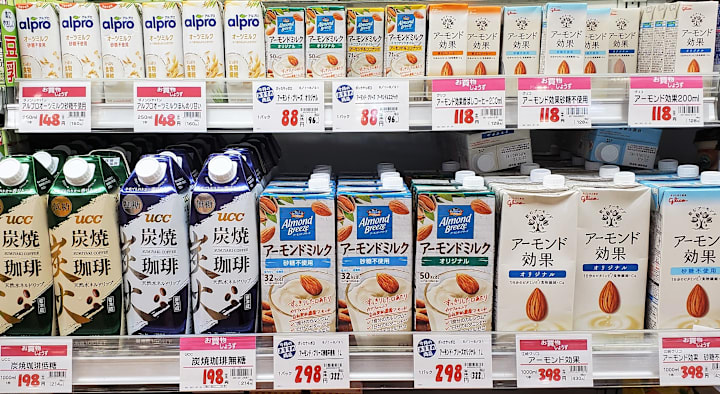
Above is a picture I took of the almond milk available at my local Valor (a popular supermarket chain in Japan). Almond milk is, as far as I can tell, relatively new here in Japan, with the Almond Breeze brand only showing up in my area in the past couple of months. Almond milk usually comes in three flavors — original, unsweetened, and coffee; however, I really like the “three nut” flavor (which tastes of almond, walnut, and cashew), plus the cocoa flavor, which tastes like a candy bar.
Soy milk, on the other hand, has been around for a while, and there are a plethora of flavors. Just below, you’ll be able to pick out banana, coffee, matcha (green tea), fruit mix, and black tea flavors, plus the more “regular” soy milk, including one that is basically just soybean juice with no additives (useful if you want to make dairy-free baked goods).
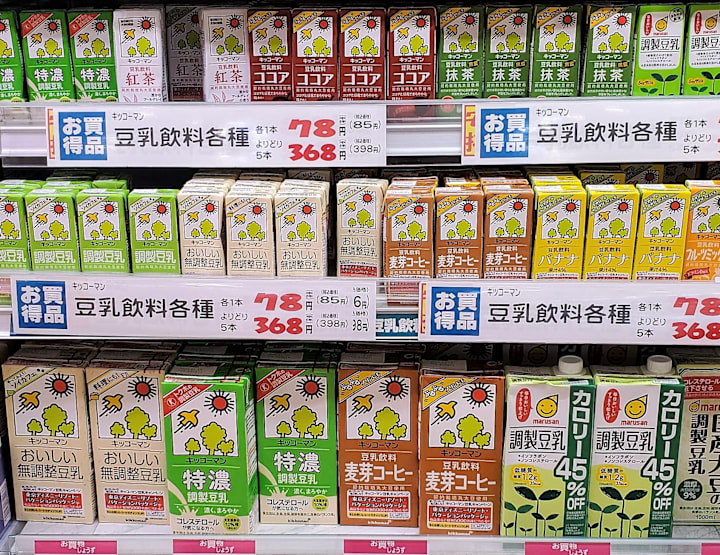
However, this is actually a pretty limited selection. In other places, I’ve seen vanilla, pudding, caramel, watermelon, and melon soda ice cream flavors — people really love soy milk here. (By “people,” I am speaking in general terms, and specifically, not including my husband. He absolutely hates soy milk.)
I’m not really an authority on the subject. I only started consuming non-dairy milk after the birth of my third kid; I figured out pretty early on that, like his father, he has trouble with milk, and since I’m breastfeeding, I have to make sure to limit my dairy intake so that he doesn’t end up with any problems.
Regardless, it’s interesting to see how Japan handles non-dairy milk versus the U.S. One thing I like about soy milk is that it is really cheap here — often cheaper than milk (and as a cheapskate, I stan). I’ll continue stocking up on it for the foreseeable future and look forward to other milk alternatives that might pop up.
Note: this was originally posted on Medium at: https://medium.com/@kloucombs28/alternative-milk-options-in-japan-2930eda0001f
About the Creator
K. Lou Combs
Stopping by for a nice cup of tea.
Keep reading
More stories from writers in Feast and other communities.
Scones
Alright, let's not fuck about - here is what you need: Ingredients: 350g self raising flour 90g butter pinch of salt tsp of baking powder 3 tbsp caster sugar (or just normal white sugar would probably be fine) 175ml milk a squeeze of lemon a drop of vanilla an egg fresh strawberries, if they're in season Extra flour Even more flour Dried fruit (I consider this completely optional and usually leave it out)
By L.C. Schäfer7 days ago in Feast
Buck’s Bar — Glasgow, Scotland
After living in Glasgow for 10 years now I’ve come realise that a Scottish winter is like an angry dog scratching at your door, barking and salivating and waiting for you to come outside so it can gnaw on your leg, leaving you writhing in agony and suffering and questioning why you ever left the comfort of your slightly less damp and chilly flat. It’s been raining for weeks here in Glasgow, which is typical for January/February, and the flooding on some streets (while fun to drive through) are getting a bit out of control, and starting to feel a bit apocalyptic. In spite of the torrential weather, or perhaps as a result of it, I found myself once again bowing to the demands of my empty stomach, so I donned my layers, grabbed my umbrella, and left for a walk into the city centre of Glasgow to get some dinner (aka dat gravy).
By Gary Heather4 days ago in Feast
Swan
“During the Metal Age, humans took photographs of everything beautiful, which was everything, yet machines did not even wear shoes. The Fauxna thought of a better way. They colored all of the light rose, for a corrupted source cannot be verified.” - Origin Parable, 011
By Nicky Frankly4 days ago in Fiction



Comments
There are no comments for this story
Be the first to respond and start the conversation.