
What makes a Silver Eagle coin valuable?
What makes a Silver Eagle coin valuable?

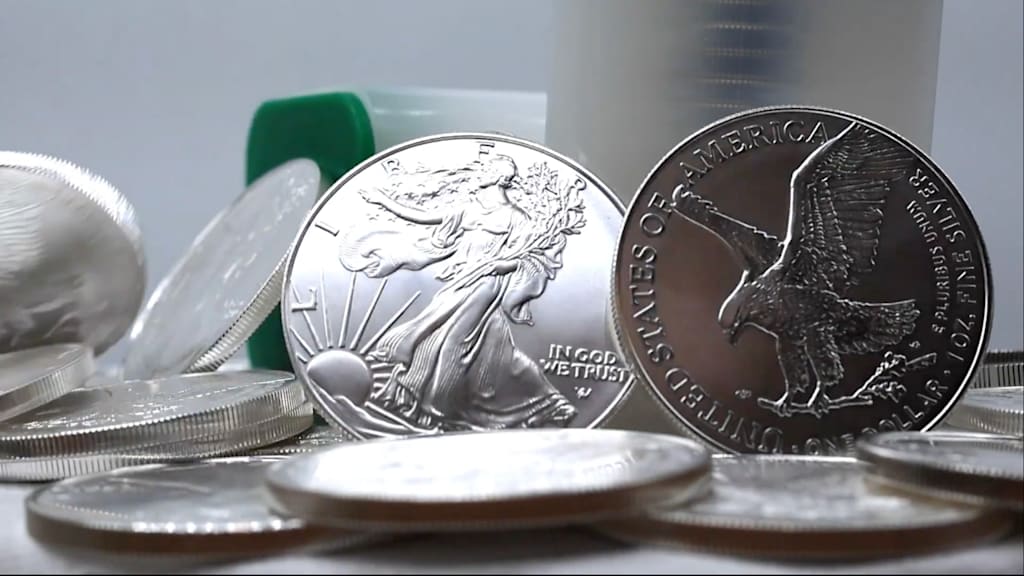
Most people think this is about finding the rarest coin.
It’s not.
If you’re trying to figure out which Silver Eagle is actually worth the most, you need a way to evaluate it. Otherwise, you’re just reacting to price tags and whatever shows up first in a search.
There’s a simple way to do this. No shortcuts. Just a handful of checks that keep you from overpaying.
Start With the Metal
Every Silver Eagle contains one ounce of silver.
That’s your anchor. It gives you a baseline that doesn’t depend on hype, labels, or opinions.
If silver is trading at a certain price, every Eagle starts there. Everything above that is what you’re paying for added demand or perceived scarcity.
People who focus on silver stacking tend to stay grounded here. They look at how many ounces they’re getting first, then worry about anything extra.
That mindset keeps you from drifting too far into premium-heavy territory too quickly.
Look at the Premium First
The premium is the gap between the silver value and the price you’re being asked to pay.
This is where most of the decision sits.
If two coins have the same silver content but very different prices, the premium explains it.
Your job is to figure out if that premium makes sense.
A modest premium for a widely recognized coin is one thing. A large premium tied to a narrow collector market is something else.
The bigger the premium, the more you’re relying on someone else to agree with that price later.
Check How Many Were Made
Next, look at mintage.
Lower numbers usually mean fewer coins available, which can push prices higher. The 1995-W Proof is the example people point to because the supply is tight and demand stayed strong.
But this is where people oversimplify.
Low mintage doesn’t guarantee anything. Some coins are scarce but overlooked. Others are both scarce and widely known.
You need both for the price to hold.
If a coin is rare but not well known, selling it later may take more effort.
Pay Attention to Condition
Condition changes everything.
Two coins from the same year can sell for very different amounts depending on how they’re graded.
Top-grade coins bring higher prices because buyers trust what they’re getting. But you pay for that upfront.
If you’re looking at a graded coin, ask yourself if the jump in price makes sense compared to a slightly lower grade.
Sometimes it does. Sometimes it doesn’t.
This is one of the easiest places to overpay without realizing it.
Know What Type of Coin You’re Looking At
There’s a clear difference between bullion and proof Silver Eagles.
Bullion coins are straightforward. They’re produced in large numbers and track the silver price more closely.
Proof coins are made for collectors. They have a different finish and usually cost more from the start.
If your goal is tied to silver stacking, bullion coins tend to fit better. They keep things simple and closer to the metal.
Proof coins can make sense if you’re intentionally stepping into the collector side of the market.
Just don’t confuse the two.
Think About Who Buys This Later
This is the part most people skip.
Value isn’t just about what you pay. It’s about who will buy it from you later.
Common Silver Eagles are easy. Almost anyone who deals in silver recognizes them.
A rare proof coin is different. It may require a more specific buyer. That doesn’t make it a bad choice, but it does change the equation.
If you had to sell quickly, which coin would move faster?
That question cuts through a lot of noise.
Compare It to Gold Investing
If you’ve looked into gold investing, you’ve probably seen a similar pattern.
Many gold buyers stick with widely traded coins or bars. Not because they’re exciting, but because they’re easy to price and easy to sell.
Silver works the same way.
The more recognizable the product, the more predictable the outcome.
That’s why both gold investing and silver stacking often follow a similar path. Start with what’s simple. Build a base. Add complexity later if you choose to.
A Quick Checklist You Can Use
When you’re looking at a Silver Eagle, run through this without overthinking it:
- What’s the premium over the silver value?
- How many were made?
- What condition is it in?
- Is it bullion or proof?
- Who is likely to buy it later?
If you can answer those clearly, you’re not guessing anymore.
Where People Get Off Track
The most common mistake is chasing price without understanding it.
A coin costs more, so it must be better. That assumption leads to a lot of overpaying.
Another issue is relying too much on past sales. Just because something sold for a high number once doesn’t mean it will again.
There’s also the tendency to jump into rare coins too early.
Without a solid base, it’s harder to tell what you’re actually buying.
A Better Way to Approach It
Start with coins you understand.
Keep premiums reasonable. Focus on liquidity. Build your position step by step.
If you decide to add higher-end pieces later, you’ll be doing it from a place of experience instead of guesswork.
That’s how most steady buyers approach both silver and gold.
They don’t rush to find the “best” coin.
They focus on making decisions they can live with later.
About the Creator
Stefan Gleason
Stefan Gleason is President and CEO of Money Metals, the company recently named "Best Overall Online Precious Metals Dealer" by Investopedia. A graduate of the University of Florida, Gleason is a seasoned business leader and investor.
Keep reading
More stories from Stefan Gleason and writers in Education and other communities.
Gold vs. Silver Prices: What the Difference Means for a Long-Term Physical Buyer
If you are asking, “How do gold and silver prices compare?”, the plain answer is this: gold costs far more per ounce than silver, but the more important difference is not just price. Gold is usually the more compact, stable store of value. Silver is usually the more affordable metal to accumulate in larger ounce counts, but it also tends to swing more sharply. As of April 7, 2026, Reuters reported spot gold around $4,655.89 per ounce, while Forbes listed silver near $73.00 per ounce on April 6.
By Stefan Gleasona day ago in Education
I Live By the Bottle
For about a week I had the Norovirus. The Norovirus is a gastrointestinal virus that causes vomiting and diarrhea. Most people get over it within three days. It is troublesome for the elderly and young children, as well as people with medical conditions. I, myself, have a rare medical condition called Nephrogenic Diabetes Insipidus.
By Sid Aaron Hirjia day ago in Education
Aligning Vision and Capital: Connecting Leadership with Institutional Investment Insight
In today’s complex business environment, success depends on more than strong leadership or access to capital alone. Organizations must effectively connect executive vision with institutional investment expertise to achieve sustainable growth. This alignment ensures that strategic goals receive the financial backing needed to move from concept to execution.
By Matthew J Smitha day ago in Education
Something Is Beginning, I Think Challenge Winners
This challenge wasn’t about clean starts. It was about that weird in-between where something is beginning, but no one really knows what yet. A lot of these stories leaned into hesitation, into pauses and false starts and that feeling that something is about to happen but hasn’t quite.
By Vocal Curation Team7 days ago in Resources



Comments
There are no comments for this story
Be the first to respond and start the conversation.