
How to Achieve High ROAS for Your Shopify Store Effectively?
Key Strategies to Increase Shopify ROAS and Drive Profitable Growth

Is your Shopify ad spend actually paying off?
For Shopify store owners, achieving a high return on ad spend (ROAS) is critical, but many struggle to ensure every dollar spent on advertising delivers a solid return. In 2026, maximizing ROAS requires more than just running ads—it's about precision and optimization at every stage of the marketing funnel. Shopify ROAS is driven by a strategic blend of advanced audience targeting, data-backed campaign adjustments, personalized customer journeys, and platform-specific ad optimization.
In this blog, we will explore five strategies to boost your Shopify ROAS, including advanced audience targeting and conversion rate optimization (CRO), and why outsourcing Shopify ads management is crucial. By following these tactics, you’ll shift from guesswork to data-driven decision-making, ensuring your ad spend is a high-return investment in your store's future.
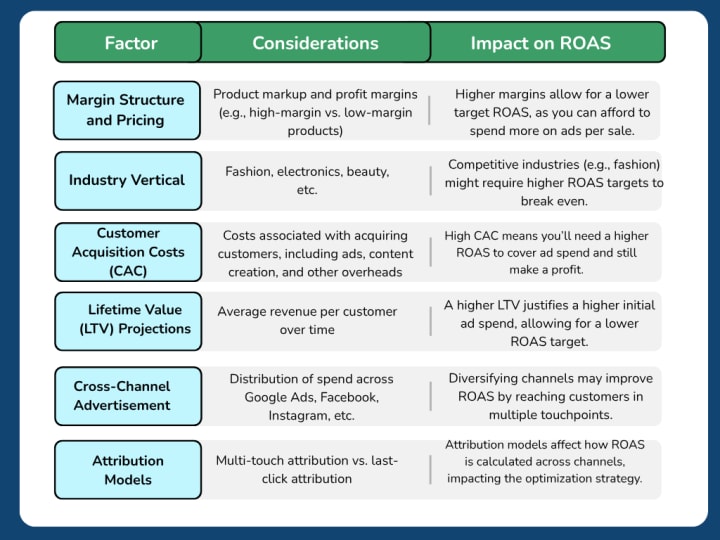
Key Factors: How to Define Shopify ROAS Targets?
5 Ways to Increase Return on Ad Spend (ROAS) for Shopify Stores
1. Advanced Audience Targeting
Predictive Analytics & AI-Driven Segmentation
By leveraging historical data, browsing behavior, and customer preferences, AI tools can forecast future purchase decisions, enabling you to target high-potential customers more precisely.
For example, Shopify merchants can integrate Google Ads and Klaviyo to track customer interactions across multiple touchpoints, including past purchases, product views, and email engagement. This enables sellers to identify high-conversion segments, predict purchase likelihood, and optimize ad targeting, resulting in more efficient ad spend and higher conversion rates.
Key Strategy:
- Segment customers using RFM (Recency, Frequency, Monetary) metrics to identify high-value groups, such as those who have recently interacted but not purchased.
- Leverage AI tools like Google Analytics and Klaviyo to identify high-conversion segments and target them with personalized ads.
- Personalize your messaging for these segments with relevant product recommendations or offers, based on their behavior.
Leveraging Lookalike Audiences for Efficient Acquisition
Instead of broad targeting, use AI-powered lookalike audience features on Google Ads and Facebook to target new customers similar to your top buyers. These tools identify people who share characteristics with your high-value customers, improving conversion rates while lowering acquisition costs.
Rather than solely relying on lookalike audiences, Google now uses a broader range of behavioral signals to identify high-potential customers. This AI signal-driven approach analyzes a range of factors, including past interactions, browsing behavior, and purchase intent, to identify individuals likely to convert, even if they don't exactly mirror your existing customers.

- Implement dynamic product recommendations using Shopify apps (e.g., Bold Upsell, Klaviyo).
- Use AI-based personalization to suggest complementary products across the customer journey—during browsing, checkout, and post-purchase.
- Analyze user behavior with heatmaps and session recordings to pinpoint friction points in the mobile experience.
- Run A/B tests on key elements (e.g., CTA buttons, product images) to identify what drives higher conversions.
- Refine based on insights to continuously improve the user experience and increase conversion rates.
- Titles & Descriptions: Use concise, keyword-rich titles (under 150 characters), integrate intent-driven, long-tail, and negative keywords.
- Images & Data: Add high-quality images with accurate, relevant product attributes (e.g., brand, condition, availability).
- Custom Labels: Use custom labels to segment products by attributes such as margin, best-sellers, or seasonality, enabling you to optimize bids and targeting based on performance.
- Cross-Channel Campaigns: Leverage cross-platform ad strategies (Google Ads, Facebook Ads, Instagram, etc.) to reach customers across different touchpoints. Use Smart Bidding and Target ROAS for performance-driven campaigns that adapt to each platform’s audience.
- Targeting & Bidding: Begin with broad audience targeting and refine based on performance. Utilize geo-targeting to focus efforts on high-value locations and adjust bids dynamically to avoid overspending.
- Combat Ad Fatigue: Refresh your ad creatives on regular intervals to maintain high engagement and CTR across all platforms.
- Visuals & Messaging: Use eye-catching visuals and clear messaging that highlight key product benefits. Tailor creatives to each platform’s audience (e.g., lifestyle images for Instagram, product-focused for Google).
- Use Shopify’s built-in tools or apps like Klaviyo to retarget abandoned carts via email or SMS, and use cross-platform ads to remind users of their interests.
- Implement sequential ads that gradually introduce your brand and products to customers, nurturing them until they are ready to purchase.
- Use Shopify’s unified customer profile to track past purchase behaviors and segment customers for targeted marketing campaigns.
- Launch subscription models and loyalty programs that incentivize repeat purchases, reducing reliance on new customer acquisition.
Personalized User Experience to Drive Engagement
Personalization goes beyond simply addressing the customer by name. By recommending the right products at the right time, you can increase your average order value (AOV) and ultimately improve ROAS. Here’s how;
2. Conversion Rate Optimization (CRO)
Optimizing User Experience (UX) for Mobile-First Shopping
With mobile commerce sales projected to account for 62% of all retail sales by 2027 (Forbes), optimizing your Shopify store for mobile is not just a trend—it’s essential for boosting your ROAS. A mobile-first approach goes beyond responsive design to deliver an intuitive experience tailored to mobile users’ specific needs. This includes fast load times, smooth navigation, and minimal friction during checkout, all of which directly impact conversion rates and customer satisfaction.
Actionable Strategy:
Prioritize Mobile-First Design: Ensure that your key pages, such as product and checkout pages, are optimized for both speed and usability. This includes ensuring that images, buttons, and text are easy to interact with on smaller screens.
Test and Optimize Mobile Checkout: Streamline the entire checkout process, from cart to payment. Reduce steps, enable auto-fill for forms, and offer mobile-optimized payment options such as Apple Pay and Google Pay to minimize friction and increase conversion.
Use Data-Driven Testing to Optimize UX
To enhance ROAS, leverage data-driven testing to understand how users interact with your site, with strategies such as,
3. Ad Platform Optimization
Setup & Tracking
Properly install tracking tools such as Meta Pixel (for Facebook/Instagram) and Google Tag/GA4 (for Google Ads) to support data-driven decisions. These tools enable automated bidding and performance optimizations across platforms.
Product Feed Optimization
Campaign Strategy & Structure
Creative & Content Optimization
4. Retargeting & Personalized Campaigns
Retaining and upselling to existing customers is more cost-effective than constantly acquiring new ones. By leveraging first-party data, you can create highly targeted campaigns that drive repeat purchases, ultimately boosting lifetime revenue from each customer.
Key Strategies:
5. Maximizing Customer Lifetime Value (CLV)
Maximizing CLV is a key strategy for long-term success. It’s more cost-effective to retain and upsell existing customers than to constantly acquire new ones. By leveraging first-party data, you can create hyper-targeted campaigns that drive repeat purchases, boosting lifetime revenue per customer.
Actionable Strategy:
End Note: Achieving a high ROAS for a Shopify store in 2026 requires more than just running ads; it demands data-driven strategies, personalization, and continuous optimization. Whether it’s advanced audience targeting, CRO, or retargeting, success comes from leveraging the right tools and approaches.
However, executing these strategies efficiently requires technical expertise and scalability—qualities often challenging to maintain in-house. Outsourcing Shopify marketing services provides access to specialized professionals who can optimize campaigns, implement best practices, and drive consistent results.
By partnering with experts, your in-house resources focus on your core business while ensuring maximum ROAS and sustainable growth.
About the Creator
Hazel James
Hazel James is an eCommerce consultant at SAMM Data, helping 45+ brands optimize operations, leverage data, and drive growth. She specializes in market trends, emerging tech, and strategies that boost efficiency, performance, and success.
Keep reading
More stories from writers in Education and other communities.
Layers of Emotion: How Evan Roderick Creates Meaningful Depth in Every Role
Evan Roderick has become known for delivering performances that feel rich, thoughtful, and emotionally layered. Their actions or dialogue do not simply define their characters. Instead, they reflect a deeper understanding of human emotion and personal experience. This ability to bring depth to his roles allows viewers to connect with his characters in a lasting and meaningful way.
By Evan Roderick7 days ago in Education
How Casting Decisions Shape the Success of a Film and Drive Audience Engagement
Introduction to Casting in Film Production Casting is a key part of making any film. It decides who will play each role and bring the story to life. Casting decisions shape the success of a film because actors are the face of the story. They help the audience understand and feel the plot. When casting is done well, the film feels natural and engaging. When it is done poorly, even a strong story can fail to connect.
By Nigel Sinclair6 days ago in Education
A Visitor's Guide To Victorian England
A Book Review Being interested in all things Victorian, I am constantly looking for books on the Victorian Era. In fact, I should admit that I am obsessed about ‘all things Victorian’. From the clothes worn by men and women, rich or poor, to how they lived, where they lived, what they ate and would (or would not ) drink, what kind of transport there was, who worked where, who went to school (and who didn’t), the list really is endless.
By Ruth Elizabeth Stiff6 days ago in BookClub



Comments
There are no comments for this story
Be the first to respond and start the conversation.