
How Do I Find a Reputable Hair Boutique Online?
What I Learned the Hard Way

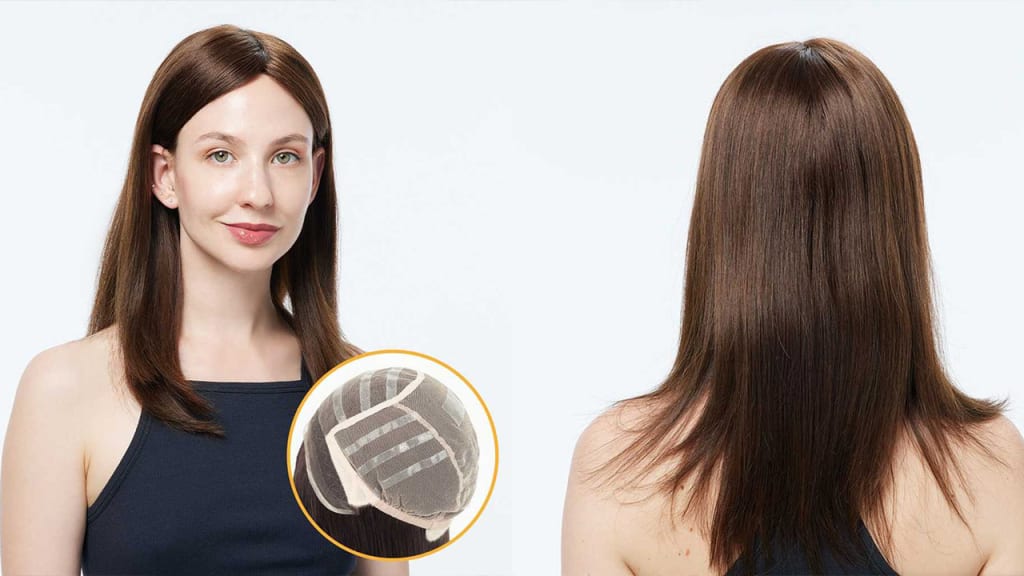
I Learned How to Find a Reputable Hair Boutique Online by Getting Burned First
I did not learn how to find a reputable hair boutique online because I’m naturally wise.
I learned because I bought bad hair, got annoyed, wasted money, and had to sit there looking stupid with a package in my hand, thinking, Well, this is on me.
That’s usually how I learn things, honestly.
A while back, I was doing what a lot of women do when life feels slightly off: scrolling online and convincing myself that hair was the solution. Not a solution. The solution. Better hair was going to make me feel prettier, calmer, more together, more like the version of myself who drinks water, answers emails on time, and doesn’t emotionally collapse over minor inconveniences.
That’s a lot to ask from hair, but I asked it anyway.
Then I found one of those online boutiques that looked perfect. Beautiful model. Gorgeous texture. Soft lighting. Big promises. Everything on the site basically whispered, “You are one purchase away from becoming her.”
And because I am, at times, an idiot with good taste, I believed it.
I ordered fast. Too fast.
When the hair arrived, the fantasy died immediately.
It looked wrong before I even fully took it out of the packaging. It had that fake shine some bad hair has, where it looks less like real hair and more like something trying very hard to pass for it. The texture felt off. The ends were dry. I remember holding it up in front of me in total silence, like maybe if I stared hard enough, it would transform into what I paid for.
It did not.
Still, I tried to force the relationship. Because once you spend money on something disappointing, your first instinct is rarely acceptance. Your first instinct is denial. You start bargaining with reality.
Maybe it just needs to be washed.
Maybe it’ll look better installed.
Maybe I’m being too picky.
Maybe I should stop expecting the internet to tell the truth.
That last one turned out to be the useful thought.
Because the hair was bad. Not “needs a little work” bad. Not “slightly different than expected” bad. Just bad. It tangled too easily, shed too much, and had that overall energy of something that was going to ruin my mood every time I wore it.
And the customer service? Absolutely amazing before checkout. Warm, quick, responsive, full of reassurance. After checkout, they developed the communication style of a deadbeat ex. Suddenly, nobody could answer a direct question. Suddenly, everything was vague. Suddenly, I was the problem for having eyes and standards.
That experience taught me something I should’ve known already: a pretty website means absolutely nothing.
A beautiful homepage is not necessarily trustworthy. A luxury-looking font is not necessarily trustworthy. A model with laid edges is definitely not trust.
Trust is what happens when something goes wrong.
That’s the real test.
And the annoying thing is, I didn’t even learn the lesson the first time. I’d love to present myself as someone who got burned once and evolved immediately into a sharper, wiser woman. That would be a nice story. Unfortunately, the truth is dumber.
I bought bad hair again later from a different site.
This one looked even more legit. Cleaner design. Better branding. More “professional.” Which, as it turns out, is a very easy label to slap onto nonsense if the website designer knows what beige looks like.
The hair wasn’t as awful as the first time, but it still wasn’t honest. It didn’t match the photos. It didn’t feel like what had been promised. And that bothered me almost more than a total disaster would have, because it felt sneaky. Like I wasn’t buying a product so much as buying someone else’s carefully staged illusion.
That’s when it clicked for me: I wasn’t just trying to find good hair. I was trying to avoid being manipulated.
And that’s a different mindset.
Hair is personal for me. Deeply personal. More personal than I’d like to admit sometimes. Good hair changes the way I move through a day. It makes me feel put together. It makes me feel finished. It gives me that small, private confidence boost that doesn’t fix my life but does make me less likely to spiral in a dressing room mirror.
Bad hair does the exact opposite. Bad hair makes me hyperaware of myself. I touch it too much. I adjust it constantly. I feel like I’m managing a problem instead of enjoying a look.
So once I admitted that buying hair online was not some casual little hobby purchase for me, I started behaving differently.
I slowed down.
That was the first real change.
I used to shop with my feelings. Now I shop with suspicion.
Not bitterness. Just suspicion. Healthy, experienced suspicion.
Now, when I land on a hair boutique’s website, I don’t go straight to the glamorous parts. I go to the boring parts. Shipping. Returns. Contact information. Processing times. Policies. Anything that tells me whether this is a real business run by adults or just a digital trap with nice photos.
Because I’ve learned that reputable businesses are usually clear in boring ways.
They don’t make you dig around for basic information. They don’t hide behind fluffy language. They don’t act offended by your need to know what happens if something goes wrong.
Shady businesses, on the other hand, want you dazzled. They want you emotional. They want you imagining yourself transformed before you’ve even figured out what the hell you’re actually buying.
I also trust video way more than photos now.
A still image can hide dry ends, weird density, strange texture, all kinds of nonsense. But video is harder to fake. If I can actually see the hair move, see someone part it, handle it, style it, wear it in normal lighting, I relax a little. Not fully. I’m not insane. But a little.
Same thing with reviews. I read reviews now like I’m interrogating a witness.
If every review sounds hysterically positive and weirdly generic, I’m out. “Love it!” means nothing to me. “Soft and beautiful!” means nothing. Tell me how it held up after two weeks. Tell me if it tangled at the nape. Tell me if the lace actually blended. Tell me if customer service disappeared the second there was a problem.
That’s real information.
And I don’t just stay on the website anymore. I look at comments. Tagged posts. Random mentions. Anywhere, people are less likely to sound like unpaid interns writing ad copy.
At some point, this got even more practical for me because I became a stylist.
That changed the way I look at hair businesses completely.
Once I had my license number, I wasn’t just shopping as a woman who wanted nice hair. I was also thinking like someone who could potentially buy wholesale, source more seriously, and build an actual relationship with a supplier. That makes you less romantic and more observant in a hurry.
Because if you’re licensed, wholesale deals can be great. But getting a “good deal” on hair from a messy supplier is like getting a discount parachute. Technically exciting. Also, potentially a terrible idea.
That’s part of why I started paying attention to businesses like Newtimes Hair. Not in some breathless, promotional way. More in a practical, grown-up way. I started studying it as a possible B2B option because I’m licensed, I can access wholesale opportunities, and I wanted to understand which companies actually felt structured enough to deal with professionals instead of just seducing retail customers with glossy marketing.
That was the key difference for me: I stopped asking, “Does this brand look pretty?” and started asking, “Does this company seem stable?”
Those are wildly different questions.
And honestly, stable is underrated.
Stable means the site is clear. Stable means the business seems prepared to answer questions. Stable means I don’t feel rushed, confused, or emotionally cornered into buying before I’ve thought things through. Stable means they expect customers to have standards.
That’s what I trust now.
Not hype.
Not the fake intimacy brands try to manufacture.
Not all-caps promises about “luxury” from people who can’t write a decent return policy.
Just clarity. Competence. Consistency.
It sounds unsexy, but after you’ve wasted money a few times, unsexy becomes hot.
I also test customer service before I buy now. Every time. I send a question and see what comes back. Not just whether they answer, but how they answer. Do they respond like someone who knows the product? Or like someone who knows how to keep me warm until checkout?
That distinction matters more than people think.
The older I get, the less impressed I am by branding and the more impressed I am by honesty.
That’s probably the whole lesson, actually.
Because these days, when I find an online hair boutique that seems reputable, it doesn’t feel thrilling. It feels calming. The product details make sense. The policies make sense. The communication makes sense. Nothing feels slippery.
And that’s how I know I’m probably in safer hands.
So if I had to answer the question honestly — How do I find a reputable hair boutique online? — I’d say this:
I find one by remembering exactly how bad it feels when I ignore the signs.
I remember the fake shine. The dry ends. The vague emails. The weird silence after payment. The feeling of trying to force bad hair to become good because I didn’t want to admit I’d made a mistake.
And then I do the least glamorous thing possible.
I slow down.
I read.
I ask.
I compare.
I research.
I let myself be harder to impress.
That’s it.
No genius formula. No magic trick. Just the deeply inconvenient wisdom that comes from wasting money and finally deciding I’d rather be careful than dazzled.
Which, now that I think about it, is probably good advice for more than just hair.
About the Creator
Natalee Chand
With 10+ years in hair, I specialize in extensions, wigs & systems, crafting trend-savvy content. My blog educates & inspires stylists and salon owners with expertise in techniques, styling & innovations in the evolving hair landscape.
Keep reading
More stories from Natalee Chand and writers in Education and other communities.
How Does Hair Direct Compare to Other Hair Product Suppliers?
There was a time when Hair Direct felt like one of those names you assumed would always be around. In the hair replacement world, that kind of familiarity matters more than people outside the industry realize. When someone finds a supplier that gets their base size right, understands density, remembers their color notes, and ships something that actually feels wearable, they do not treat it like a casual online purchase. They treat it like a lifeline.
By Natalee Chand14 days ago in Education
Understanding Digital Transformation in Modern Healthcare Operations
Digital transformation is redefining how healthcare organizations manage their operations and deliver care. As the demand for faster, more efficient, and patient-centered services continues to grow, healthcare providers are turning to digital technologies to modernize their systems. This transformation involves integrating advanced tools into everyday processes to improve efficiency, accuracy, and accessibility.
By Brady Beitlicha day ago in Education
Is Evidence-based Medicine a Joke?
The medical profession often brings to mind the image of the proverbial ostrich: burying its head in the sand, hoping problems will disappear. While doctors claim to practice evidence-based medicine, there is a glaring oversight when it comes to mental illness. They routinely ignore the growing evidence that our thinking itself is a hypnotic process—that we are, in a sense, continually self-hypnotising through our inner dialogue. The profession’s lack of understanding about hypnosis and its mechanisms results in a reluctance to investigate this mystery. Rather than exploring how ego and self-hypnosis shape mental states, many in the field shy away, perhaps because it requires confronting their own egos. This avoidance is neither scientific nor professional.
By Mal Mohanlal4 days ago in Education


Comments
There are no comments for this story
Be the first to respond and start the conversation.