
Mexico’s Rainbow Lake
The Fading Colors of a 3-Billion-Year-Old Living Fossil

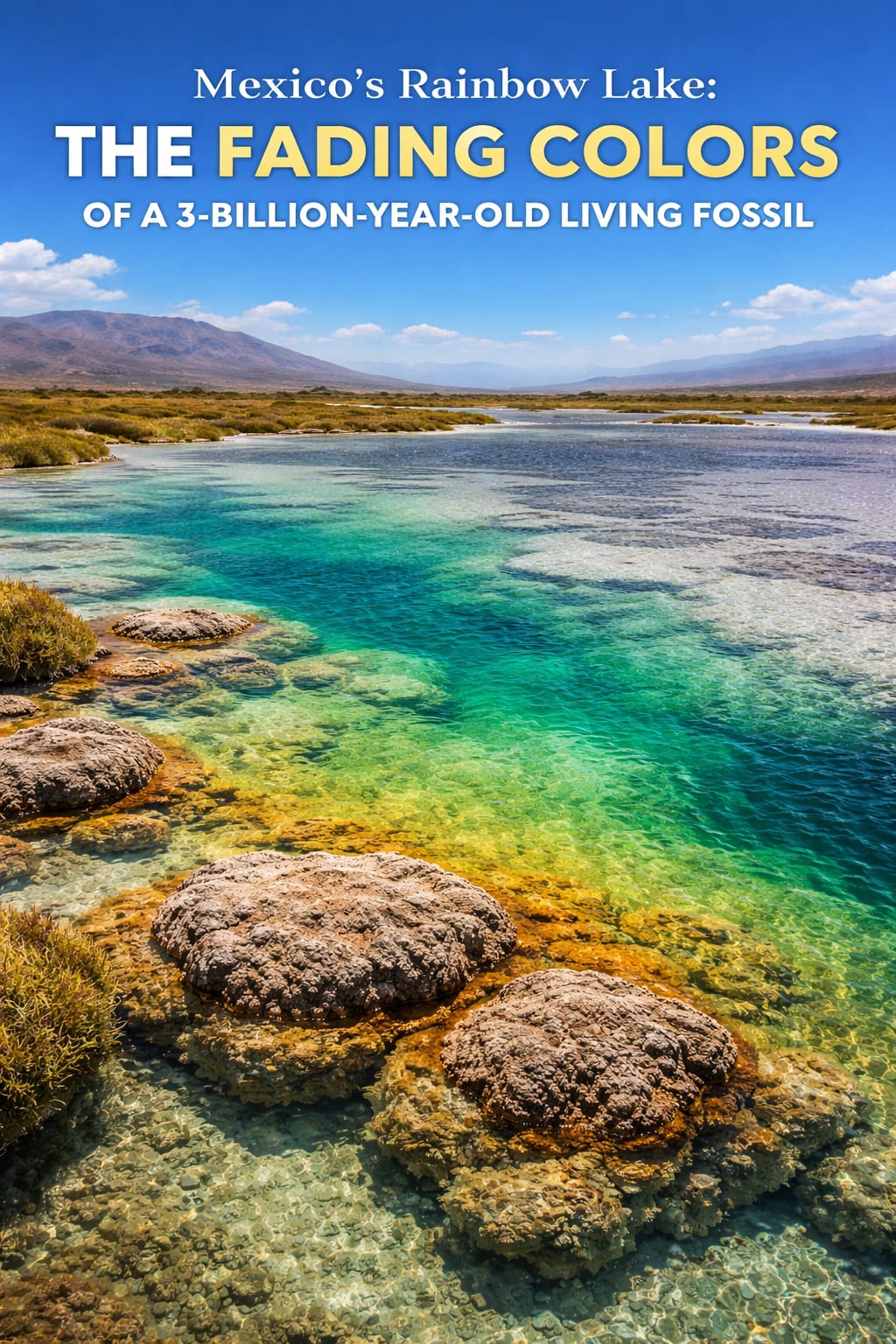
Hidden within the remote landscapes of Mexico lies a natural wonder unlike any other—a lake so unique that it offers a glimpse into Earth’s earliest days. Often referred to as Mexico’s “Rainbow Lake,” this extraordinary body of water is home to living fossils believed to be over three billion years old. Yet today, its once-vivid colors are fading, raising serious concerns among scientists and environmentalists.
The lake, located in the Cuatro Ciénegas Basin in northern Mexico, is renowned for its striking hues—shades of blue, green, and turquoise that shimmer under the desert sun. These colors are not just a visual spectacle; they are the result of a delicate ecosystem dominated by ancient microbial formations known as stromatolites. These layered structures are among the oldest forms of life on Earth and are often described as “living fossils” because they closely resemble organisms that existed billions of years ago.
Stromatolites played a crucial role in shaping Earth’s atmosphere. Billions of years ago, they contributed to the production of oxygen through photosynthesis, making it possible for more complex life forms to evolve. Today, they are rare, found in only a few places around the world. This makes the Mexican lake not only beautiful but scientifically invaluable.
However, the vibrant colors that once defined the lake are now gradually disappearing. Researchers have observed a noticeable dulling of the water’s hues, with some areas turning pale or even gray. This change is more than cosmetic—it signals a disruption in the lake’s fragile ecological balance.
One of the primary reasons behind this transformation is human activity. Over the past few decades, increased agricultural development in surrounding areas has led to excessive groundwater extraction. The basin relies on underground water sources to maintain its unique conditions, and as these reserves are depleted, the lake’s water levels drop. This alters the chemical composition of the water, directly affecting the microorganisms responsible for the lake’s colors.
In addition to water depletion, pollution has also become a growing concern. Runoff from farms introduces nutrients and chemicals into the ecosystem, disturbing the delicate balance that stromatolites depend on. Even small changes in water chemistry can have significant impacts on these ancient organisms, which have evolved to survive in very specific conditions.
Climate change further complicates the situation. Rising temperatures and changing rainfall patterns are putting additional stress on the already vulnerable ecosystem. Prolonged droughts reduce water availability, while extreme weather events can disrupt the lake’s stability. Scientists warn that if these trends continue, the stromatolites could face irreversible damage.
The fading colors of the lake serve as a visible warning sign—a signal that something is going wrong in one of Earth’s most ancient ecosystems. For researchers, this is not just about preserving a beautiful landscape; it is about protecting a living record of our planet’s history. The stromatolites in this lake offer invaluable insights into early life on Earth, helping scientists understand how life began and evolved.
Efforts are now underway to protect and restore the lake. Conservationists are working with local communities to promote sustainable water use and reduce environmental impact. There have also been calls for stricter regulations on agriculture and groundwater extraction in the region. Education campaigns aim to raise awareness about the importance of this unique ecosystem, encouraging both locals and visitors to take part in its preservation.
Despite these efforts, time is running out. The changes occurring in the lake are happening faster than many scientists anticipated. Without immediate and coordinated action, the world could lose one of its most extraordinary natural laboratories.
Mexico’s Rainbow Lake is more than just a scenic destination—it is a window into the deep past, a place where life has persisted for billions of years. Its fading colors remind us of the delicate balance that sustains life on Earth and the impact human activity can have on even the most ancient ecosystems.
As scientists continue to study and protect this remarkable lake, one thing is clear: preserving it is not just about saving a natural wonder—it is about safeguarding a piece of Earth’s history that can never be replaced.
About the Creator
Irshad Abbasi
Ali ibn Abi Talib (RA) said 📚
“Knowledge is better than wealth, because knowledge protects you, while you have to protect wealth.
Keep reading
More stories from Irshad Abbasi and writers in Earth and other communities.
The Skeleton Lake of the Himalayas
High in the rugged mountains of the Indian Himalayas lies one of the world’s most mysterious and haunting archaeological sites—Roopkund Lake, often called Skeleton Lake. Located at an altitude of about 5,029 meters (16,500 feet) in the Indian state of Uttarakhand, the small glacial lake is surrounded by steep snow-covered peaks. What makes this remote location extraordinary is the presence of hundreds of ancient human skeletons scattered around its shores and beneath its icy waters.
By Irshad Abbasi 3 days ago in Earth
The Door to Hell
In 1971, Soviet geologists accidentally opened a portal to an underground natural gas cavern in Turkmenistan's desert, and to prevent poisonous gas from spreading, they set it on fire expecting it to burn out in weeks—it's still burning today.
By The Curious Writer3 days ago in Earth
Oil Market is Volatile Again: What It Means for Global Energy and Traders
Global energy markets are once again at the center of attention after the United States introduced a temporary waiver allowing the purchase of certain Russian oil shipments that were already stranded at sea. The move has sparked intense discussions across financial markets, energy sectors, and geopolitical circles.
By Daniel Reid7 days ago in Earth
The First Rainbow Baby
Pitter-patter, pitter-patter. The rain fell in rhythmic splatters, slowly slowing, but still constant. Mira rolled onto her side pulling the blanket tight against her ears, but still she could hear chitter-chatter and scurrying feet of the creatures that refused to sleep in the lower decks.
By A. J. Schoenfeld7 days ago in Fiction


Comments
There are no comments for this story
Be the first to respond and start the conversation.