
How the Ukulele Came from Portugal to Hawaii
Ukulele Came from Portugal to Hawaii
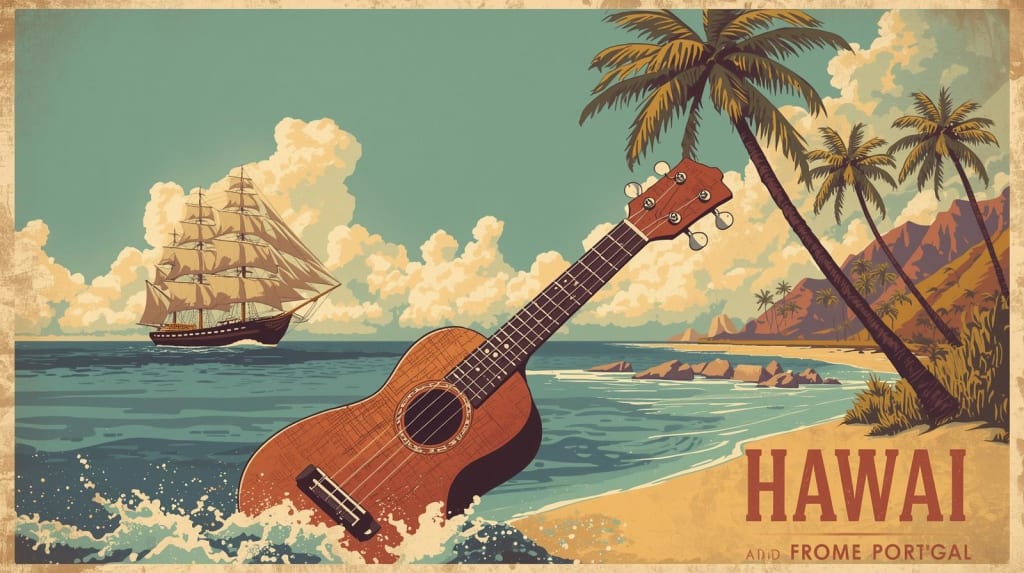
A Small Instrument with a Big Journey
The ukulele may look like a simple and cheerful instrument, but its story is full of travel, culture, and transformation. It did not begin in Hawaii, even though many people think it did.
Its roots go back to Portugal, where small string instruments were already part of daily life. Over time, this musical idea crossed the ocean and found a new home.
This journey is not just about an instrument. It is about people, migration, and how cultures blend to create something completely new.
Life in Portugal Before the Ukulele
In Portugal, music was an important part of everyday life. People used simple instruments to express joy, tell stories, and celebrate special moments.
Among these instruments were the machete, braguinha, and cavaquinho. These were small, guitar-like instruments with bright and lively sounds.
They were easy to carry and simple to play, which made them popular among ordinary people. These instruments would later become the foundation of the ukulele.
The Sound That Traveled Across Borders
The sound of these Portuguese instruments was light, cheerful, and rhythmic. It was perfect for dancing, singing, and social gatherings.
This sound had a unique quality that made people feel relaxed and happy. It was not heavy or complex like some classical instruments.
This simple and joyful tone made it easy for the sound to travel across cultures and be accepted in new places.
The Great Migration to Hawaii
In the late 19th century, many Portuguese workers moved to Hawaii. They were invited to work on sugar plantations, which needed labor at the time.
These workers did not come alone. They brought their traditions, food, language, and music with them.
Among their belongings were the small string instruments that would soon change Hawaiian music forever.
The Arrival That Sparked Curiosity
When the Portuguese immigrants arrived in Hawaii, locals were curious about their culture. The music they brought was new and exciting.
One famous moment tells the story of João Fernandes, a Portuguese immigrant who played his instrument upon arrival.
His fast and energetic playing amazed the Hawaiian people. They had never seen fingers move so quickly across strings.
The Birth of a New Identity
The Hawaiian people were inspired by this new sound. Local craftsmen and musicians began experimenting with the instrument.
They changed its size, adjusted its shape, and modified its tuning. Slowly, the instrument began to take on a new identity.
It was no longer just a Portuguese instrument. It was becoming something uniquely Hawaiian.
Why the Name "Ukulele" Was Chosen
The name "ukulele" comes from the Hawaiian language and means "jumping flea." This name may sound unusual, but it has a fun explanation.
It was inspired by the fast finger movements of players, which looked like tiny creatures jumping across the strings.
The name perfectly captured the playful, lively, and energetic spirit of the instrument.
The Role of Hawaiian Craftsmanship
Hawaiian craftsmen played a major role in shaping the ukulele into what it is today. They used local wood and materials to improve its sound and design.
They focused on making the instrument lightweight, durable, and easy to play. This made it more appealing to a wider audience.
Their creativity turned a simple imported idea into a refined and culturally meaningful instrument.
Influence of Hawaiian Culture
Hawaiian culture is deeply connected to music, dance, and storytelling. The ukulele quickly became a part of these traditions.
It was used in hula dances, folk songs, and community gatherings. Its cheerful sound matched the peaceful and joyful lifestyle of the islands.
Over time, it became more than just an instrument. It became a symbol of Hawaiian identity and spirit.
Royal Support and Recognition
The ukulele gained even more popularity when Hawaiian royalty began to support it. King Kalākaua was especially important in this process.
He loved music and encouraged the use of the ukulele in royal events and performances. This gave the instrument respect and recognition.
Because of this support, the ukulele became widely accepted across Hawaiian society.
How the Ukulele Spread Beyond Hawaii
Once the ukulele became popular in Hawaii, it started to travel beyond the islands. Visitors and performers helped introduce it to other parts of the world.
In the early 20th century, it became popular in the United States. People loved its simple design and joyful sound.
From there, it spread to Europe, Asia, and beyond, becoming a global instrument.
Why People Fell in Love with the Ukulele
One reason for the ukulele’s global success is its simplicity. It is easy to learn, affordable, and fun to play.
Unlike larger instruments, it does not feel intimidating. Beginners can quickly learn basic chords and start playing songs.
Its cheerful sound also makes it enjoyable for both players and listeners.
Cultural Exchange and Musical Evolution
The ukulele is a perfect example of cultural exchange. It shows how ideas can travel, change, and grow over time.
What started as a Portuguese instrument became a Hawaiian symbol and then a global musical tool.
This evolution shows that music is always changing and adapting to new environments.
Differences Between Portuguese Instruments and Ukulele
Although the ukulele came from Portuguese instruments, it is not exactly the same. There are key differences in design and sound.
Portuguese instruments had slightly different shapes and tuning styles. They were also used in different types of music.
The ukulele became simpler, lighter, and more focused on cheerful tones, making it unique.
The Role of Community in Its Growth
Communities played a big role in the growth of the ukulele. People shared music, taught each other, and passed down traditions.
This helped the instrument spread quickly and become part of daily life.
Music became a shared experience that brought people together.
Ukulele in Modern Times
Today, the ukulele is used all over the world. It is popular in schools, social media, and music communities.
Many artists use it in modern songs, blending it with different styles and genres.
It continues to evolve while still keeping its original charm.
Why This Story Matters Today
The story of the ukulele is important because it teaches us about connection. It shows how cultures can come together and create something beautiful.
It also reminds us that simple ideas can grow into something powerful and meaningful.
This journey is not just about music. It is about human creativity and shared experiences.
Lessons from the Ukulele’s Journey
There are many lessons we can learn from this story. One lesson is that creativity has no limits or borders.
Another lesson is that small things can have a big impact when they are shared and developed over time.
The ukulele teaches us to appreciate both simplicity and innovation.
Final Thoughts
The journey of the ukulele from Portugal to Hawaii is a story of transformation, creativity, and cultural blending.
It started as a simple instrument and became a symbol of joy and connection across the world.
When you play a ukulele today, you are not just making music. You are continuing a story that began many years ago across the ocean.
About the Creator
Backlinks Cart
Mohsin (CEO BacklinksCart Agency).
Our Backlinks Platform " Backlinkscart.com"
For any edits or link insertions. WhatsApp" +92 3263918853 or +92 3132824834 or +92 3091821105
Gmail: [email protected] or [email protected]
Keep reading
More stories from Backlinks Cart and writers in Earth and other communities.
Recent Infrastructure Issues Affecting Urban Areas in the UK
Urban infrastructure plays a critical role in supporting daily life across the United Kingdom. From water supply systems and road networks to public transport and energy distribution, cities rely heavily on well-maintained infrastructure to function smoothly. However, in recent years, many UK urban areas have faced increasing infrastructure challenges that have affected both residents and local economies.
By Backlinks Cart11 days ago in Earth
Remarkable Looking Lizards
Inhabiting the southwestern US, collared lizards are known for their vibrant color and their characteristic black “collar” mark around their necks. These lizards have quick movement and impressive speed. Collared lizards are primarily insectivorous, meaning their diet mainly consists of insects. They are known for their hunting skills, often pouncing on prey after displaying tail movements.
By Rasma Raistersa day ago in Earth
Israel-Iran War: Environmental Risks Overview
Nearly a month into the Israeli-US war against Iran, it is clear that the environmental costs for Iran and the wider region have been substantial and are continuing to mount. The primary environmental threat during this stage of the war is conflict-linked pollution, which has the potential to impact public health, as well as terrestrial and marine ecosystems, and natural resources such as soils and aquifers. Contamination of water bodies is of particular concern for Iran, where drought and mismanagement have depleted water resources.
By Ibrahim Shah 2 days ago in Earth




Comments
There are no comments for this story
Be the first to respond and start the conversation.