
Tried to Love "The Secret Agent" (2025)- But it Almost Broke Me
Kleber Mendonca Filho's "Secret Agent" is a visual miracle of 1970s Brazil. But as a lover of cinema, I have to ask: When does a masterpiece stop being art and start being a test of endurance ?
I wanted to love it. I really did. I sat down with the lights dimmed, ready to be transported to 1970s Recife, ready for the "slow-burn" brilliance that everyone from Cannes to the Oscars had been whispering about. But two hours in, something happened that rarely happens to me as a cinephile: I felt a heavy, physical exhaustion. I had to hit pause. I had to walk away.
I ended up watching Secret Agent (O Agente Secreto) in three separate acts over three nights. And while my brain tells me I just witnessed a technical triumph, my heart feels like it was left stranded at a bus station in the middle of a Brazilian night, waiting for a connection that never came.
The Ghost of the Seventies
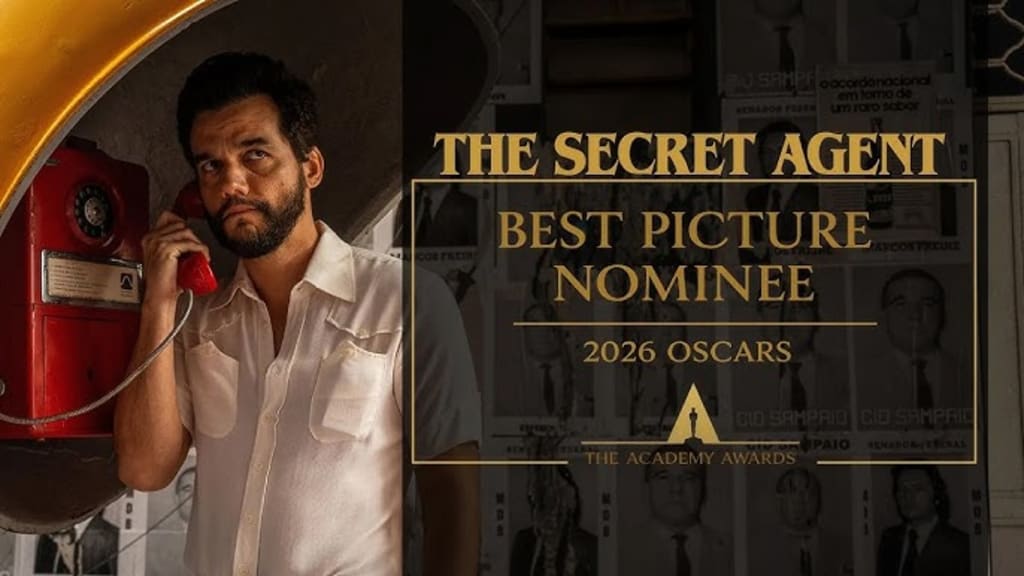
Let’s talk about what this film gets right, because it gets everything right. Kleber Mendonça Filho isn’t just a director; he’s a time traveler. The film doesn’t just look like the seventies—it feels like them. You can almost smell the stale cigarette smoke, the humidity clinging to the walls of those cramped apartments, and the silent, vibrating paranoia of a military dictatorship.
The protagonist is a ghost haunting his own life. The way the camera lingers on him—sometimes for five, six minutes in a single, unblinking shot—is hypnotic. I found myself connecting with his every sigh, his every cautious glance out the window. It’s a documentary-style intimacy that few filmmakers dare to attempt. As a student of the craft, I was in awe. I saw the genius in the stillness. I saw the bravery in the silence.
The Wall of Time
But here is where the "intellectual" movie lover meets the "human" viewer. There is a fine, invisible line between immersion and inertia.
Secret Agent crosses that line and sets up camp there. For three hours, the film asks you to breathe at its pace—a pace that is agonizingly, almost provocatively, slow. I understood the intent: the director wants us to feel the stagnation of a life under surveillance, where time is both an enemy and a cage. But as a viewer, I felt the cage more than the life.
I found myself admiring the grain of the film, the perfect placement of a rotary phone, the way the light hit a glass of water—and then I realized I was admiring the decor because the story had stopped moving. I wasn't watching a man’s journey anymore; I was watching a beautifully curated museum exhibit. And museums, as much as we love them, aren't where you want to spend three uninterrupted hours of your life.
The Betrayal of the Archive
The moment that truly broke me—the "nail in the coffin," as I keep calling it—was the ending. After three nights of living with this character, after feeling his heartbeat and his fear, the film suddenly cuts to the present day.
We don't see his end. We don't get to say goodbye. Instead, we are given a clinical, cold recitation of his fate through old newspaper clippings. Just like that, the man I had come to love was reduced to a headline. A piece of paper in an archive.
I get it. In a dictatorship, people don't get grand finales; they simply disappear. They become statistics. It’s a brilliant, haunting metaphor for the erasure of human history. But after 160 minutes of intimate connection, it felt like an emotional abandonment. I felt like I had been invited to a deep, personal conversation, only for the speaker to suddenly stand up, hand me a dry report, and walk out of the room without looking back.
The Guilt of the Modern Viewer
There is a strange, quiet guilt that comes with not "clicking" with a masterpiece. You start to doubt yourself. Am I too distracted? Is my attention span ruined by the modern world? Do I just not "get" high art anymore?
But the more I thought about it, the more I realized that my reaction is the critique. I didn't hate the film. In fact, I’m glad I saw it. I learned more about the power of a single frame from this movie than from a dozen Hollywood blockbusters. But I also learned that technical perfection is not a substitute for emotional pacing.
Secret Agent is a film that demands everything from you and gives back very little in the way of warmth. It is a monumental achievement in world cinema, but it’s a monument made of cold stone. I can admire the sculpture, I can study the craftsmanship, and I can respect the artist—but I don't have to pretend that standing in its shadow for three hours was a joy.
Conclusion: A Masterpiece for the Mind, a Wall for the Soul
In the end, Secret Agent will likely win its awards and be discussed in film schools for years to come. And it should be. It is a rare, uncompromising vision of a dark era.
But for me, it remains a beautiful, insurmountable wall. It’s a film that I will remember for its details, its textures, and its incredible lead performance—but I will also remember the relief I felt when I finally finished it. Cinema is supposed to be a bridge between the artist and the audience. This time, the bridge was so long and so steep that I arrived at the other side exhausted, wondering if the view was worth the climb.
About the Creator
Feliks Karić
50+, still refusing to grow up. I write daily, record music no one listens to, and loiter on film sets. I cook & train like a pro, yet my belly remains a loyal fan. Seen a lot, learned little, just a kid with older knees and no plan.
Keep reading
More stories from Feliks Karić and writers in Critique and other communities.
Slippers vs. Statues: Melania's Untold Human Story(Part.3)
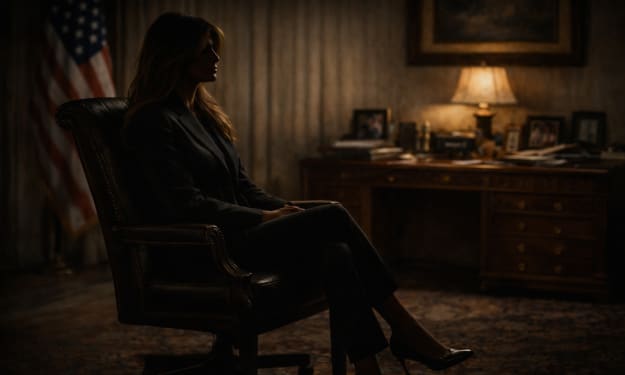
In this series, I’ve explored Melania Trump through a lens Hollywood doesn’t have: the lens of a neighbor. I was born in 1973 in Croatia, just thirty miles from where she grew up in Sevnica, Slovenia. I’ve written about her "Stone Face" as a reflex of Balkan Survival Mode and how her marriage to Donald reflects the "Grč"—that deep-seated Balkan muscle spasm of seeking security in a cold patriarch.
By Feliks Karić2 months ago in Critique
The Road by Cormac McCarthy:
"If he is not the word of God, God never spoke." It's a line spoken by The Man, unnamed, early on in the 2007 Pulitzer Prize winning novel, "The Road" by Cormac McCarthy. It's this line, elegiac and moving, infused with despair and hope, that informs you, you're not reading something you'll easily forget.
By Adam Diehl4 days ago in Critique
Forbidden Fruits Review: A Hilarious Toxic Cult of Feminist Witches
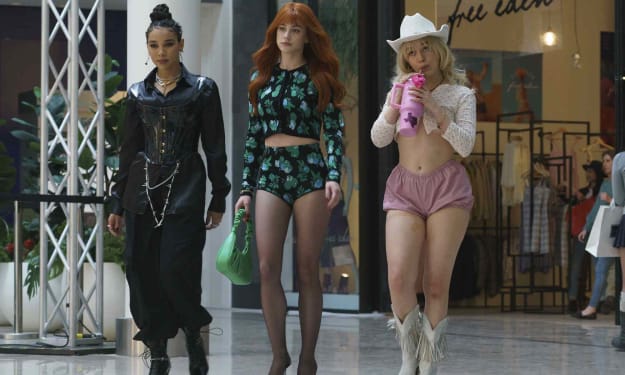
Forbidden Fruits, directed by Meredith Alloway, is a vibrant and audacious debut that blends horror and comedy within the context of a modern-day mall culture. The film, which draws inspiration from Lily Houghton’s play Of the woman came the beginning of sin, and through her we all die, introduces audiences to a coven of young women who navigate the complexities of friendship and rivalry while engaging in witchcraft rituals.
By Ninfa Galeanoa day ago in Critique
A Visitor's Guide To Victorian England
A Book Review Being interested in all things Victorian, I am constantly looking for books on the Victorian Era. In fact, I should admit that I am obsessed about ‘all things Victorian’. From the clothes worn by men and women, rich or poor, to how they lived, where they lived, what they ate and would (or would not ) drink, what kind of transport there was, who worked where, who went to school (and who didn’t), the list really is endless.
By Ruth Elizabeth Stiff6 days ago in BookClub

Comments
There are no comments for this story
Be the first to respond and start the conversation.