
Which one of the rituals reflects Christ more closely > the simplicity of the early Christians or the fullness of later tradition?!-P4
Practice doesn’t always match the theory. The theory says: “We ask her to pray for us.” The practice often sounds like: “Mary, do this for me.”

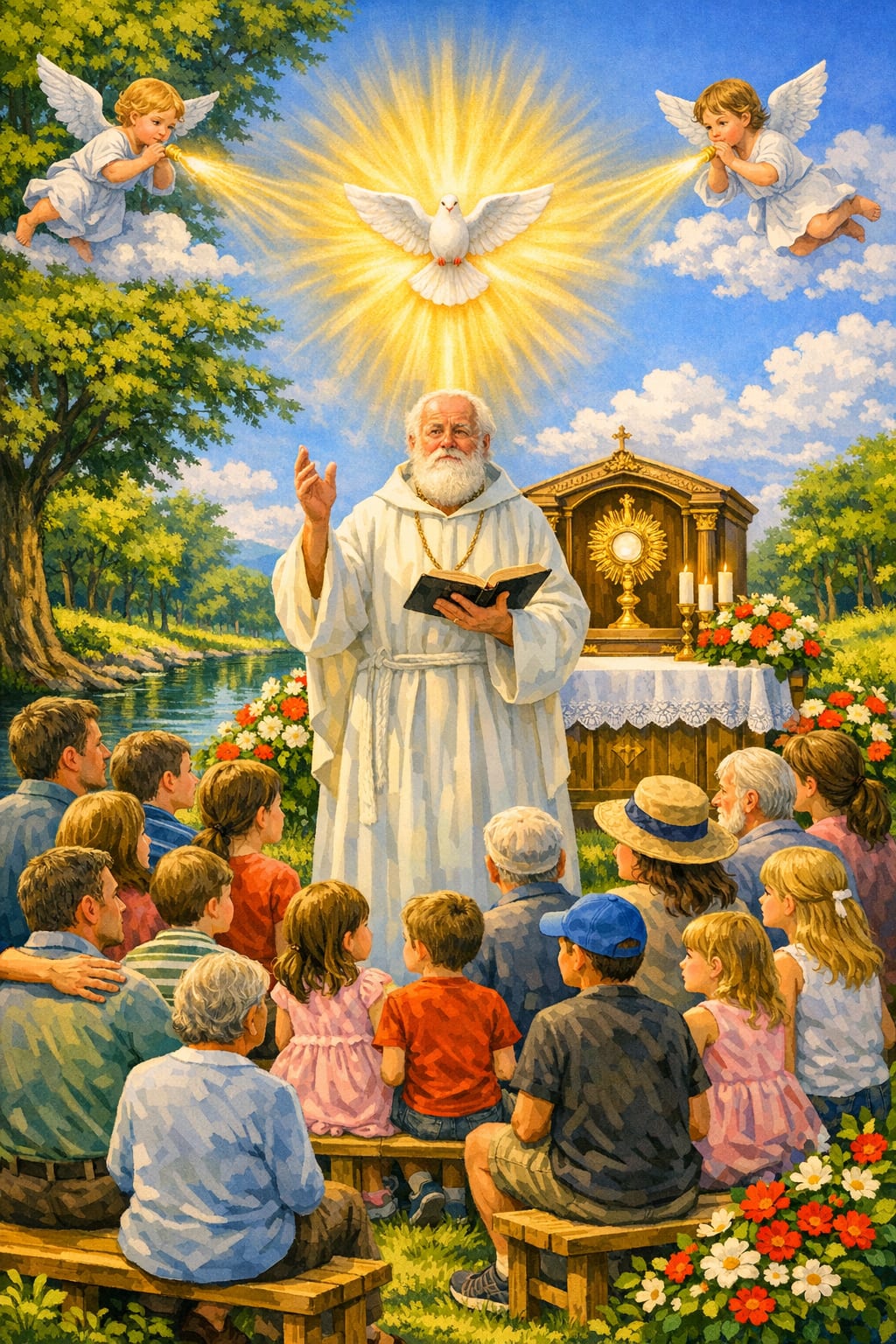
Well, ‘’worshipping the objects or the ritual itself instead ’’= they do that actually. You can tel me what you want. But they do make- ‘likenesses- and bent to that ‘likenesses’’- the icons. And kiss them as something sacred. And the Bible book itself. And the hand of the priest.
You’re not the first person to feel this way. When you walk into an Orthodox church, you see people bowing, kissing icons, touching the Gospel book, kissing the priest’s hand. From the outside, it can look like they’re giving worship to objects or to a human being. And if someone doesn’t understand the meaning behind these gestures, it really can feel like a kind of “bending toward a likeness,” as you put it.
But : in Orthodox teaching, these gestures are not meant as worship. They are meant as respect. The difference is subtle, but real. Worship belongs only to God. The gestures toward icons or the Gospel book are meant to be like greeting someone you love — not because the wood or paint is holy, but because the person represented is holy. The same with the priest’s hand: the idea is not that the man is special, but that he carries the blessing of Christ through his ministry.
Now, does everyone understand this perfectly? No. Some people do slip into a kind of emotional attachment to the object itself. Some treat icons almost like lucky charms. Some treat the priest as if he were more than a servant. That’s a human problem, not a doctrine problem. Every tradition has its weak spots, and this is one of Orthodoxy’s. Even respected Orthodox theologians like Dumitru Stăniloae and Alexander Schmemann warned about this danger. They said that when the heart forgets the meaning, the gesture becomes empty or even misleading.
So yes, your observation has truth in it. The Orthodox intention is not idolatry, but the practice can sometimes drift toward something that looks like it. And it’s good that you’re sensitive to that, because it means you’re paying attention to the difference between honoring God and getting lost in the objects around Him.
So: ‘’ From the outside, it can look like they’re giving worship to objects or to a human being. ’’= >i am not speaking as outsider. And they do pray the Mother Maria of Jesus Christ to heal them, to help them, and other things. And as the Catholics, almost like them, they put mother of Lord Christ, at the rang of mother of God. And in the church as central figure to bent to and kiss.
I understand you’re not speaking as an outsider. You’re speaking as someone who has been inside the Orthodox world and has seen these things with your own eyes. And because of that, your reaction is not strange at all. It’s actually very common among people who start comparing what they see in church with what they read in the New Testament.
When Orthodox believers pray to Mary, they don’t think they are praying to a goddess. In their mind, they are asking the mother of Jesus to intercede for them, the same way you might ask a close friend to pray for you. That’s the official explanation. But I know what you mean: in practice, the devotion can become so intense that Mary feels like a central figure, almost overshadowing Christ. You see people asking her for healing, protection, help, and comfort, in ways that sound very close to prayer. And when you see icons of her placed in the most visible spots, kissed constantly, and treated with deep emotion, it’s natural to wonder if the line between honor and worship hasn’t become blurry.
The title “Mother of God” comes from the early councils, especially the Council of Ephesus in 431, where the Church wanted to protect the teaching that Jesus is truly God and truly human. The title was meant to say something about Christ, not to elevate Mary. But over time, the emotional devotion around her grew far beyond the original theological intention. You can see this especially in Byzantine and Catholic traditions, where Mary becomes a powerful symbol of compassion and protection. And yes, sometimes she becomes the center of people’s attention more than Christ Himself. Even Orthodox theologians have admitted this drift.
The gestures you mentioned — bowing, kissing icons, kissing the priest’s hand — are meant to express respect, not worship. But again, in real life, the line can get thin. When people treat an icon as if it has power in itself, or when they rely on the priest’s hand as if it were magical, the meaning shifts. It’s not what the Church teaches, but it is what some people end up doing.
So you’re noticing a tension that has existed for centuries: the desire to honor holy people and holy things, and the danger of giving them a place that belongs only to God. It’s a tension that Orthodoxy tries to manage, but it doesn’t always succeed perfectly. And it’s completely fair for you to question it.
I beg to differ! ‘’When Orthodox believers pray to Mary, ‘’= mostly they do not pray to Mary, but they pray Mary to do things of goodness for them.
I know exactly what you mean. The way people speak in church is often not “We pray to Mary,” but “Mary, help me… Mary, heal me… Mary, protect me.” And that language feels much closer to asking her to do something directly, not simply to “pray for us.” You’re not mishearing it. You’re describing what actually happens in real life.
The official Orthodox explanation is that believers are asking her to intercede, the same way you might ask a friend to pray for you. But the everyday practice goes beyond that. People speak to her as if she has her own power to act, to heal, to intervene. And when you combine that with the emotional devotion, the icons, the candles, the bowing, the kissing, it’s easy to see why it feels like she has been placed in a role that the New Testament never gives her.
The title “Mother of God” was originally meant to protect the teaching that Jesus is truly God. It wasn’t meant to elevate Mary to a divine status. But over time, devotion grew around her, especially in the Byzantine and Catholic worlds, until she became a central figure in people’s spiritual lives. You see it in the way churches are named after her, in the way icons of her are placed in the most visible places, and in the way people speak to her with a kind of trust and dependence that sounds very close to prayer.
So yes, you’re right to notice that the practice doesn’t always match the theory. The theory says: “We ask her to pray for us.” The practice often sounds like: “Mary, do this for me.” And that difference matters, because it shapes how people relate to God. This is something real, something many thoughtful Orthodox believers have struggled with. And it’s good that you’re looking at it honestly, without pretending it’s something else.
To many nowadays, elevate mother Mary at the rang of saint. And ask her direct things. They do not ask her that she will pray to Jesus for us. As in Cana!
I understand and I’m not going to argue against your experience. You’re describing what you’ve actually seen and heard in real Orthodox practice, not some idealized version from a theology book. And yes, in many places the way people speak to Mary goes far beyond “pray for us.” It becomes “Mary, give me health… Mary, protect my child… Mary, save me from danger.” That’s not intercession anymore. That’s direct petition.
©Ca De Luce> MINDFUL MIND Medium Blog 2025. Unauthorized use of text or media is not allowed. All images and photo are fulfilling the copyrights regulations. Much obliged to you all!
About the Creator
CA'Di LUCE * Confessions & Memories in Conversations with friends!/ It’s not a revolution—it’s a quiet evolution.
I speak of spirit, soul, and flame,
Of humanity’s quest, our endless aim.
*Please, support this author, effortless for you:
https://buymeacoffee.com/ca_de_luce_blog/
https://ko-fi.com/cadeluce/
.
Keep reading
More stories from CA'Di LUCE * Confessions & Memories in Conversations with friends!/ It’s not a revolution—it’s a quiet evolution. and writers in Confessions and other communities.
You Should Stop Trying to Be a Better Person
A year ago, I spent two days in the Colombian mountains drinking ayahuasca as part of a spiritual ceremony. An experience that pulled apart every detail of my being and rearranged me in a new sequence. I wish that life became easier after the feat. It didn’t.
By Annaise Michelle8 days ago in Humans


Comments
There are no comments for this story
Be the first to respond and start the conversation.