
Inside the Scandal Machine: Why We Can’t Look Away from Fame’s Darkest Secrets
A personal reflection on how celebrity scandals—from old Hollywood to modern media—became the stories we secretly crave.

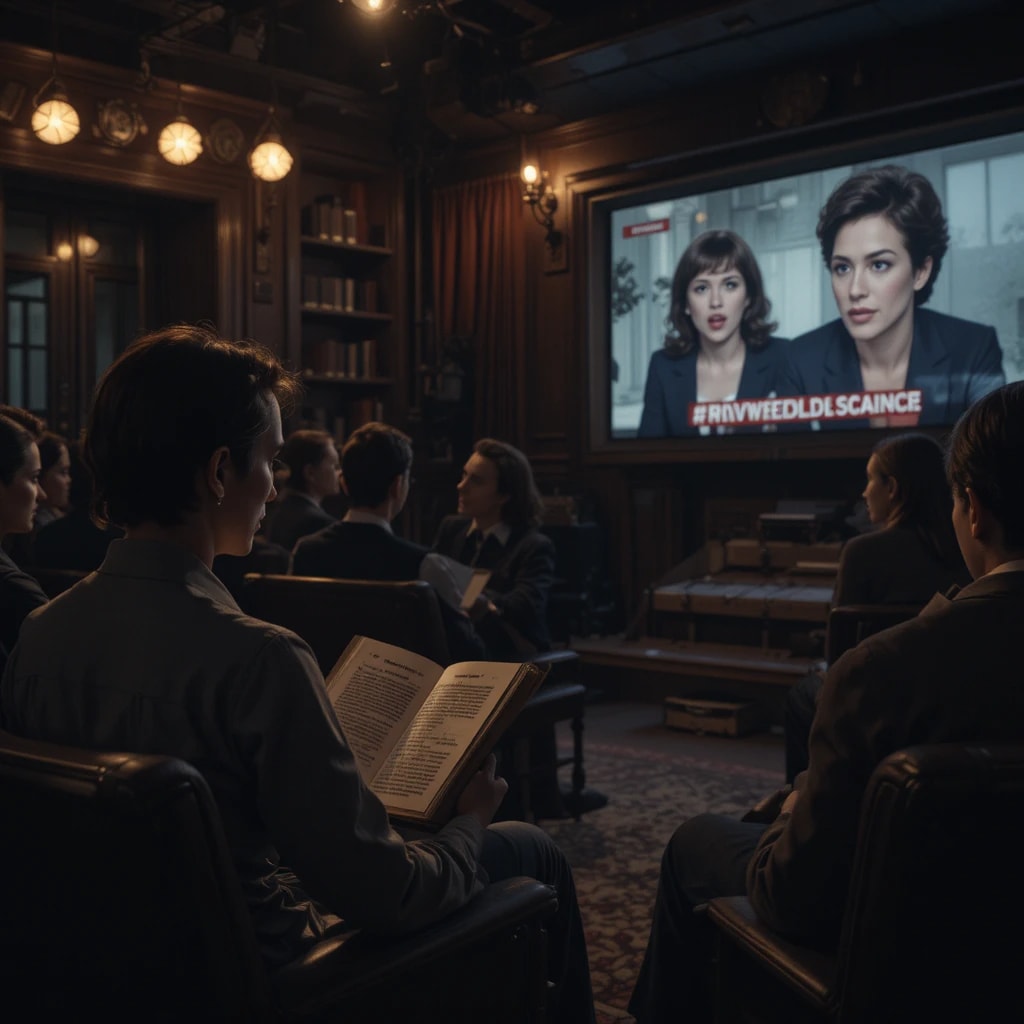
I’ll admit something most people won’t say out loud—we are drawn to scandal.
Not because we are bad people, but because scandal gives us a glimpse behind the curtain. It allows us to see that even the most polished, admired figures carry imperfections. And somehow, that makes them feel human… or at least closer to us.
Growing up, I remember discovering stories from the golden age of Hollywood. Books filled with hidden truths, whispered secrets, and lives that looked perfect on screen but were far more complicated behind the scenes. Titles like Mommie Dearest shocked readers by revealing the reality behind a glamorous public image. These stories weren’t just entertainment—they were revelations.
Back then, magazines thrived on similar energy. Headlines promised secrets, and readers couldn’t resist. Not because they wanted to judge, but because they were curious. We all are.
And that curiosity hasn’t disappeared—it has evolved.
Today, scandals no longer live only in books or magazines. They unfold in real time, across television and digital platforms, reaching millions within hours. What’s more interesting is how quickly these stories are transformed into something else entirely: content.
In the United Kingdom, for example, a recent television production dramatized the controversy surrounding Huw Edwards. The program was based on publicly known details and created a massive wave of attention. Viewers tuned in not just to understand what happened, but to experience the story emotionally.
And that’s where the line becomes blurred.
When a scandal turns into a dramatized production, what becomes the focus? Is it the truth behind the situation—or the performance of the actor portraying it? Conversations began shifting from the seriousness of the issue to discussions about acting, ratings, and awards. The original story slowly transformed into something else: a spectacle.
This raises a difficult question.
Are we still seeking understanding—or are we simply consuming?
What makes this even more complex is how quickly the industry moves on. Once one story captures attention, producers begin searching for the next. Another example often mentioned is the controversy surrounding Phillip Schofield. His situation, which once dominated headlines, has already begun to fade—yet there are discussions about turning it into the next major dramatized series.
It’s almost as if scandals now follow a pattern: A moment of revelation.
A wave of public reaction.
A period of silence.
And finally, a return as entertainment.
I find that both fascinating and unsettling.
Because behind every headline, there are real people, real consequences, and real lives affected. Yet when these stories are retold, they often lose that human depth. They become narratives shaped for impact, not necessarily for truth.
And still—we watch.
That’s the part I struggle to admit. Even when we say we’re tired of scandals, we remain curious. We want to know what really happened. We want to understand the hidden side of fame.
Maybe it’s because we compare it to our own lives. We see success, recognition, and influence—and then we see how fragile it all can be. It reminds us that no one is immune to mistakes, pressure, or public judgment.
But there’s another layer to this.
Scandal also reflects the world we live in. A world where attention is currency. Where stories are shaped not just to inform, but to attract viewers. Television networks, streaming platforms, and media companies all compete for the same thing: our attention.
And scandal delivers it.
The more shocking the story, the more people watch. The more people watch, the more it is repeated. Eventually, the story becomes bigger than the truth itself.
So where does that leave us?
As viewers, we have a choice. We can consume these stories passively, accepting them as entertainment. Or we can pause and ask deeper questions: What is being shown? What is being left out? And who benefits from this narrative?
Because at the end of the day, scandal isn’t just about the people involved—it’s about us too.
Our curiosity.
Our attention.
Our willingness to watch.
And maybe the biggest confession of all is this:
We don’t just observe scandals.
We help create their power.
About the Creator
CelebCast Central
CelebCast Central brings you explosive celebrity scandals, royal drama, Hollywood gossip, and viral stories — unfiltered and uncensored. Follow us for bold takes and trending tales the world is buzzing about!
Keep reading
More stories from CelebCast Central and writers in Confessions and other communities.
I Witnessed a Royal Grift Unfold And the Truth Will Shock You
I have a confession to make. For months, I’ve been watching stories unfold about one very high-profile couple, and the more I pay attention, the more I see a pattern—a carefully orchestrated pattern that most people don’t notice at first glance.
By CelebCast Central14 days ago in Confessions
Friendfluence Dating Trend Encourages Honest Feedback About Romantic Partners
The friendfluence dating trend is the increasing influence of friends in making romantic choices, especially by giving truthful feedback on potential or current partners. With the current dating trend, people are now more dependent on their circle of friends to determine their compatibility, characters, and potential relationships. It is a tendency that is indicative of the concept that the friends who tend to view relationships in an external sense can make valuable contributions to them and maybe by-passed by the involved parties. Friendfluence is an extension of the emotional decision-making process because dating is becoming more complex.
By Mark Hipster2 days ago in Confessions
Thirty (one) and Neither Flirty nor Thriving.
I'm thirty-one and orbiting the same few mistakes like they're landmarks. London is already awake before I am (or before I've slept) - sirens somewhere far enough to ignore, buses sighing at stops, people moving with purpose I can't quite borrow. I lie there for a bit, tasting last night at the back of my throat, trying to remember if I meant to drink that much or if it just...happened again.
By Stacey Vella5 days ago in Psyche


Comments
There are no comments for this story
Be the first to respond and start the conversation.