
Brainstorming Plan of US Ground Invasion of Iran
Negotiations in Pakistan and the Strategic Chessboard of the Middle East

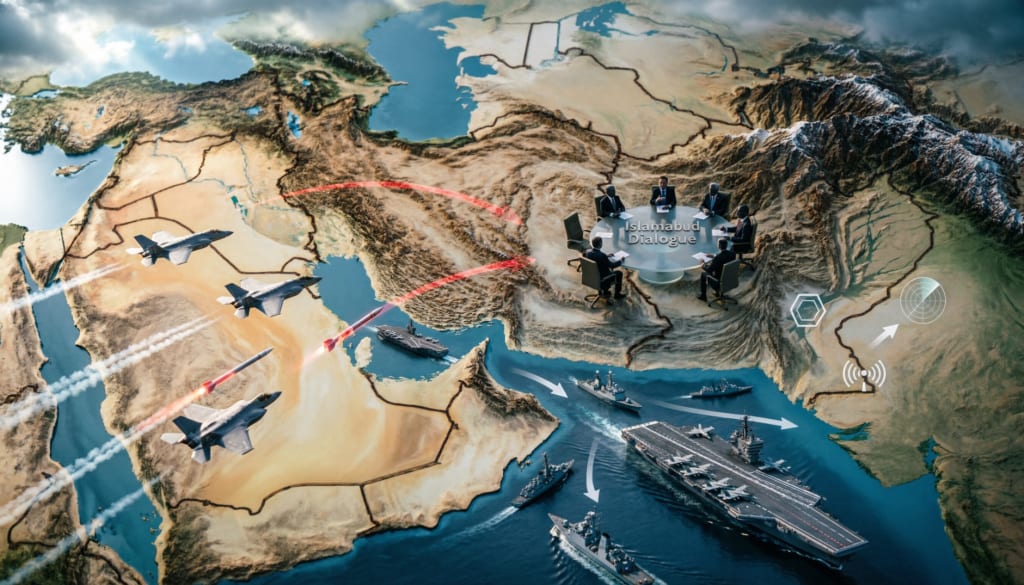
Brainstorming Plan of US Ground Invasion of Iran
The possibility of a United States ground invasion of Iran has once again become a topic of global strategic debate. With rising military tensions, economic disruptions, and diplomatic maneuvering, the Middle East is entering a critical phase. Reports suggest increasing troop deployments, rising threats, and parallel diplomatic efforts — including potential negotiations through Pakistan. These developments indicate that the conflict is no longer limited to airstrikes or naval pressure, but could evolve into a broader geopolitical confrontation.
Recent escalation began when the United States and its allies launched major strikes targeting Iranian military infrastructure. Iran responded with missile attacks, drone strikes, and threats to close the Strait of Hormuz — one of the world’s most important oil routes. This confrontation has disrupted global trade, aviation, and energy markets, increasing fears of a wider war.
At the same time, diplomatic efforts are intensifying, with Pakistan emerging as a potential mediator between Washington and Tehran.
The Brainstorming Plan: US Ground Invasion Scenario
If the United States considers a ground invasion of Iran, military planners would likely follow a multi-phase strategy:
Phase 1: Air and Cyber Domination
Before any ground invasion, the United States would attempt to:
- Destroy Iranian air defense systems
- Target missile launch facilities
- Disable command and communication networks
- Conduct cyber warfare against military infrastructure
This phase is already partially visible through ongoing strikes targeting Iranian military installations and infrastructure. The objective is to weaken Iran's defensive capability before ground forces move in.
Phase 2: Strategic Entry Points
Possible entry points for a US ground operation may include:
- Persian Gulf coastal regions
- Southern Iran oil infrastructure
- Western border near Iraq
- Special forces operations inside key military zones
Iran's geography, however, makes invasion extremely difficult. The country is mountainous, large, and densely populated. Unlike Iraq in 2003, Iran's terrain favors defensive warfare.
Additionally, Iran has strong missile capabilities and regional allies, increasing risks for invading forces.
Phase 3: Limited Ground Operations
Instead of a full-scale invasion, the United States may consider:
- Special Forces raids
- Limited seizure of strategic oil hubs
- Securing Strait of Hormuz region
- Targeting nuclear facilities
Recent statements suggest the United States may consider seizing key oil infrastructure if negotiations fail.
This indicates a potential "limited invasion" rather than full occupation.
- Iran's Response Strategy
- Iran's likely counter-strategy includes:
- Missile attacks on US bases in the Middle East
- Drone warfare
- Proxy forces across the region
- Blocking oil shipments
- Cyber retaliation
Iran has already demonstrated large-scale drone and missile retaliation across regional targets, showing its ability to escalate conflict quickly.
This creates a high-risk environment for any ground invasion.
Pakistan's Role in Negotiations
Pakistan has positioned itself as a possible mediator between Iran and the United States. Pakistani officials have expressed readiness to facilitate dialogue and reduce tensions in the region.
Pakistan's diplomatic advantages include:
- Good relations with Iran
- Strategic ties with the United States
- Neutral regional positioning
- Military credibility
Pakistan offered to mediate following US-Israel strikes, emphasizing de-escalation and diplomacy.
However, there is also uncertainty. Iran recently denied participating in mediation discussions through Pakistan, showing diplomatic complexity.
This suggests negotiations remain fragile.
Global Consequences of Ground Invasion
If the US launches a ground invasion of Iran, the consequences could include:
Oil Market Shock
Iran controls access to the Strait of Hormuz. Any conflict could disrupt:
- 30% of global oil supply
- 20% of global LNG shipments
This would cause global economic instability and rising fuel prices.
Regional War Risk
A US-Iran ground war could trigger:
- Israel involvement
- Gulf country tensions
- Proxy conflicts in Iraq, Syria, Lebanon
- Wider Middle East instability
Economic Fallout
Global markets would face:
- Oil price surge
- Supply chain disruption
- Inflation increase
- Economic slowdown
The Diplomatic Window
A full invasion of Iran is challenging because:
- Iran is 4 times larger than Iraq
- Strong missile capability
- Mountain terrain
- Large population
- Regional allies
This makes any invasion costly and risky.
Despite rising tensions, diplomacy is still active. Reports indicate ongoing negotiations and possible deals to avoid escalation.
Some leaders have warned that if negotiations fail, further military action could follow.
This creates a critical diplomatic window where Pakistan and other countries could help prevent war.
Conclusion
The possibility of a US ground invasion of Iran remains uncertain but increasingly discussed. Military planning, rising troop deployments, and diplomatic efforts suggest a complex geopolitical chessboard.
Pakistan's potential role as mediator adds an important diplomatic dimension. If negotiations succeed, war may be avoided. If they fail, the Middle East could face one of the largest conflicts in modern history.
The coming weeks may determine whether diplomacy prevails — or whether the world moves toward a new geopolitical confrontation.
About the Creator
Wings of Time
I'm Wings of Time—a storyteller from Swat, Pakistan. I write immersive, researched tales of war, aviation, and history that bring the past roaring back to life
Keep reading
More stories from Wings of Time and writers in Chapters and other communities.
Iran’s Next Move: Nuclear Bomb?
Iran’s Next Move: Nuclear Bomb? Rising Fears as Iran Moves Closer to Nuclear Threshold As tensions escalate in the Middle East, one major question is now dominating global security discussions: Is Iran preparing for a nuclear bomb?
By Wings of Time a day ago in Chapters
Life will find a way
One cocoon twitches; my screaming must have disturbed it. It’s followed by a sound like the shaking of a cobra’s tail. A dry rattle sends a shiver down my spine. The rest of the cocoons respond the same way, as if communicating with one another; the cave fills with rattling. The glow becomes stronger as they vibrate and bathes the cave floor in an eerie blue light.
By N J Delmas13 days ago in Chapters




Comments
There are no comments for this story
Be the first to respond and start the conversation.