
The Moment He Understood Calm Isn’t Something You’re Born With
For years, people kept asking him the same question.

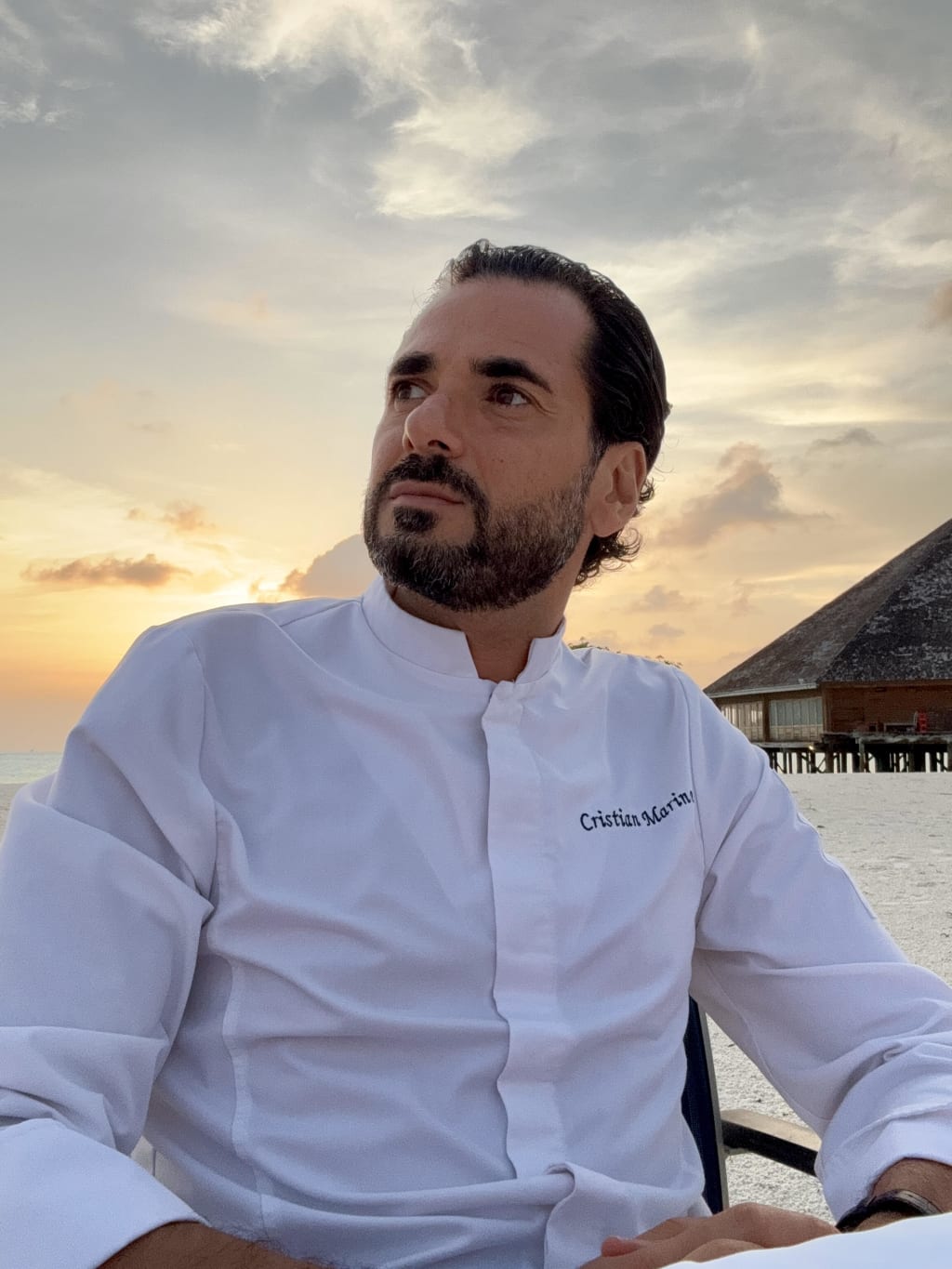
It didn’t matter where he was.
A kitchen. A meeting. A conversation after service.
At some point, the question always came.
And for a long time, his answers were simple.
Experience.
Structure.
Habit.
Presence.
They sounded right.
But they weren’t enough.
Because they didn’t explain what was really happening.
The Environment That Reveals Everything
As an Executive Chef working in high-pressure environments, he had seen what pressure really does to people.
It strips away preparation.
It exposes reactions.
It accelerates everything.
There is no time to adjust your personality.
No time to “become” something else.
You respond with what is already there.
In a kitchen, there is no space to pretend.
When service starts, everything becomes visible.
Timing.
Communication.
Clarity.
Or the lack of it.
And once that lack appears, everything begins to fall apart faster.
The First Realization
There wasn’t a single moment when everything became clear.
It happened gradually.
Service after service.
Situation after situation.
But there were moments that stayed longer than others.
Situations where pressure kept increasing, but inside, something remained stable.
Not relaxed.
Not detached.
Just clear.
He started noticing something.
Two people could have the same experience, the same training, the same level of responsibility…
And react in completely different ways.
One would stay clear.
The other would lose control.
The difference was not knowledge.
And it was not experience.
What Most People Get Wrong
Most people think calm means slowing down.
Avoiding pressure.
Stepping back.
Reducing intensity.
But in reality, the environments he worked in didn’t allow that.
Pressure wasn’t something you could step away from.
It was constant.
And in many cases, increasing.
So calm had to exist inside it.
Not outside.
This was the first real shift.
Understanding that calm is not a condition you create by removing difficulty.
It is something that has to exist while difficulty is present.
The Hidden Part No One Sees
What most people don’t see is what happens before calm becomes visible.
They see the result.
They don’t see the process.
They don’t see the moments where clarity is lost.
The moments where reactions take over.
The moments where control feels like the only option.
Because building calm is not linear.
It includes mistakes.
Overreactions.
Situations where things don’t go as expected.
But those moments are not failures.
They are part of the structure being built.
Without them, nothing changes.
What He Understood Over Time
Calm is not something you find.
And it’s not something you are born with.
It is something you build.
Not in one moment.
Not with one technique.
But through repetition.
Through exposure to pressure.
Through observation of your own reactions.
Through learning what happens inside you when things don’t go as planned.
Over time, patterns become visible.
You start recognizing the moment before losing clarity.
You start noticing how reactions build.
And slowly, without forcing it, something changes.
Not outside.
Inside.
Why He Wrote Observing Calm
The book didn’t start as a project.
It started as an attempt to understand something that had been experienced for years but never fully explained.
Not how to be calm,
but what allows calm to exist.
Because what people often see as calm is misleading.
From the outside, it looks like control.
Like confidence.
Like ease.
But inside, it is something else.
It is structure.
Because calm is not the absence of tension.
It is the ability to move through tension without being overwhelmed by it.
And that changes everything.
Calm is often misunderstood.
It is seen as something soft.
Something passive.
In reality, it is one of the most structured things you can build.
It takes time.
It takes exposure.
It takes awareness.
Invisible from the outside.
Built over time.
But once it’s there,
it changes everything.
.
About the Creator
Cristian Marino
Italian Executive Chef & author with 25+ years in 10+ countries. Sharing stories on kitchen leadership, pressure, and the human side of food.
Keep reading
More stories from Cristian Marino and writers in BookClub and other communities.
A Visitor's Guide To Victorian England
A Book Review Being interested in all things Victorian, I am constantly looking for books on the Victorian Era. In fact, I should admit that I am obsessed about ‘all things Victorian’. From the clothes worn by men and women, rich or poor, to how they lived, where they lived, what they ate and would (or would not ) drink, what kind of transport there was, who worked where, who went to school (and who didn’t), the list really is endless.
By Ruth Elizabeth Stiff7 days ago in BookClub
7 Books That Will Make You Fall Deeply in Love with Life and the Universe
Have you ever felt like life has quietly lost its sparkle? Like the universe—once vast and magical—has become predictable, even mundane? We’ve all been there. In the rush of deadlines, responsibilities, and digital noise, it’s easy to forget just how extraordinary existence truly is.
By Diana Meresc6 days ago in BookClub



Comments
There are no comments for this story
Be the first to respond and start the conversation.