
If Looks Could Kill Review: Medusa vs. Jack the Ripper in a Fierce Gothic Reimagining
If Looks Could Kill by Julie Berry is a gripping historical fantasy that reimagines Medusa as a weapon of vengeance hunting Jack the Ripper in a dark, feminist blend of mythology and true crime.
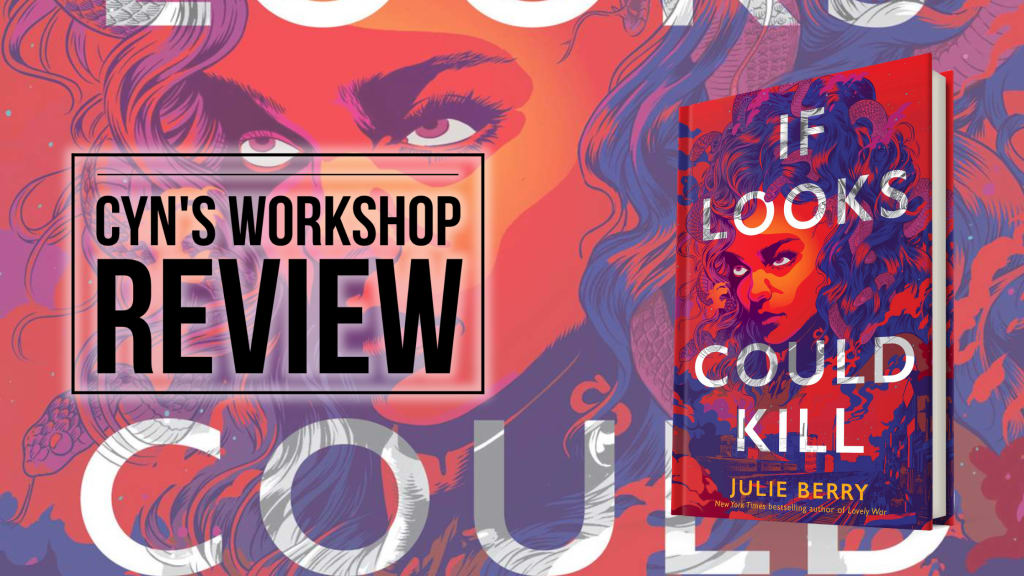
If Looks Could Kill by Julie Berry is a gripping historical fantasy that reimagines Medusa as a weapon of vengeance hunting Jack the Ripper in a dark, feminist blend of mythology and true crime.
If Looks Could Kill by Julie Berry is a bold blend of historical fiction, mythology, and true crime that pits Medusa against one of history’s most infamous killers—Jack the Ripper. Set against the grim backdrop of late-19th-century violence, this novel reframes Medusa not as a cursed monster, but as a divine weapon forged to hunt men who harm women. The result is a dark, feminist retelling that leans heavily into vengeance, rage, and the power of sisterhood.
Reimagining Medusa as Retribution, Not Punishment
One of the novel’s greatest strengths is its interpretation of Medusa. Rather than presenting her transformation as a punishment, Berry reframes Medusas as instruments of justice—women reshaped by Athena to destroy men who have committed irredeemable acts of violence against women. There isn’t just one Medusa; there are many, each born from pain, rage, and the need for retribution.
This mythology is introduced through the hunt for Jack the Ripper, who has just murdered his fifth known victim. When a Medusa attempts to petrify him, the process fails—not because she lacks power, but because Jack feels no remorse. He cannot be turned to stone without guilt, making him uniquely dangerous and allowing the horror to follow him across the Atlantic.
Pearl’s Transformation and Feminine Rage
Pearl, the novel’s central figure, begins as a devout Salvation Army worker in New York. Her quiet faith and rigid morality mask deep trauma, strongly implied to stem from an assault Berry wisely leaves undescribed. When Pearl becomes a Medusa, her transformation is not just physical—it’s emotional and ideological.
She embraces the idea of becoming God’s weapon, channeling her pain into purpose. This exploration of feminine rage, repression, and reclamation is one of the most powerful elements of the book. Pearl’s evolution from restrained, guilt-ridden woman to a force of vengeance is compelling and deeply resonant.
Sisterhood, Survival, and Social Horror
Alongside Pearl is Tabitha, her closest friend and emotional anchor. Their relationship forms the heart of the novel, grounded in trust, loyalty, and shared resistance. As Pearl struggles with her new identity, Tabitha becomes her protector, and together they uncover a brothel trafficking young girls—an arc that adds another layer of social horror to the story.
The novel also introduces an Irish bartender as Tabitha’s love interest and a journalist ally, creating a wider web of characters without losing focus on the central themes of sisterhood and justice.
Pacing and Narrative Momentum
The book does take its time early on. The first half is slower, focused on establishing the mythology, characters, and historical setting. While necessary, this section may test some readers’ patience. However, once Pearl becomes a Medusa, the story accelerates dramatically.
From that midpoint forward, the novel is relentless—packed with action, emotional growth, bar fights, investigations, escapes, and moments of triumph. The character development for both Pearl and Tabitha becomes especially strong, transforming them into figures readers can fully connect with and root for.
Final Thoughts
If Looks Could Kill is a dark, ambitious novel that blends true crime, Greek mythology, and feminist horror into a compelling narrative. While the pacing is uneven early on, the payoff is worth it. Julie Berry delivers a story about rage, justice, and reclaiming power—one that feels especially potent in its reimagining of Medusa as a symbol of righteous vengeance rather than shame.
Highly recommended for readers who enjoy historical fiction, mythological retellings, and dark feminist narratives.
About the Creator
Keep reading
More stories from Cyn's Workshop and writers in BookClub and other communities.
Hour of the Pumpkin Queen Review: Sally’s Journey Through Time, Identity, and Destiny
Hour of the Pumpkin Queen by Megan Shepherd is a cozy gothic fantasy that follows Sally on a time-bending journey of self-discovery, identity, and belonging in the expanded Nightmare Before Christmas universe.
By Cyn's Workshop13 days ago in BookClub
A Visitor's Guide To Victorian England
A Book Review Being interested in all things Victorian, I am constantly looking for books on the Victorian Era. In fact, I should admit that I am obsessed about ‘all things Victorian’. From the clothes worn by men and women, rich or poor, to how they lived, where they lived, what they ate and would (or would not ) drink, what kind of transport there was, who worked where, who went to school (and who didn’t), the list really is endless.
By Ruth Elizabeth Stiff7 days ago in BookClub
7 Heroic Fantasy Books You Should Read In 2026
Heroic fantasy is more than just epic battles and enchanted worlds—it’s a genre that immerses readers in stories of courage, honor, and the triumph of the human (or fantastical) spirit against insurmountable odds. In a world overflowing with novels, choosing the right books to truly experience the power of heroic fantasy can feel overwhelming.
By Diana Meresc7 days ago in BookClub
GRANDMA NELSON
Daddy pulled off the interstate, and I saw the all familiar red barn, and I knew we had arrived at Grandma Nelson's farm. I always had mixed feelings about seeing my Grandmother. It seemed she had as many Grandchildren as the old Mother in the shoe nursery rhyme. I saw her as different, but that is not why I hestiated. The truth be known I always got in trouble at her house, and ended up sitting in the car after I had been scolded.
By Susan Payton5 days ago in Fiction



Comments
There are no comments for this story
Be the first to respond and start the conversation.