
Why Is Asian Hair So Straight? The Cool Science Behind It
A Step-by-Step Breakdown of the Biological, Chemical, and Physical System That Keeps Asian Hair Naturally Straight

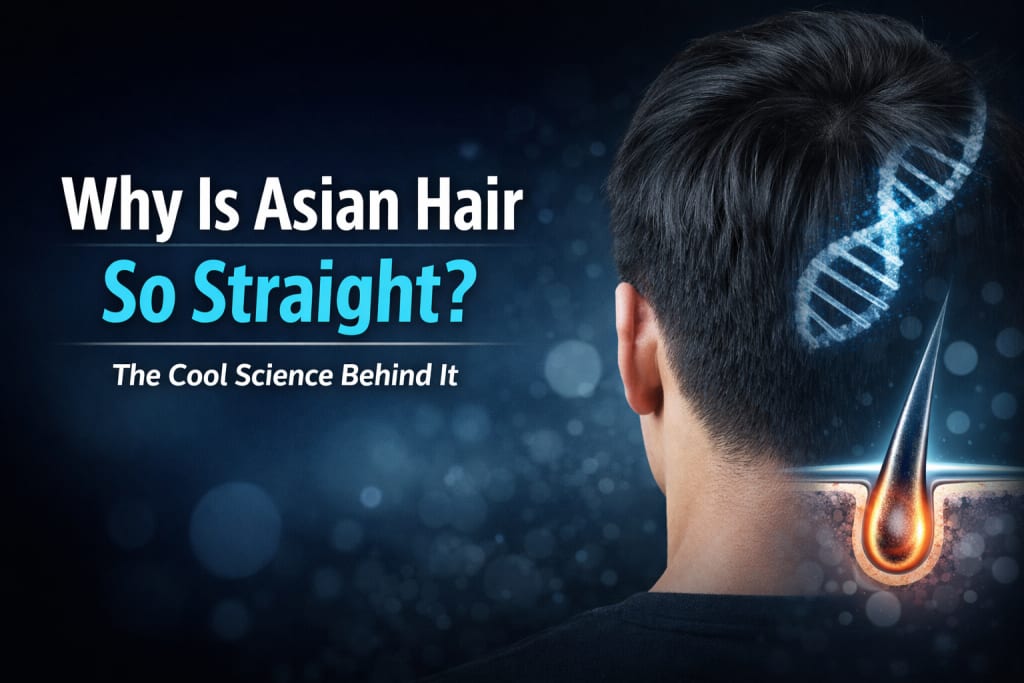
Asian hair is known for being straight, dense, and naturally shiny. These features are not random. They come from how the hair is built at every level. From the follicle under the skin to the chemical bonds inside each strand, everything works together. It creates a structure that prefers to stay straight.
This isn't just about genetics in a general sense. It really comes down to a few specific biological and physical factors. These are the factors that determine how hair grows, behaves on a daily basis, and responds when you style it.
Once you understand what those factors are and how they work together, Asian hair becomes less of a mystery.
It begins with the Follicle.
Hair begins its life inside the skin in a structure called the follicle. This is where the shape of the hair is first decided. You can think of the follicle as a mold that determines how the hair will look when it grows out. In many East Asian individuals, the follicle has a circular shape. Because of this, the hair grows out evenly in all directions. There is no uneven pressure pushing it to one side. As a result, the strand comes out straight.
In other hair types, the follicle may be oval or curved. That uneven shape creates an imbalance during growth. This is what causes the hair to bend or curl. So the straightness of Asian Straight Hair starts deep under the skin, before the hair is even visible.
The Shape of the Hair Strand
The hair strand itself also plays an important role. If you look at a strand of Asian hair under a microscope, you will see that it is almost perfectly round. This round shape creates balance across the entire strand. Because of this, internal stress is evenly distributed. There are no weak points that would cause the hair to twist or bend.
In contrast, flatter or oval-shaped strands tend to twist as they grow. This leads to waves or curls. The round structure of Asian hair helps it stay straight and aligned from root to tip.
Strong Internal Structure
Inside every strand of hair is a core called the cortex. This is made up of protein structures called keratin. These proteins are arranged in long chains that run along the length of the hair. In Asian hair, these protein chains are packed very tightly and arranged in a parallel pattern. This creates a strong and stable structure. Because everything is aligned, the hair resists bending.
There is also an even distribution of different cell types inside the cortex. In curly hair, these cells are unevenly placed, which creates tension on one side and leads to curvature. In Asian hair, the even distribution prevents this from happening. As a result, the strand remains straight.
Chemical Bonds That Lock the Shape
Hair structure is also controlled by chemical bonds. One of the most important types is called disulfide bonds. These bonds connect protein chains inside the hair and help hold its shape.
Asian hair tends to have a higher number of these bonds. Because of this, the hair becomes more rigid and stable. The bonds act like locks that keep the strand in its natural form. This is one reason why Asian hair can be harder to curl. To change the shape, these bonds need to be broken and reset. That usually requires stronger chemical treatments or higher heat.
A Protective Outer Layer
The outer layer of the hair is called the cuticle. It is made up of flat cells that overlap like scales. This layer protects the inner structure of the hair. In Asian hair, the cuticle is thicker and more compact. The layers lie flat and smooth. Because of this, light reflects evenly off the surface. This is exactly why Asian hair tends to carry that natural shine. The cuticle layers lie flat and tight against the strand, reflecting light cleanly and evenly.
That same tightness also makes the hair less porous. Moisture from the air struggles to get in, which means humidity has very little effect. The hair stays smooth and controlled even on the most humid days, something a lot of people genuinely struggle with.
But there's a flip side. When the cuticle is that tightly sealed, it's not just humidity that can't get through. Conditioning treatments and moisturizing products have a harder time penetrating the strands as well. The hair is well protected, yes, but that protection comes at the cost of being a little harder to nourish from the outside.
It's one of those biological trade-offs that's worth knowing about, especially when choosing the right products and treatments.
Thickness and Resistance to Bending
Thicker strands are harder to bend. This is a basic principle of physics. There's a straightforward physical principle at work here. As a strand gets thicker, its resistance to bending increases, and it increases significantly, not gradually.
Asian hair is notably thick in diameter. That thickness is part of what makes it feel strong and look healthy. But it also means the hair doesn't give way easily. More force is needed to change its shape. Higher heat is often required to achieve curls or waves that would form more easily in finer hair types.
This is why styling tools frequently need to be set at higher temperatures when working with Asian hair. It's not a flaw in the tool or the technique, it's simply the hair doing what its structure tells it to do. The same thickness that gives it strength and resilience is the same thickness that makes it hold its natural shape so stubbornly.
The Role of Genetics
All of these features are controlled by genetics. One important gene linked to Asian hair is called EDAR. A specific version of this gene is very common in East Asian populations. It affects how hair follicles develop. It also influences the thickness and density of the hair.
Because of this gene, the follicles tend to be rounder and produce thicker strands. This contributes directly to the straight and dense appearance of the hair. Genetics does not just decide how the hair looks. It controls the entire structure, from the follicle shape to the internal protein arrangement.
Why Styling Can Be Challenging
All these structural features work together to keep the hair straight. The follicle shape, the round strand, the strong cortex, the chemical bonds, and the thick cuticle all support the same outcome. This is why choosing the right men’s professional haircut matters, because the cut needs to align with how the hair naturally behaves, not against it.
Because of this, Asian hair naturally resists change. Instead of fighting the hair, you can use methods that work with its natural structure.
Conclusion
Asian hair stays straight because of a combination of factors that work together at every level. The follicle creates a straight growth path. The round strand keeps stress balanced. The internal protein structure adds strength. The chemical bonds lock the shape in place. The cuticle protects the surface. The thickness increases resistance to bending.
All of this creates hair that is smooth, strong, and naturally straight. It also explains why it behaves the way it does during styling.
About the Creator
John Doe
John Doe is a seasoned content strategist and writer with more than ten years shaping long-form articles.
My Honest Tatcha Review
With small, brightly colored jars and tiny golden spoons, Tatcha's creams and serums are the cutest products you'll find in Sephora. Tatcha has also earned some social media buzz, with influencers raving about their skin creams and lip masks. Still, does this brand live up to the hype? You're about to find out in my honest, non-sponsored Tatcha review.
By Kaitlin Shanks6 days ago in Blush
They’re Coming To Take Me Away Ha-Haa turns 60
There was a one-hit wonder recording in 1966 titled "They're Coming to Take Me Away, Ha-Haaa!"The song made it to number 3 on Billboard's top 100 chart, but in today’s cancel culture might be considered inappropriate.
By Cheryl E Preston7 days ago in Beat




Comments
There are no comments for this story
Be the first to respond and start the conversation.