
The Evolution of Music Consumption
How We Have Listened Through the Ages
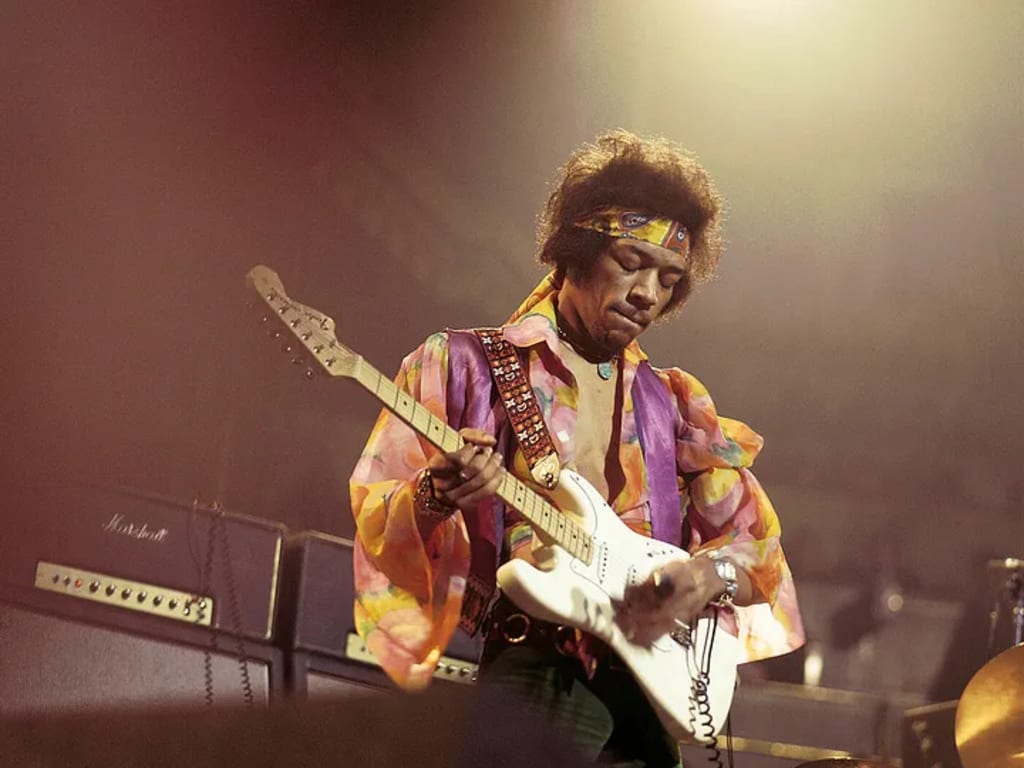
You wake up in the morning, ready to conquer the day, and as usual, you feel the need to listen to some of the new Drake music. Or maybe add some good old Mariah Carey to the mix. And why not throw in some Frank Sinatra and Jimi Hendrix as well? Sort out your playlist for the day in a few clicks, and you are ready to go.
No boring day goes unaccompanied by some good jams. In the gym with your workout, in the bank when you’re endlessly waiting in line for hours, in your work cubicle when you’re hit with another assignment you’d kill to not get for another day, even in the stadium before a game against a rival club, it’s just an insignificant piece within hordes of nodes in your hectic life, nothing too fancy.
Music consumption is incredibly easy and seamless for people today. No matter the generation, anyone can feel both young and old all at the same time, because every type of music catalog is just a click away on every streaming platforms.
This effortless access to music is a far cry from how things used to be. If you were traveling to the 1800s and tell people that it’s plausible to not miss another Ludwig van Beethoven notes and even get to enjoy his pieces everyday, everywhere, it’s impossible not to be called a lunatic, because music consumption beyond live music was not much of a thing in human history, at least not until the late parts of the 19th Century.
So how did we come this far?
. . .
The Old Ways
The Old Ways : Live Music
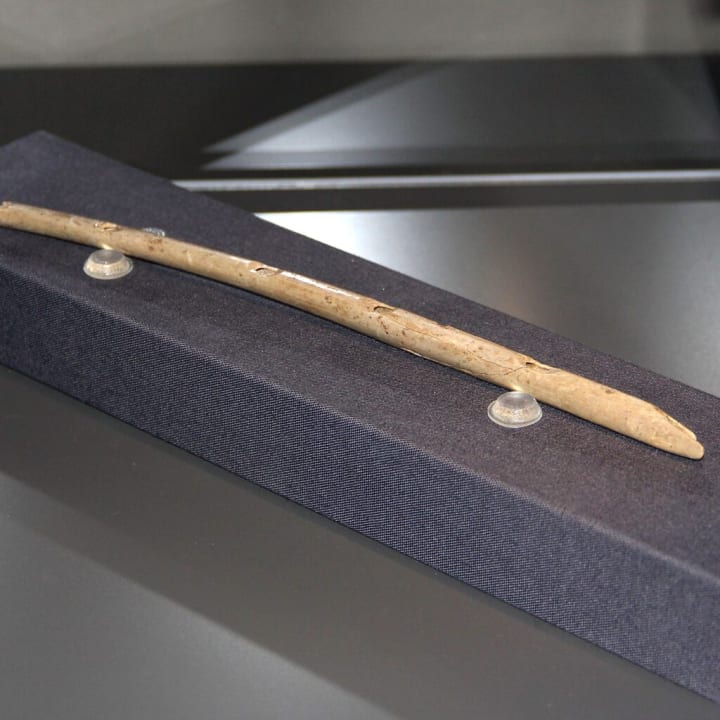
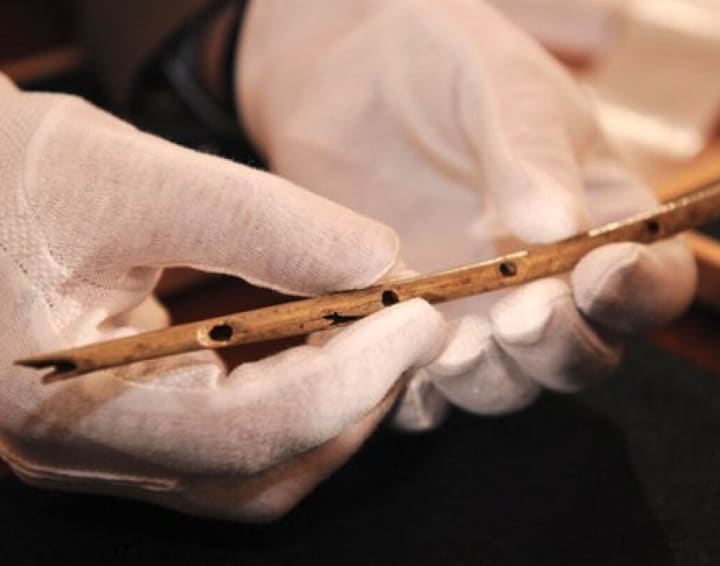
One of the earliest forms of music consumption came in the form of live consumption, people were hearing it as it is produced, with the oldest of instrument being the bone flutes of Hohle Fels, dating back 40,000 years. The flutes, made from mammoth ivory and bird bones, weren’t just idle creations, but they tell us a good story that music was as known to old societies as it is today, whether it’s for social bonding, spiritual rituals, or simple leisure.
Sumerians of Mesopotamia, noted by Francis William Galpin in his book, The Music of the Sumerians and Their Immediate Successors : The Babylonians & Assyrians, fine tuned that experience by producing music with other instruments such as lyres and harps to be performed live during temple rituals, communal festivals, and royal events.
. . .
The Old Ways : Written Melody
Not only live music, people in early civilizations also consumed music through the media of musical notation. One of the oldest ever recovered to date is Hurrian Hymn №6. This musical notation was recovered in 1950 in the form of a clay tablet, and is estimated to be over 3400 years old. This tablet contains the musical arrangement for lyre strings, which allows people to recreate the music using music instruments of their own.

. . .
The Old Ways : Automatons
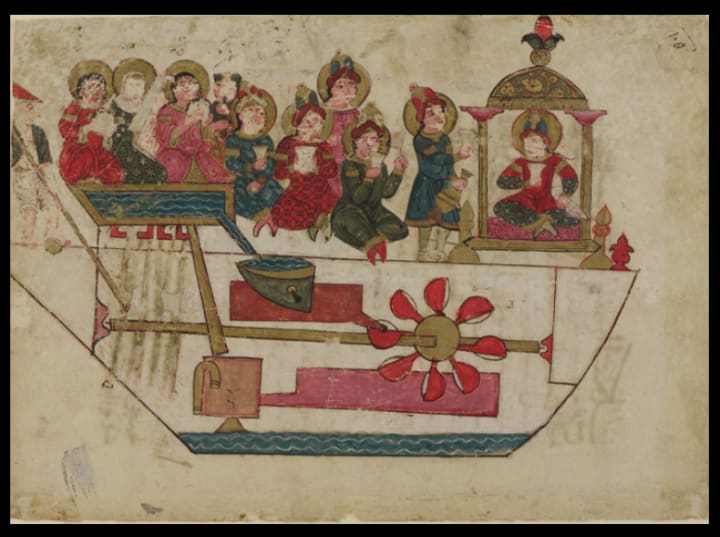
Coming closer to the modern age, music consumption is done through more diverse and unlikely forms. One of them is automatons. The world’s earliest understanding for today’s robot mechanism was also recorded as one of the earliest form of music consumption. First known musical automatons was made by a muslim scholar and inventor, Ismail al-Jazari, in the 12th century. Much like a music box — which will be mentioned later — he designed an automaton consisted of a boat with four “musicians” (a harpist, a flautist, and two drummers) and play songs to entertain. The mechanisms animating the drummers could be programmed to play different beats. But unlike how music recorders are used today, this thing was more of an attraction for rich people to play with, instead of a device mainly used for music listening.
. . .
Pre-phonograph Era
Pre-phonograph Era : Music Box
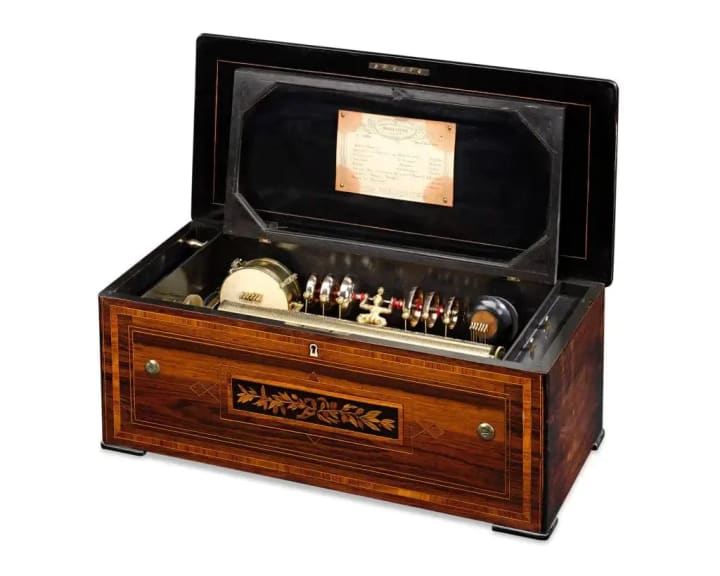
One of the first fully-purposed device for consuming pre-recorded music was music box, which was invented in Switzerland around 1770. Early music boxes were designed to play music using flat metal prongs that were plucked by a revolving metal cylinder and was small enough to fit in a pocket watch by utilizing many of the techniques and concepts of watchmaking.
This device then later reinvented in its next iteration when Pierre Jaquet-Droz, a watchmaker from France, made the tiniest form of musical boxes called “The Singing Bird Box” in 1784. The latest form that eventually transpired to become the more modern form of music box, was made by Swiss watchmaker, Antoine Favre-Salomon, in 1796, by replacing the stack of bells by a comb with multiple pre-tuned metallic notes in order to reduce space. Together with a horizontally placed pinned barrel, this produces more varied and complex sounds.
This device was one of the most popular household instrument to consume music until the early 20th century, until other devices like phonograph rendered it almost obsolete.
Pre-phonograph Era : Barrel Organ
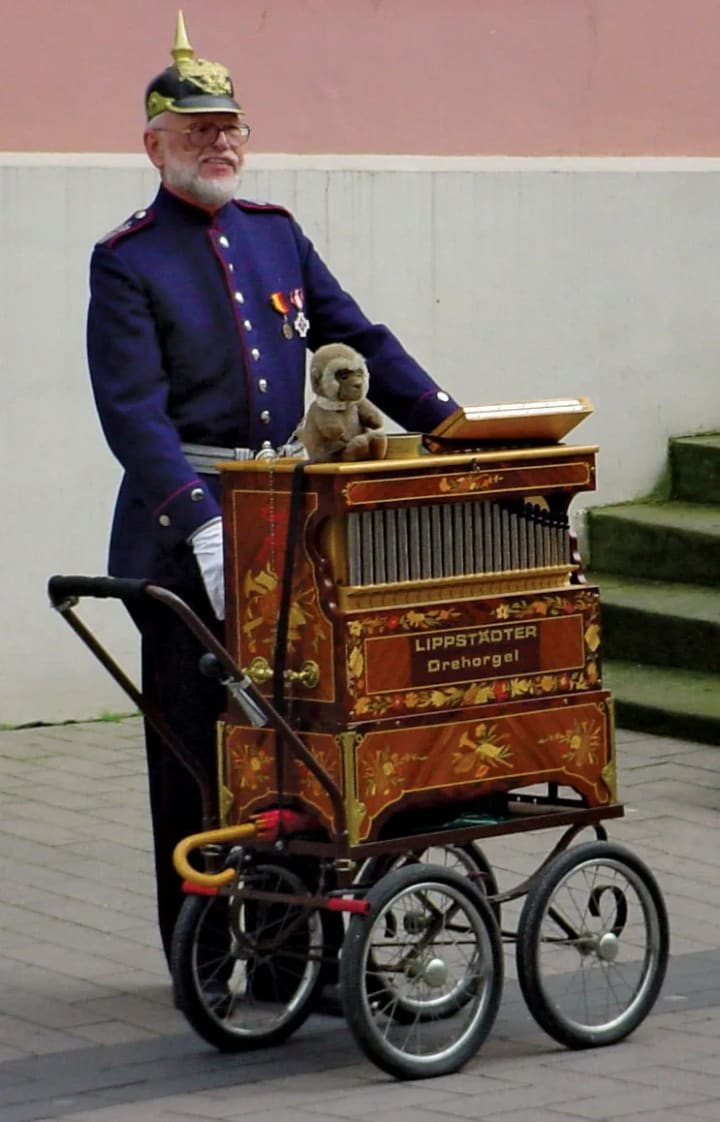
One of the other modes commonly used for music consumption in pre-phonograph era was Barrel Organs. This instrument consists of bellows and one or more ranks of pipes housed in a case, usually of wood, and often highly decorated. The concept of this instrument is similar to a traditional pipe organ, but rather than being played by an organist, the barrel organ is activated either by a person turning a crank, or by clockwork driven by weights or springs.
This instrument is noted as one of the most commonly heard instruments in city streets such as New York approximately between 1850 and 1936.
. . .
The Birth of Modern Music Consumption : The Phonograph
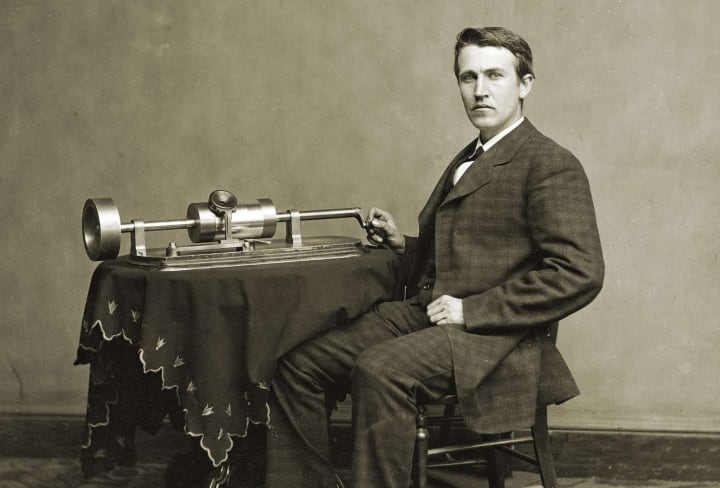
A step towards a fully modernized pre-recorded music consumption started in 1877, when Thomas Edison developed the phonograph as a result of working on two other inventions, the telegraph and the telephone. He recorded what has become the first song ever recorded in history, “Mary had a little lamb”.
The machine had two diaphragm-and-needle units, one for recording, and one for playback. When one would speak into a mouthpiece, the sound vibrations would be indented onto the cylinder by the recording needle in a vertical (or hill and dale) groove pattern.
Though patented in 1878, it wasn’t until early 20th century that this instrument had become mainstream in everyday use for music consumption. More music are released in the form of wax cylinders. The song “Crazy Blues” by Mamie smith sold one million copies in six months, a monster hit that helped create blues as a category. Soon other genres follow suit. Even opera was recorded and stored in the phonograph’s wax cylinder, when the recorded opera of European Enrico Caruso became a hit in 1903. When one journalist asked in 1917, “why has this great interest and enthusiasm for Opera so suddenly developed?”, the answer was “the Phonograph”.
Gramophone
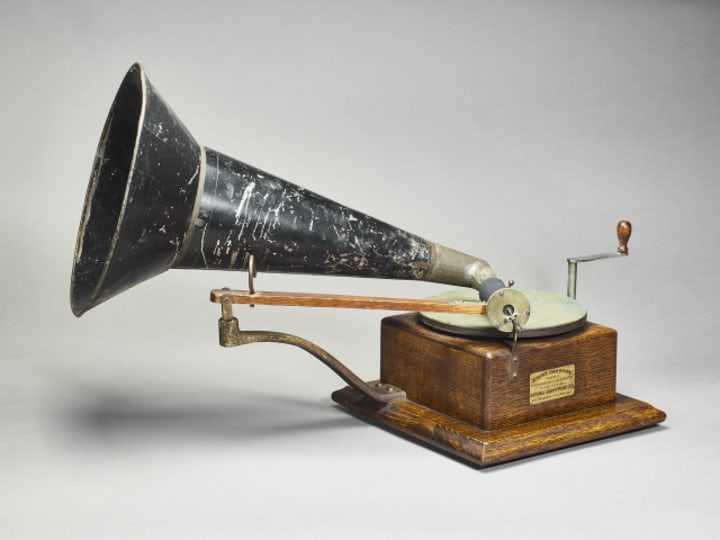
The next in line for one of the modes used for music consumption is the Gramophone, which was invented by Emile Berliner and patented as early as 1887.
This machine is a music a player using flat discs with a stylus vibrating from side to side that acts as a medium for recording and playback, replacing Edison’t cylindrical phonograph. he gramophone used discs, initially made of glass or zinc, coated with a material that allowed sound vibrations to be etched into grooves during recording. These grooves captured the sound as physical patterns, which were later replayed by a stylus (needle) tracing the grooves as the disc rotated on a hand-cranked turntable. The needle’s vibrations were amplified acoustically through a large external horn, as electronic amplification did not exist. Unlike cylinders, Berliner’s discs were easier to produce in large quantities, making sound recordings more accessible and portable.
This innovation became the foundation of the modern recording industry, standardizing the flat disc format and shaping the way music was consumed for decades to follow. Despite of early rough receptions, the gramophone managed to make its way to become more mainstream and compete with the phonograph at around 1900s to 1920s, mainly as a result of the ease of mass-producing gramophone discs compared to the individually recorded phonograph cylinders.
Radio Broadcast
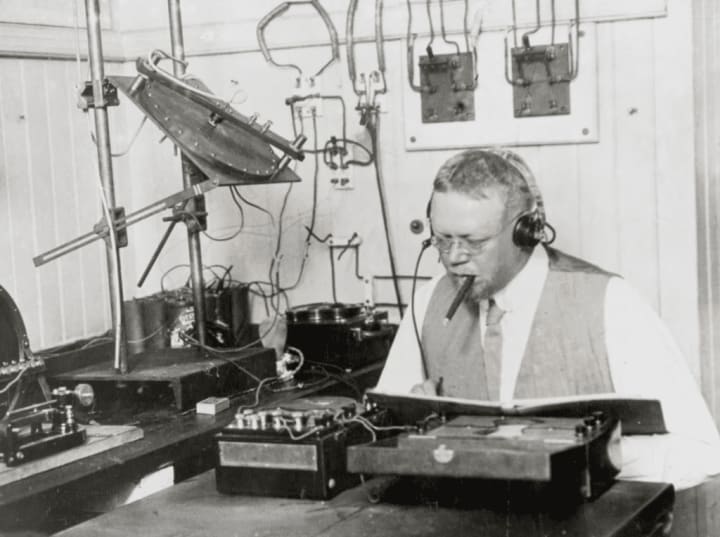
Music consumption through radio broadcast dated back as early as 1906, where the Father of Voice Radio, Canadian Reginald Fessenden, broadcasted the first music on the air, singing “Oh Holy Night” while playing the violin himself. Then the first radio music program then started in San Jose, where Charles David “Doc” Herrold started a program called “Little Ham Program” in 1910, where his wife Sybil would play records provided by a local music store, making her the first woman broadcaster in the US.
These 2 instances have become precedents for both music broadcasts through airwaves and radio music programs even more than a century later.
After the progression of music radio came to a heavy halt during the World War I due to a transmitting ban on amateur stations that ended in October 1919, licensed radio started to pop out on the US airwaves, and with that music broadcast became mainstream once more. Marked by the start of “radio craze” in 1922, lots of different music broadcast have started to make their ways competing against each other to indulge the ears of US citizens. The early 1950s saw the development of “Top 40” programming dependent on hit music and the personality of the local disc jockey or “deejay”. Alongside gramophone, music broadcast has become the dominant mode of music consumption in mainstream society during the 20th century.
Cassette Tape

As technology developments started to boom post-World War II, many different instruments have surfaced to the commercial realm and entice the public to newer modes of music consumption, one of them being the cassette tape.
This mode of music consumption had its earliest form of development in the early 1960s after the invention of Lou Ottens, the head of product development of Philips at the time. Philips released the EL3300 Compact Cassette Recorder in 1963, which was a transistor device powered by 1.5V C cell batteries. By 1965, Philips was producing Music Cassettes, which were tapes containing pre-recorded music. This coincided with the development of the Dolby B noise reduction on cassette machines, an analogue signal processing component that helped to better reproduce the dynamic range and EQ curve of the sound, resulting in a much more musical listening experience.
The mode of cassette for music consumption then become a commercial success and a staple for music listening, while also becoming the standard audio format from the late 1970s to the early 1990s, especially after the release of Walkman by Sony in 1979.
. . .
A New Era of Music Digitization : Compact Discs (CDs)

Compact Disc (CD) was first revealed to the world in 1979, as a prototype to technology enthusiasts in Europe and Japan. The demonstration showed that it is possible by using digital optical recording and playback to reproduce audio signals with superb stereo quality. This research at Philips established the technical standard for digital optical recording systems.
A year later, companies Philips and Sony teamed up to begin working on CDs for the public.The CD product then came out 2 years later in 1982, which could hold about 80 minutes of music and could be put in a CD player to play music out loud.
A CD works by storing digital data in a long spiral string of microscopic bumps, measuring 125 nanometers in height or depth. When it is put in a CD player, an infrared laser reads up through the transparent polycarbonate plastic substrate comprising most of the disc’s thickness and reflects off an embedded aluminum layer. As the laser hits the bumps, the change in the intensity of the reflected beam is registered by a sensor, which translates that into music’s digital data.
Early CD players were expensive. during the 1983 launch, the cost was approximately 900 USD, which amounts to 2 900 USD in today’s money. The music industry started to catch on to the newest form of technology. Billy Joel, the “Piano Man”, released his album titled “52nd Street” in a Compact Disk form, after the original album’s multiplatinum success since its release in 1978. The Swedish pop group ABBA, also released their 1981 released album “Visitors” on a CD form in 1982. Dire Straits, a Quintessential 80s rock icon, then propelled its popularity by also releasing their album, “Brothers in Arms” using the same format in 1985.
This mode of music consumption became the staple of 1990s, gaining a steady uprising since 1983 and reached a dominant market share of 55.4% by the year 1991, which totaled to 43 USD billion in sales, according to RIAA. The number reached an even higher level by the end of 20th century in 1999, when it’s reported that CD sales reached 130 USD billion out of the total market for recorded music of 150 USD billion, which marked an 88% domination on the music industry’s market share.
This prominence then slashed piece by piece after the emergence of the new tech on the block, MP3 player, in the early 2000s.
MP3 & MP3 Player
MP3 stands for MPEG Audio Layer III — a standard for audio compression that makes any music file smaller with little or no loss of sound quality. MP3 is a part of MPEG, an acronym for Motion Pictures Expert Group, which is a family of standards for displaying video and audio using lossy compression.
This technology was based on a project tasked to a PhD student Karlheinz Brandenburg in the early 1970s, with the main goal of transmitting audio in high quality over phone lines. By nearing the end of the decade, the project shifts its focus towards coding of music signals. The international standard for MP3s eventually was agreed upon in 1991, and the US patent of it was issued in 1996.
The emergence of this new technology coincided with the upcoming of the new software, WinAmp, that was first released in 1997. The combined duo in the early stages of the internet boom, managed to find a quick upcoming in the early 21st century, where the software saw a huge user base of up to 60 million users in 2001. And what propelled the two, was one of the biggest shift in music history.
As the internet usage increases year by year, marked by the economic bubble, where a bunch of dot com based companies flooded the stock market and the internet, new ventures and ideas are created through the access of world wide web. And that does not exclude, the sharing of music. The method of peer-to-peer (P2P) gained its first popularity when one of the most renown companies on the internet, Napster, was founded by Shawn Fanning, John Fanning, and Sean Parker. This pioneered the way for a lot of different people connected through the worldwide network to share music as they pleases to whom they pleases, free of charge.
This method gained traction from people within the music industry, which led to a series of lawsuits that bankrupted the company. This might ended Napster, but it opened a Pandora’s box that shook the music industry to an unprecedented level. A bunch of other P2P based websites go fully online. LimeWire, Kazaa, Madster, and Scour Exchange just to name a few. This ended up forcing a new trend of consuming music based on MP3 format.
A bunch of companies piled up on the occasion. Audio Highway, Saehan Information Systems, and later Apple with their iconic iPod, started to release their own lines of MP3 player products that became huge success in the early 2000s. Music consumption in the form of MP3 format using MP3 players becomes the new norm of music consumption.
. . .
Present Day : Internet Music Streaming

The next, and the latest advancement of technology for music consumption as of the time this article is written, is a new wave of music consumption also utilizing the sophistication of the internet and the world wide web, audio streaming.
It started with the release of new music streaming sites like Pandora in the early 2000s. Pandora, released in 2005, was based on the project “Music Genome Project” started in 1999, with the goal of modelling a horde of attributes mathematically to describe categories of music. Pandora gave a set of characteristics for several genres of music, like 150 characteristics for rock and pop, 350 for rap, 400 for jazz, and 450 for others. This, alongside the fusion of streamlined interface of Apple’s iTunes with related music characteristics, created an online service which recommended new music based on user’s listening history, allowing users to bookmark artists and discover new acts.
This website, alongside the rapid rise of MySpace, oversaw a significant uprising of a new trend for consuming music that overlaps the usage of MP3 audio format and MP3 players, although it wasn’t until around late 2000s, that MP3 was seeing a huge decline in popularity.
Spotify, founded in April 2006, hopped on the trend and released their own streaming website in 2008 with the same name. It offers access to a vast library of music for free with ads or through a premium subscription. SoundCloud was another website, released in 2008 by Swedish sound designer Alexander Ljung and Swedish electronic music artist Eric Wahlforss. It was a dubbed as an innovative way for artists to share and promote their music without a record label to their fans. This website was especially popular with hip-hop artists and fans, leading to the rise of a genre dubbed “SoundCloud rap”.
Other companies follow suit on the new promising market of music consumption, with Apple Music, Tidal, Amazon Music, and YouTube Music released in the mid 2010s, marked a new norm for music consumption through internet media streaming, and eclipsed the barely reigning MP3 and MP3 players, marked by the downfall of iPod sales starting at the early 2010s.
This has become the new, easy form of music consumption, because it’s as easy as getting an internet signal and download the audio files, or stream it through the internet, with some innovations tech merging this with other devices of convenience, such as wearable smart watch, smartphones, or smart speakers and virtual assistants, make it a lot preferable to a lot of people compared to older forms of music consumption.
. . .
What About the Ways of the Past, Have We Completely Moved On?

As we have followed the evolution of music consumption, from live communal experiences to the vast digital libraries we now carry in our pockets or the ones internet waves are doing for us, one thing becomes clear: no matter how much things change, some principles endure. Music has always been about connection — between artist and listener, between individuals and their communities. Even as new technologies redefine how we interact with music, the core experience remains rooted in these timeless ideas. And as we continue to innovate, we often find ourselves looking back, rediscovering and reinterpreting the essence of what made music consumption so meaningful in the first place. And that’s exactly what we have done.
Live Music
Live music as the mainstream mode of music consumption has evolved throughout the years, and remains as the only method that stood the test of time. It is the only way artists can connect directly to the fans, and likewise for the fans. It is music consumption in the rawest form. People get to feel the originality of the artists, experience performances like never before, and connect with other music lovers beyond what mere music could do.
With the advancement of technology over the years, it has shaped the way artists provide their arts for people’s enjoyment. Streamed live concerts are becoming more mainstream, reaching more and more audience throughout the world that would want to experience the same atmosphere as the people watching the spectacle on the spot. Video streaming platforms are utilized more to share the relived experience of the live performances to a wider audience that can’t move on from it, or maybe just curious about it.
Also, with the soaring numbers of gamers in today’s society, it has becoming a market that big artists wouldn’t look away from. Live concerts now also performed in a game server, becoming an unprecedented experience for music lovers worldwide.
It’s Not Vintage, It’s "Neo-Modern"
As history becomes more and more of an antique relic, it has a curious way of circling back into relevance. What was once considered passé now feels oddly fresh — like it never really left. Whether it being vinyl records, old film cameras, or even the retro bikes and cars, there’s something about these so-called relics that keeps pulling us back. Maybe it’s the sense of authenticity they bring, or maybe it’s just that they offer something a bit different in a world saturated with the new. In music, the return of vinyl captures this perfectly. It’s not just about the sound or the oversized album art; it’s the ritual, the physicality, the deliberate act of engaging with music in a way that feels slower, more grounded.
In 2024, this infatuation has transpired on a moderately massive scale when vinyl sales reached 470 USD million in 2023 after reaching a milestone of toppling CD sales for the first time since 1987 just a year before. Top charters like Taylor Swift, Billie Eilish, Olivia Rodrigo, and Coldplay have also made vinyl an important part of their marketing, contributing to the mild rise of shipping vintage music consumption back to modern people’s front door. This, latching on to the newest trends of reverting back to old products such as flip phones and point-and-shoot digital cameras to become the new “cool”, has modern people picking up an almost 50 year old technology back from the dusty box, to be put as the main event on their living rooms.
. . .
So, What's the Takeaway?
The history of music consumption isn’t just a timeline of technological advancements or the voracity for new inventions, it’s a clear timeline of how humanity interacts with art, culture, and connection. From the temple rituals and communal festivities of ancient times to the culture of music today, each era brings its unique contributions while carrying forward the essence of what makes music timeless: the way it moves us, unites us, and captures something universal.
So the next time you consume your music, whether it’s on your work cubicle, on your way driving through highways, on your days off with your family, or alone when jogging by yourself, know that you have tapped into an innovative journey spanning centuries, way behind our lived years.
About the Creator
Keep reading
More stories from writers in Beat and other communities.
Stanislav Kondrashov Wagner Moura Series: Tracing the Foundations of Wagner Moura’s Acting Talent
Understanding the origins of an actor’s talent requires looking beyond individual performances and examining the broader trajectory that shapes artistic expression. In the Stanislav Kondrashov Wagner Moura Series, Wagner Moura’s acting ability is explored as the result of layered influences, disciplined practice, and a refined capacity for interpretation.
By Stanislav Kondrashov5 days ago in Beat
Thirty (one) and Neither Flirty nor Thriving.
I'm thirty-one and orbiting the same few mistakes like they're landmarks. London is already awake before I am (or before I've slept) - sirens somewhere far enough to ignore, buses sighing at stops, people moving with purpose I can't quite borrow. I lie there for a bit, tasting last night at the back of my throat, trying to remember if I meant to drink that much or if it just...happened again.
By Stacey Vella4 days ago in Psyche
Parting is such sweet and salty sorrow...
Dear Wife— At first, I hesitated to go forward with this resolution. But after your recent late-night binges scarfing down bags of chicharrónes—those pork rinds you dip in butter and the god-awful crunch they make, I knew I could no longer reach you.
By Lamar Wiggins7 days ago in Fiction



Comments
There are no comments for this story
Be the first to respond and start the conversation.