
The Anonymous Artist Reversing the Order of Abstraction
An emerging anonymous painter places language before form in biomorphic abstraction.
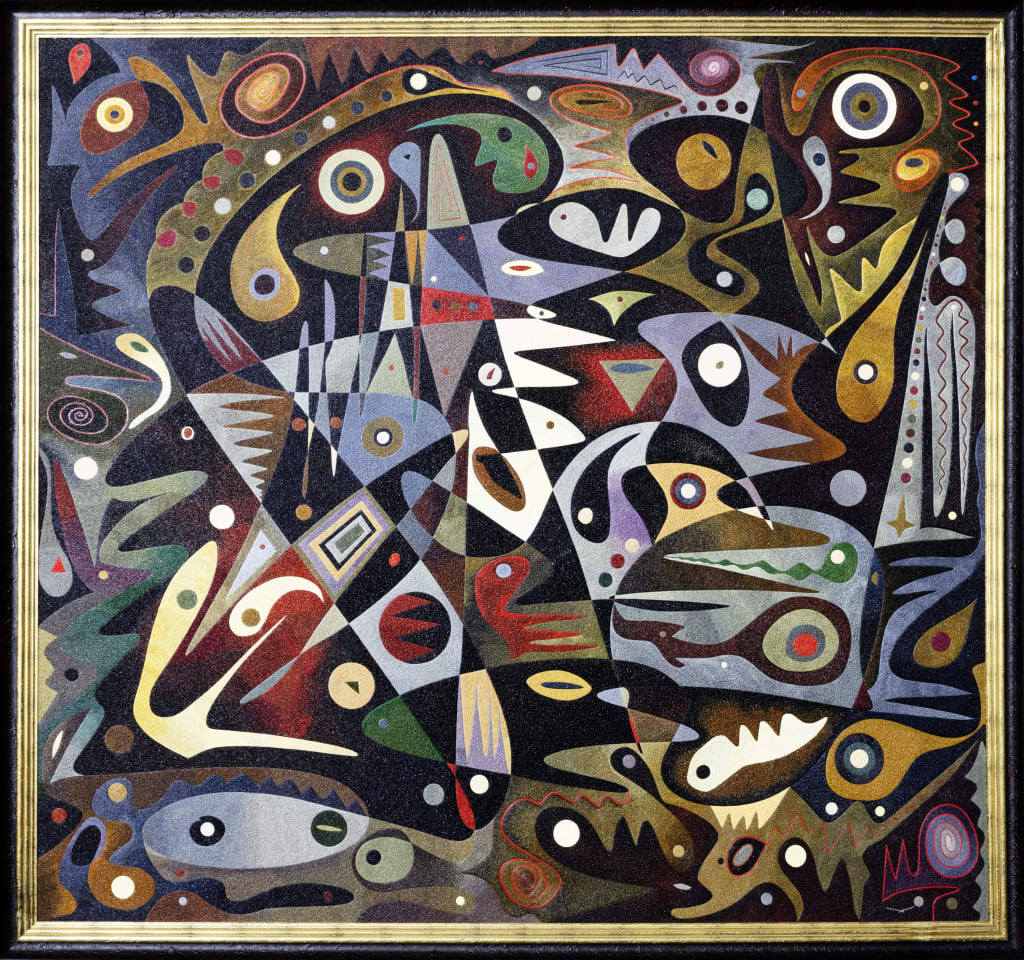
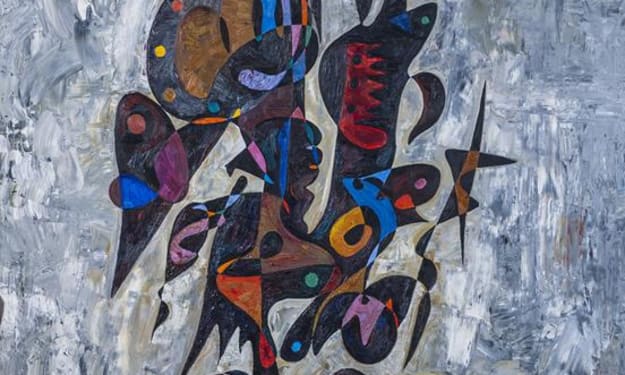
In an art landscape saturated with gesture, spontaneity, and post-rationalized meaning, a quietly emerging anonymous artist is taking a markedly different approach. His work, rooted in biomorphic abstract expressionism, begins not with form—but with language.
Each piece starts with a title.
Not as an afterthought, nor as a poetic addition once the painting is complete, but as the first and decisive act in the process. According to limited documentation accompanying the works, the title is established in advance—fixed, specific, and non-negotiable. The painting that follows is developed in response to it.
This reversal—placing language before image—introduces a subtle but significant shift in how the work is experienced.
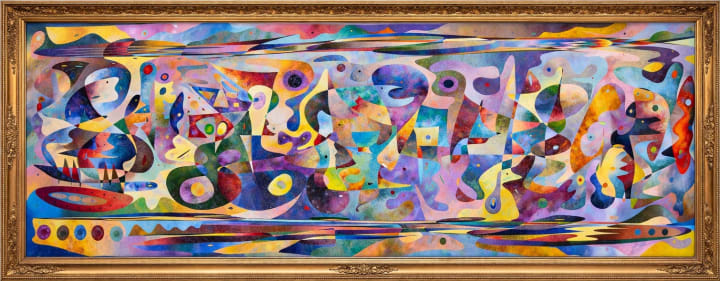
Visually, the paintings are consistent with biomorphic abstraction: fluid, organic forms that expand, contract, and interact across the canvas. Shapes resemble cellular structures, membranes, or evolving organisms. There is a sense of internal logic, but not of representation. Nothing is illustrated directly.
What distinguishes the work is the relationship between the title and the final composition.
Titles such as Divine DNA (2016), The Magician (2016), Geisha (2017), Hinduism (2017), and Battle of Gaugamela (2002) do not describe the paintings in a literal sense. Instead, they establish a conceptual boundary within which the work develops. The resulting images appear neither random nor illustrative, but constrained—guided by an underlying condition set by the title.
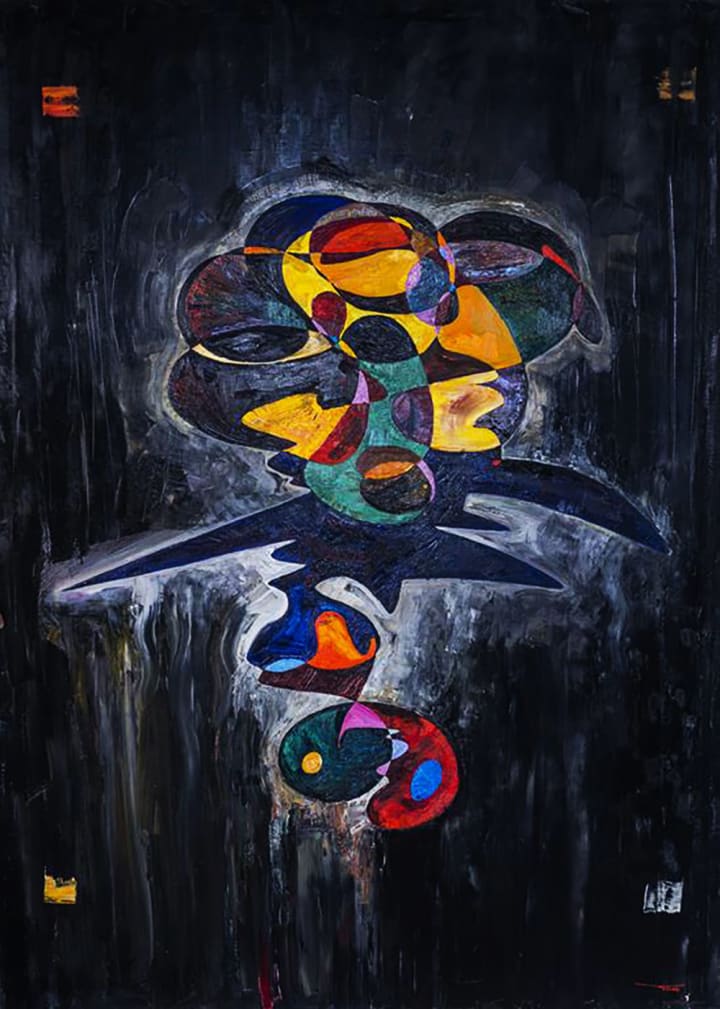
In this sense, the title functions less as a label and more as a framework.
The viewer encounters the work in two stages. First, the title introduces a term with established meaning. Then the painting complicates that meaning, extending it into visual form. The interaction between the two creates a tension: the viewer recognizes the word, but must reconsider it through what is seen.
Importantly, there is no ambiguity in authorship of meaning. The titles are presented as definitive. There is no invitation to rename or reinterpret them. This stands in contrast to much of contemporary abstraction, where openness and subjective interpretation are often emphasized.
Here, the structure is clearer:
the artist defines the term, and the painting explores it.
Little is known about the artist himself. There are no interviews, no public appearances, and no statements beyond the works and their titles. This absence of context has, if anything, increased attention, directing focus entirely onto the relationship between language and form.
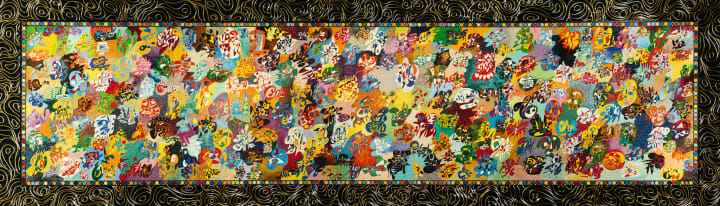
While it is too early to assess the long-term impact of this approach, the work introduces a disciplined variation within abstraction—one that reasserts intention without sacrificing visual complexity.
At a minimum, it poses a straightforward but uncommon proposition:
What happens when a painting is not named after it is made—but made to meet its name?
About the Creator
Thelma Golden
American art curator, the director and chief curator of The Studio Museum in Harlem.
Keep reading
More stories from Thelma Golden and writers in Art and other communities.
Memory as Fragmented Body
I return, again, to Anonymous—an artist I have followed for some time, and one I continue to regard as a rare source of fresh air within the visual language of the 21st century. There is a persistence in this practice, a refusal to resolve too quickly, that feels increasingly vital.
By Thelma Golden8 days ago in Art
Watching The End Of The World From The Diner
Introduction I am not sure how to approach this. Guy Peellaert was an amazing artist who created iconic fantasy images of famous people, usually musicians or politicians, as well as creating commissioned album covers such as "It's Only Rock'n'Roll" by The Rolling Stones and David Bowie's "Diamond Dogs" which you can read more about below.
By Mike Singleton 💜 Mikeydred 3 days ago in Art
The Irony of Flying While We Bomb the "World's Greatest Terror Regime"
Ah, the irony of flying at this moment in time as the United States is simultaneously bombing Iran - the nation officials have insisted for decades is "The World's Greatest Terror Regime" - while the TSA is on a go-slow, courtesy of a funding squeeze that's left its officers unpaid, quitting in droves, and turning checkpoints into something like slow-moving bread lines.
By Scott Christenson🌴8 days ago in Humor


Comments
There are no comments for this story
Be the first to respond and start the conversation.