
Rats 🐀 Drank Thousands of Liters of Seized Liquor
Authorities in India’s dry state of Bihar say rodents consumed massive quantities of confiscated alcohol—but critics question the explanation amid concerns of corruption and poor storage systems.

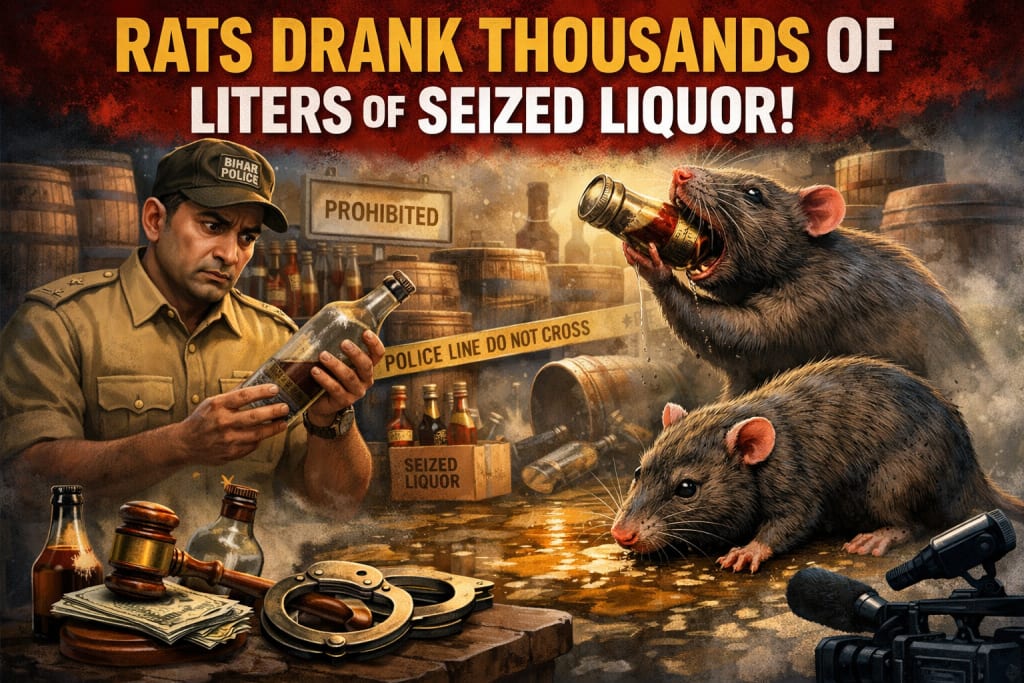
A surprising and controversial claim by police in India’s eastern state of Bihar has captured widespread attention: thousands of liters of confiscated alcohol, stored in police facilities, were allegedly consumed by rats. The statement, which might sound unusual or even humorous at first glance, has instead sparked serious debate about accountability, governance, and the effectiveness of prohibition laws in the region.
Bihar has been under a strict alcohol ban since 2016, when the state government imposed prohibition in an effort to reduce crime, domestic violence, and public health issues associated with excessive drinking. Since then, authorities have conducted frequent raids, seizing large quantities of illegal liquor. However, managing and storing this confiscated alcohol has proven to be a logistical challenge.
In several recent instances, police officials reported that significant portions of seized alcohol had mysteriously disappeared from storage facilities. When questioned, some officers attributed the loss to rats, claiming that the rodents had gnawed through containers and consumed the liquor. According to these reports, thousands of liters were lost in this manner.
The explanation has drawn skepticism from both the public and experts. Critics argue that while rats can indeed damage stored goods, the idea that they could drink such vast quantities of alcohol is highly questionable. Many believe the claim is being used as a convenient excuse to cover up theft, mismanagement, or even internal corruption within the system.
Legal experts and activists have also weighed in, calling for greater transparency and stricter monitoring of seized goods. Some have pointed out that improper storage conditions—such as poorly sealed containers and inadequate facilities—could lead to leakage or spoilage, but not necessarily complete consumption by rodents.
The issue has even reached the courts. In previous cases, judges have expressed frustration over similar explanations and urged authorities to adopt better storage practices. The judiciary has emphasized that blaming rats without proper investigation undermines public trust and raises concerns about the integrity of law enforcement agencies.
Beyond the controversy, the incident highlights broader challenges associated with enforcing prohibition. While the ban was introduced with good intentions, its implementation has faced numerous hurdles. Illegal alcohol trade continues to thrive in many areas, leading to frequent seizures and overcrowded storage facilities. This, in turn, creates opportunities for mismanagement and raises questions about the sustainability of such policies.
Public reaction to the “rats drank the liquor” claim has been mixed. On social media, many users have responded with humor, sharing memes and jokes about intoxicated rodents. However, others have taken a more serious stance, demanding accountability and calling for independent investigations into the missing alcohol.
Experts in animal behavior have also commented on the issue, noting that while rats are opportunistic feeders and may be attracted to certain substances, alcohol is not typically a preferred or sustainable source of nourishment for them. Consuming large quantities could even be harmful or fatal to the animals, making the police’s claim even more doubtful.
The state government has yet to provide a comprehensive explanation or detailed investigation report regarding the missing alcohol. However, officials have acknowledged the need to improve storage systems and ensure better tracking of seized goods. Some proposals include digitizing inventory records, installing surveillance cameras in storage facilities, and conducting regular audits.
For many observers, the controversy is less about rats and more about systemic issues within the enforcement of prohibition laws. It raises important questions about how seized materials are handled, how accountability is maintained, and whether current policies are achieving their intended goals.
In the end, the story serves as a reminder that unusual explanations often invite closer scrutiny. Whether the missing liquor was truly consumed by rats or lost due to other reasons, the incident has highlighted the importance of transparency and effective governance. As Bihar continues to navigate the complexities of prohibition, addressing these challenges will be crucial in restoring public confidence and ensuring that the law is enforced fairly and efficiently.
About the Creator
Irshad Abbasi
Ali ibn Abi Talib (RA) said 📚
“Knowledge is better than wealth, because knowledge protects you, while you have to protect wealth.
Keep reading
More stories from Irshad Abbasi and writers in 01 and other communities.
Afghan Singer Gains Fame for Looking Like Justin Trudeau
In the age of social media, fame can emerge from the most unexpected circumstances. For one young Afghan singer, recognition did not initially come from his music alone, but from his uncanny resemblance to Justin Trudeau. What began as a casual observation quickly spiraled into a viral phenomenon, transforming the singer’s life almost overnight.
By Irshad Abbasi 12 days ago in 01
How 5G Is Changing What IoT Apps Can Actually Do
The promise of the Internet of Things (IoT) has historically been throttled. Limitations of 4G LTE and Wi-Fi held back true innovation for years. Early "smart" devices were often plagued by high latency and poor connection density. They also suffered from battery-draining protocols that limited their real-world utility. As of 2026, the widespread maturation of 5G Standalone (SA) networks has changed everything. This shift has fundamentally altered the entire digital and physical landscape.
By Del Rosario5 days ago in 01




Comments
There are no comments for this story
Be the first to respond and start the conversation.