
How to Repay Mother Earth Every Time You Use AI?
How To Offset AI Usage

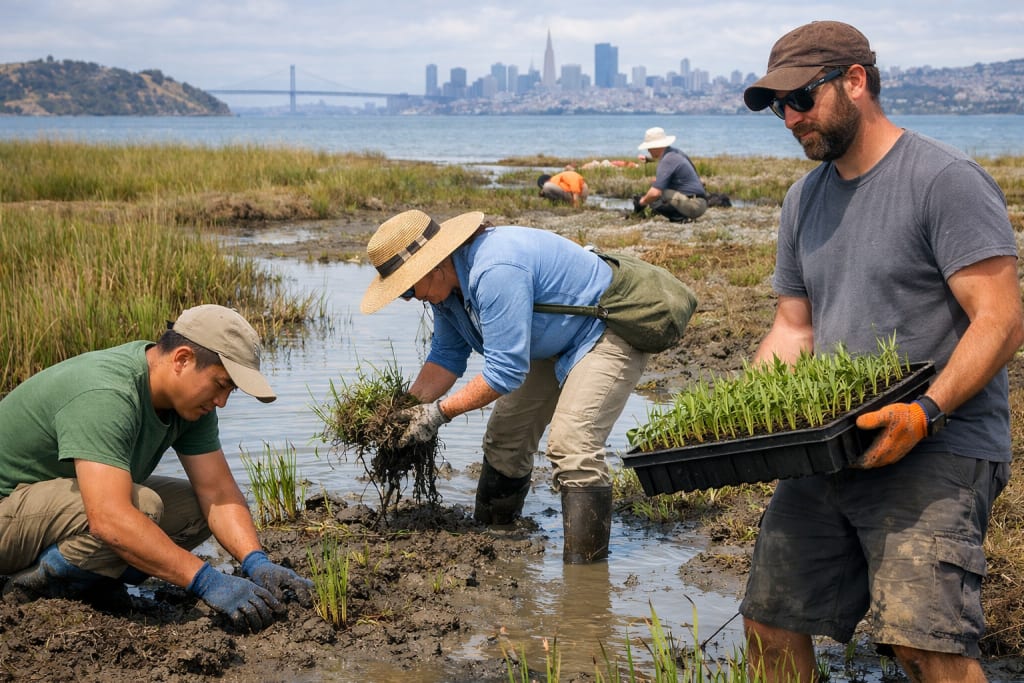
Generated with the help of AI
I use AI every single day. I use it to write, to research, to build tools, to generate images, to solve problems faster than I ever could alone. And I do it at scale — dozens of sessions a week, hundreds of outputs a month.
For a long time I didn't think much about the physical cost of that. AI felt weightless. Instant. Clean.
Then I started digging into the numbers.
Every AI query consumes water. Every image generated draws power from an electrical grid straining under unprecedented demand. Every article written with AI assistance runs through data centers that are quietly becoming some of the largest water and energy consumers on the planet.
Once you know that, you can't unknow it.
So I started asking a different question. Not "is AI bad for the environment" — that's too abstract, too easy to dismiss. The question I started asking was more personal:
What can I actually do about it — myself, directly, without routing money through organizations that spend it on conferences?
Here's what I found. And here's the practice I've built around it.
First: Understanding What You Actually Owe
Before you can repay something you need to know what you spent.
Based on current research, here's a rough environmental ledger for typical AI use:
Per AI text article generated: approximately 500ml to 1 liter of water consumed through data center cooling
Per AI image generated: approximately 50–100ml of water, plus significantly higher energy draw than text generation
Per AI video generated: the most resource-intensive output — multiple liters of water equivalent, high sustained energy demand
Per full working session (research, drafting, image generation, revisions): roughly 2–4 liters of water and a meaningful slice of daily energy consumption
Monthly, for a professional using AI daily: 60–100 liters of water and energy consumption equivalent to running several household appliances continuously
None of this should make you stop using AI. The technology is genuinely transformative and the efficiency gains it enables likely offset its footprint when used thoughtfully. But knowing the cost is the first step toward taking responsibility for it.
What You Can Do Yourself — No Middleman Required
These are actions you can take with your own hands, your own land, your own time. No donation forms. No waiting to see if the money actually does anything.
Plant Native Trees — Especially Near Water
A single mature native tree processes and cycles up to 37,000 liters of water per year through its root system and transpiration. It shades waterways, slows runoff, rebuilds soil structure, and recharges groundwater — all simultaneously, all for free, indefinitely.
Planting native trees is the most direct personal counter to data center water consumption that exists. The key word is native. A native tree is already adapted to your local soil, rainfall patterns, and ecosystem. It requires no irrigation once established. It supports local wildlife. It belongs there.
For every 10 AI articles you publish, plant one native tree. That single practice, maintained over a year, builds a small forest and a permanently improved local water cycle.
How to do it yourself:
Identify native tree species for your specific region at Calflora.org (California) or the Native Plant Society in your state
Purchase from a native plant nursery — not a big box garden center which rarely carries true local natives
Plant in fall when rains begin so roots establish naturally without irrigation
Plant near any existing waterway, drainage channel, or low area on your property for maximum water impact
Replace Lawn With Native Plants
If you have any outdoor space at all — even a small yard, a strip of ground, a balcony with containers — replacing conventional lawn or ornamental plants with native species is one of the highest-impact environmental actions available to an individual.
Conventional lawn is an ecological desert. It requires constant irrigation, provides almost nothing to local wildlife, compacts soil preventing water infiltration, and contributes to runoff pollution. In water-stressed regions it is genuinely harmful.
Native plants are the opposite. Deep root systems evolved over thousands of years break up compacted soil and channel rainwater directly into groundwater. They support native pollinators. They cool local air temperature. They require zero watering once established. They filter pollutants from runoff before it reaches waterways.
The water math: A typical suburban lawn uses 50–70% of a household's outdoor water. Replacing it with natives effectively eliminates that consumption — saving thousands of gallons annually while actively improving local groundwater recharge.
How to do it yourself:
Remove existing lawn with cardboard sheet mulching — lay cardboard directly over grass, cover with 4–6 inches of wood chip mulch, wait one season. Grass dies, cardboard composts, natives go in on top
Start with a small section — even 10 square feet is a meaningful beginning
Choose plants that are native to your specific county, not just your state — local ecotypes are far more effective than generic "California native" labeling
Water new plantings through their first summer only — after that, done
Plant Flowers — Specifically Native Wildflowers
Native wildflowers are not decorative. They are functional ecosystem infrastructure.
Pollinators — bees, butterflies, hummingbirds — are the mechanism through which plant communities reproduce and spread. Healthy pollinator populations support the native plant communities that stabilize soil, filter water, and maintain watershed function. Remove the pollinators and the entire cascade weakens.
Planting native wildflowers in any available space — yard, parkway strip, containers, community garden plot — directly supports the pollinator populations that keep local ecosystems functioning.
For every AI image you generate, plant a packet of native wildflower seeds. A single packet costs $5–10, covers 25–50 square feet, and supports hundreds of native pollinators through an entire season.
How to do it yourself:
Scatter seeds in fall directly onto cleared or loosely raked ground
No special preparation needed for native species adapted to local conditions
Water once when planting, then let natural rainfall take over
Leave seed heads standing through winter — they feed birds and reseed for next year
Volunteer for Physical Restoration Work
Every land trust and watershed organization in the country runs regular volunteer days where ordinary people show up and do physical restoration work — pulling invasive plants, planting natives, clearing debris from streams, building erosion control structures.
This is the most direct possible connection between your AI use and ecological repair. You are personally, physically restoring the water systems that data centers are straining.
No money changes hands. No overhead. No travel budgets. Just your hands in the soil, doing work that would not happen without you.
What volunteer restoration days typically involve:
Removing invasive plants that outcompete native species and destabilize soil
Planting native trees and shrubs in restored areas
Installing erosion control along stream banks
Removing trash and debris from waterways
Monitoring and data collection for restoration projects
Most organizations welcome complete beginners. They provide tools, training, gloves, and usually snacks. You provide time and willingness.
A simple commitment: One volunteer restoration day per month for every month you use AI professionally. Twelve days a year. That's it.
Build a Water Feature or Rain Garden
A rain garden is a shallow depression planted with native plants designed to capture and absorb stormwater runoff. Instead of rainwater rushing off your property into storm drains — carrying pollutants into local waterways — it pools briefly in the rain garden and slowly infiltrates into the groundwater.
A properly designed rain garden can absorb 30–40% of the runoff from a typical roof during a storm event. Over a year that's thousands of gallons of water returned to local groundwater instead of flushed into the storm system.
How to build one yourself:
Identify a low area in your yard that naturally collects water
Dig a shallow bowl — 6 to 12 inches deep, any size that fits your space
Amend with compost and native sandy soil mix for drainage
Plant with native sedges, rushes, and water-tolerant native wildflowers
Direct your downspout toward it
Cost: under $100 for a basic installation. Impact: permanent groundwater recharge for the life of the garden.
Organizations Actually Buying and Restoring Land
These are not traditional charities. These are organizations with legal mechanisms — conservation easements, land purchases, permanent deed restrictions — that make their work irreversible. When they protect land it stays protected regardless of who owns it next or who runs the organization in the future.
Your support goes directly to permanent outcomes you can visit, verify, and point to on a map.
Peninsula Open Space Trust (POST)
openspacetrust.org
Has permanently protected over 80,000 acres of Bay Area land including critical watershed areas in the Santa Cruz Mountains. Their work directly protects the water supply infrastructure for millions of Bay Area residents. When POST acquires land it is legally protected forever.
Sonoma Land Trust
sonomalandtrust.org
Over 55,000 acres permanently protected across Sonoma County including coastal watersheds, riparian corridors, and agricultural land. Their restoration team actively removes invasive species and replants native vegetation on acquired properties.
Marin Agricultural Land Trust (MALT)
malt.org
One of the oldest and most respected agricultural land trusts in North America. Protects working farmland and the watershed land surrounding it in Marin County permanently. Their model keeps land in agricultural production while legally preventing development forever.
Save The Bay
savesfbay.org
Focused specifically on San Francisco Bay wetland restoration — the most water-relevant conservation work in the region. Wetlands filter pollutants, recharge aquifers, buffer flooding, and regulate water temperature. Everything data centers disrupt, restored wetlands repair. Save The Bay does hands-on physical restoration and offers regular volunteer opportunities.
Pacific Forest Trust
pacificforesttrust.org
Focuses specifically on forest watershed protection across the Western United States. Forests are the primary mechanism through which rainfall becomes groundwater and eventually drinking water. Protecting forest watersheds is protecting the water cycle at its source.
Golden Gate National Parks Conservancy
parksconservancy.org
Manages habitat restoration across the Golden Gate National Recreation Area — one of the largest urban national parks in the world. Their volunteer program is one of the most active and accessible in the Bay Area with restoration events running nearly every weekend.
One Tam
onetam.org
Focused on Mount Tamalpais watershed restoration — one of the most ecologically important water catchment areas in the Bay Area. Their work directly maintains the natural water infrastructure serving Marin County communities.
A Simple Personal Practice
Here's the framework I've built for my own AI use. It's simple enough to actually maintain:
For every article I create with AI:
One native tree planted or one volunteer restoration day scheduled
For every batch of AI images I generate:
One packet of native wildflower seeds scattered somewhere they can grow
For every month I use AI professionally:
One contribution to a land trust doing permanent protection work in my region
Ongoing:
Native plants replacing any conventional lawn or ornamental garden at my property
This isn't guilt. It's accounting. AI gives me extraordinary productivity. The Earth provides the water and energy that makes it possible. Maintaining that relationship consciously — with my hands, my time, and my choices about where I live and what I plant — feels like the honest response.
The data centers are not going away. AI is not going away. But neither is the Earth's capacity to regenerate — given half a chance and a little help from the people who benefit most from the technology it's now being asked to support.
Plant something. Restore something. Protect something.
It's the least we can do — and it turns out the least is quite a lot.
About the Creator
Sandy Rowley
AI SEO Expert Sandy Rowley helps businesses grow with cutting-edge search strategies, AI-driven content, technical SEO, and conversion-focused web design. 25+ years experience delivering high-ranking, revenue-generating digital solutions.
Keep reading
More stories from Sandy Rowley and writers in 01 and other communities.
AI Data Center Energy News
Created with the help from AI There's a story unfolding in the energy sector that most people outside the tech industry haven't fully registered yet. It's moving fast, it's reshaping national infrastructure priorities, and it touches everything from your electricity bill to global climate commitments.The story is this: AI data centers are consuming energy at a scale that is rewriting the rules of power generation — and the industry is struggling to keep up. As an AI SEO consultant who tracks this space daily, I want to give you a clear, honest picture of what's happening right now in AI data center energy news — no hype, no corporate spin, just the facts and what they mean.
By Sandy Rowleya day ago in 01
I Spent 6 Months Comparing AI Software Development Companies — Here's What I Found That Nobody Talks About
Six months ago, I started a research project that I expected to take three weeks. I wanted to understand the landscape of AI software development companies — who the real players were, what distinguished them from each other, and what founders should actually look for when engaging one.
By Aarti Jangidabout 5 hours ago in 01




Comments
There are no comments for this story
Be the first to respond and start the conversation.