
How to Choose the Right Platform for Your Website Migration
Everything Businesses Need to Plan, Execute, and Validate a Successful Website Transition

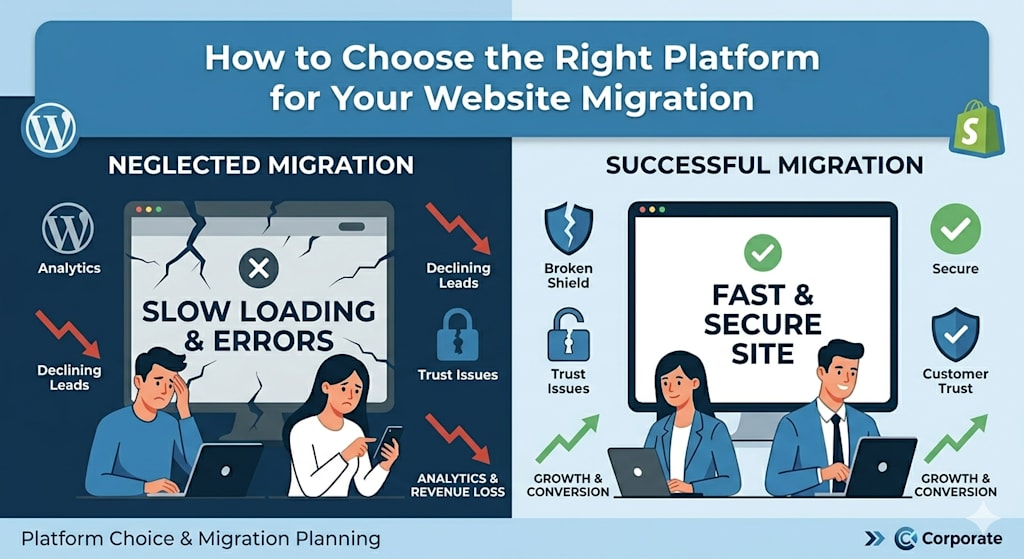
Website migration is one of the most sensitive and high-risk technical processes a business can undertake. Whether you are moving to a new platform, redesigning your site, switching domains, or upgrading infrastructure, every change has the potential to affect performance, search visibility, and user experience.
Many businesses underestimate the complexity involved in moving a website. They assume that transferring content and launching a new version is enough. In reality, migration involves technical structure, SEO signals, redirects, performance validation, and user testing. Missing even one of these elements can lead to broken pages, traffic loss, or ranking drops that take months to recover from.
That is why experienced teams rely on a structured website migration checklist to guide every stage of the transition. A methodical approach ensures that no important steps are skipped and that the migration process remains controlled, predictable, and measurable.
This guide is designed to help businesses, marketing teams, and website managers understand how to plan and execute a smooth migration process. By following the steps outlined here, you can protect your search performance, maintain user trust, and avoid costly technical mistakes.
Throughout this article, you will learn how to prepare before migration begins, what to execute during the transition, and how to validate performance once your new website is live.
What Is Website Migration and Why It Requires Planning
Website migration refers to making significant structural or technical changes to a website that affect how it is accessed, displayed, or indexed by search engines. These changes can include switching platforms, moving hosting providers, changing domain names, redesigning the website structure, or improving technical architecture.
Although migration offers opportunities to improve performance and scalability, it also introduces risk. Every component of your website—content, URLs, metadata, navigation, and functionality—must be transferred accurately.
Planning ensures that valuable digital assets remain intact during the transition. Without preparation, businesses often experience unexpected downtime, missing pages, broken links, or degraded performance.
Migration planning also supports long-term stability. Instead of reacting to problems after launch, teams can anticipate issues and build safeguards that protect performance and usability.
When Businesses Typically Need Website Migration
Website migration is not limited to large organizations or enterprise platforms. Businesses of all sizes face situations where migration becomes necessary.
One common scenario occurs when companies outgrow their existing platform. As product catalogs expand or traffic increases, older systems may struggle to support growth. Upgrading to a scalable platform becomes essential to maintain performance and user satisfaction.
Another frequent reason is redesigning a website to improve usability or branding. Modern design standards evolve quickly, and businesses must adapt to remain competitive. Redesigning a site often involves restructuring content, improving navigation, and optimizing page speed.
Domain changes also require migration planning. Businesses may rebrand, merge with another organization, or move to a new domain to better represent their identity. Domain changes significantly impact search indexing, making careful implementation necessary.
Infrastructure upgrades, such as moving from shared hosting to cloud-based servers, are also common triggers for migration. These upgrades improve performance and reliability but require precise configuration.
Understanding why migration is happening helps teams define priorities and determine which components require special attention.
The Three Core Phases of Website Migration
Successful migration follows a structured sequence. Dividing the process into phases helps teams stay organized and maintain control over progress.
The first phase focuses on preparation. This stage involves analyzing the current website, defining objectives, and building technical readiness. Planning reduces risk and sets clear expectations.
The second phase focuses on execution. This is when the actual transfer of data, content, and configurations takes place. Accuracy and testing are critical during this stage.
The final phase focuses on validation. After launch, teams must verify that everything works correctly. Monitoring performance ensures that the migration achieves its intended outcomes.
Following these phases reduces uncertainty and improves confidence throughout the project.
Pre-Migration Preparation: Building a Strong Foundation
Preparation is the most important stage of migration. Most failures occur due to incomplete planning rather than technical errors during execution.
The first step in preparation is conducting a comprehensive audit of your existing website. This process involves identifying every page, image, and resource that needs to be transferred. A full audit also helps detect outdated content that can be removed before migration.
Auditing performance metrics is equally important. Identifying high-traffic pages allows teams to prioritize them during migration. Preserving valuable content ensures that search rankings remain stable.
Creating backups is another essential task. Backups protect against unexpected data loss. Storing backups in secure locations ensures that files can be restored if technical issues occur.
Defining migration goals provides direction for decision-making. Without clear goals, migration can become unfocused and inefficient. Goals may include improving load speed, enhancing scalability, simplifying content management, or upgrading technical capabilities.
Planning URL mapping is one of the most critical tasks during preparation. Each existing URL must be matched with its corresponding destination. Accurate mapping prevents broken links and preserves search visibility.
Setting up a staging environment allows teams to test functionality before launch. Staging environments simulate real-world conditions without affecting live users. Testing in this controlled environment reduces the likelihood of unexpected problems.
Platform Selection and Compatibility Considerations
Choosing the right platform plays a central role in long-term success. The platform determines how easily your website can grow, adapt, and integrate with other tools.
Businesses must evaluate platform capabilities based on their specific needs. Ecommerce businesses, for example, require strong product management features and secure payment processing. Content-driven websites benefit from flexible publishing tools and advanced SEO options.
Compatibility with existing systems is another important factor. Websites often rely on third-party tools such as customer relationship management software, analytics systems, or marketing automation platforms. Ensuring compatibility reduces disruptions during migration.
Performance considerations also influence platform selection. Faster platforms improve user satisfaction and reduce bounce rates. Scalability ensures that websites remain stable as traffic increases.
Taking time to evaluate platforms reduces future technical limitations and improves long-term reliability.
During Migration Execution: Ensuring Accurate Transfer
The execution phase transforms planning into action. This stage requires careful attention to detail and continuous verification.
Setting up the new environment is the first step. Hosting configurations, databases, and security settings must be properly configured before transferring data. Secure connections protect user information and maintain trust.
Content migration must be performed systematically. Each page, image, and file should be transferred in an organized manner. Verifying formatting ensures that visual consistency remains intact.
Maintaining SEO elements is essential during execution. Metadata, headings, and structured data provide context for search engines. Preserving these elements prevents visibility loss.
Redirect implementation ensures continuity between old and new pages. Redirects guide users to updated locations and maintain navigation flow. Without redirects, users may encounter error pages.
Internal links must also be updated. Navigation menus, buttons, and references should point to new destinations. Clean navigation improves usability and reduces confusion.
Post-Migration Validation: Confirming Stability
Validation begins immediately after launch. This stage focuses on confirming that the new website functions correctly under real-world conditions.
Testing functionality across all pages ensures that users can navigate without interruptions. Forms, search tools, login systems, and checkout processes should be reviewed carefully.
Performance testing measures loading speed and responsiveness. Faster loading times improve engagement and support better search performance.
Search visibility must be monitored closely after launch. Submitting updated sitemaps helps search engines recognize new structures. Monitoring crawl reports identifies errors quickly.
Analytics tracking provides valuable insights into user behavior. Comparing traffic patterns before and after migration reveals whether performance remains stable.
Validation continues beyond the initial launch period. Ongoing monitoring allows teams to identify trends and respond to emerging challenges.
Common Mistakes That Lead to Migration Failures
Understanding common mistakes helps prevent costly setbacks. Many migration failures occur due to predictable errors that can be avoided with preparation.
One major mistake involves neglecting redirect planning. Missing redirects cause users to land on error pages instead of intended destinations. This disrupts navigation and harms search rankings.
Another frequent mistake is skipping testing phases. Testing identifies technical issues before they affect users. Without testing, small problems can escalate into major failures.
Losing metadata during transfer is another risk. Metadata plays a critical role in search visibility. Missing information reduces discoverability and traffic potential.
Failing to monitor performance after launch also leads to long-term problems. Migration does not end at launch. Continuous observation ensures stability and reliability.
Avoiding these mistakes improves confidence and reduces unexpected downtime.
Migration Considerations for Different Website Types
Different types of websites require different migration priorities. Understanding these differences helps teams allocate resources effectively.
Content-focused websites often prioritize article structure, formatting consistency, and search optimization. Preserving headings and internal linking patterns ensures that readers can navigate easily.
Ecommerce websites require special attention to product listings, pricing accuracy, and payment processing systems. Even minor errors can affect revenue and customer trust.
Corporate websites may focus on integration with external tools such as customer portals or scheduling systems. Maintaining seamless connections prevents workflow disruptions.
Each website type presents unique challenges. Tailoring migration strategies improves overall effectiveness.
Tools That Support a Successful Migration Process
Modern tools simplify migration and reduce manual workload. Using the right tools improves efficiency and accuracy.
Crawling tools analyze website structure and identify hidden issues. They help teams discover broken links and duplicate content.
Backup tools provide secure storage for website data. Reliable backups protect against accidental loss and enable recovery when necessary.
Performance testing tools measure loading speed and identify optimization opportunities. Faster websites provide better user experiences.
Monitoring tools track search performance and user behavior. Real-time insights allow teams to respond quickly to unexpected changes.
Combining multiple tools creates a comprehensive support system for migration projects.
Indicators That Confirm Migration Success
After migration, teams must determine whether the transition achieved its intended results. Measuring performance helps identify strengths and areas for improvement.
Stable traffic levels indicate that search visibility remains intact. Sudden drops may signal technical issues requiring attention.
Functional navigation confirms that users can access content without interruption. Broken pathways reduce engagement and increase frustration.
Improved loading speed demonstrates technical progress. Faster websites encourage longer visits and higher conversions.
Positive user feedback also signals success. Users often notice improvements in navigation and performance.
Monitoring these indicators ensures that migration delivers measurable value.
Expert Recommendations for Reducing Migration Risk
Experienced professionals follow proven strategies to minimize uncertainty during migration projects.
Planning early is one of the most effective methods. Early preparation allows teams to identify dependencies and allocate resources efficiently.
Testing in controlled environments reduces risk. Simulating real-world scenarios ensures that systems perform reliably before launch.
Clear communication between stakeholders improves coordination. Teams working together reduce misunderstandings and streamline workflows.
Monitoring performance continuously supports early detection of problems. Quick responses prevent minor issues from escalating into major disruptions.
Following expert recommendations builds confidence and improves outcomes.
Final Readiness Review Before Launch
Before launching the migrated website, teams should perform a comprehensive readiness review. This review confirms that all components function correctly and meet expectations.
Backup verification ensures that restoration options remain available. Confirming redirect accuracy prevents navigation errors. Validating content ensures that formatting remains consistent.
Checking performance metrics confirms that speed and responsiveness meet standards. Reviewing analytics setup ensures accurate data collection from the moment of launch.
Completing a final review reduces uncertainty and supports a smooth transition.
Conclusion
Website migration represents both a challenge and an opportunity. While the process involves risk, it also provides a chance to improve performance, enhance user experience, and support long-term growth.
Success depends on careful preparation, structured execution, and continuous validation. Businesses that approach migration methodically protect valuable digital assets and maintain user trust.
By following a systematic approach and maintaining attention to detail throughout each phase, organizations can complete migrations with confidence. Instead of fearing disruption, teams can view migration as a strategic step toward better performance, scalability, and reliability.
About the Creator
Henry Davids
Hi, I’m Henry Davids!
I’m passionate about technology, web development, and helping businesses grow online. I write about website development, SEO, digital marketing, and practical tech insights that make complex ideas easier to understand.
Keep reading
More stories from Henry Davids and writers in 01 and other communities.
How SEO Helps Small Businesses Compete with Big Brands
Imagine you own a small business and have just launched a well-designed website. Your products are good, your services are reliable, and your pricing is competitive. Yet when you search for your industry on Google, the first page is dominated by large brands. Their names appear everywhere, making it seem almost impossible for a smaller business to gain visibility.
By Henry Davids27 days ago in 01
Lost Crypto? Understanding Blockchain Recovery and Security in 2026
Imagine logging into your crypto wallet only to discover that your balance has dropped to zero. For many investors, this moment feels like a devastating blow to their financial plans and digital security. Unfortunately, cryptocurrency theft and Frauds have become increasingly common, with thousands of incidents reported every month.
By Float Mediaabout 24 hours ago in 01
Top 7 Trusted Fintech App Development Companies in USA in 2026
The fintech revolution continues to reshape how businesses and consumers interact with money. From digital banking and payment gateways to blockchain-powered platforms, the demand for reliable fintech app development solutions is higher than ever in 2026.
By keith laurance4 days ago in 01




Comments
There are no comments for this story
Be the first to respond and start the conversation.