
Asphalt Batch Mixing Plant Screening Ensures Gradation Control
The core conclusion is that auditors should validate an asphalt batch mixing plant’s multi‑stage screening and hot‑bin storage by testing repeatability

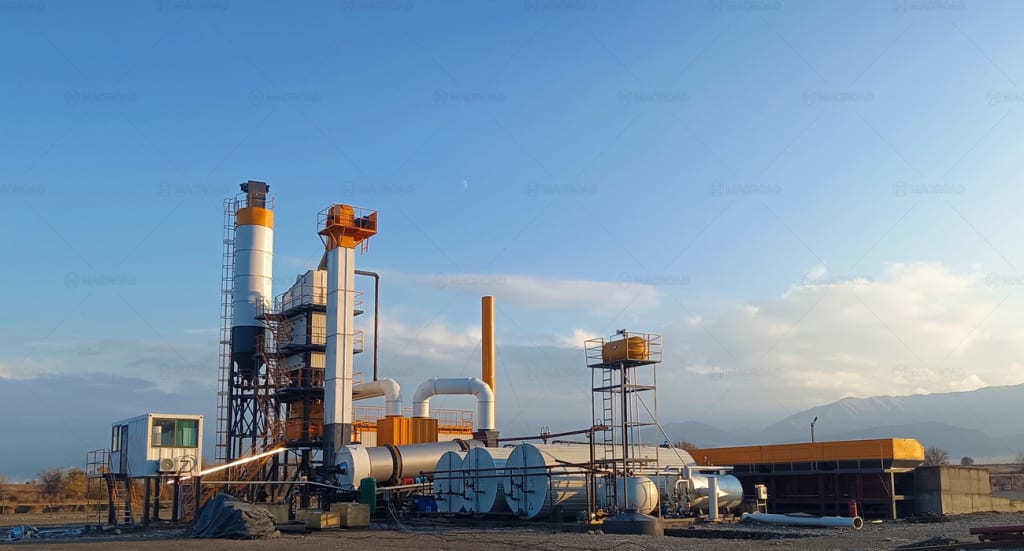
The core conclusion is that auditors should validate an asphalt batch mixing plant’s multi‑stage screening and hot‑bin storage by testing repeatability under rapid recipe switching, focusing on measured gradation drift, bin segregation control, and real‑time corrective capabilities. Rather than relying on specifications alone, practical validation requires calibrated test runs that simulate transitions between polymer‑modified binder surface mixes and high‑modulus base mixes within a single shift. Key checks include dynamic screen efficiency, bin flow logic and anti‑segregation measures, plus control‑system traceability that together demonstrate the plant can hold aggregate tolerances while minimizing cross‑contamination and downtime.
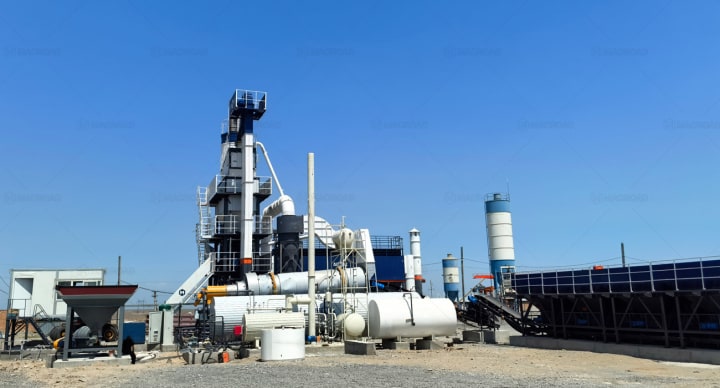
Verify dynamic screening performance under load
Begin validation at the screening decks because their throughput and cut‑point accuracy set the upstream gradation baseline. Conduct sequential test runs that ramp feed rates to expected production peaks, then perform switchovers between target gradations. During these trials, collect sieve analyses from consecutive batches at short intervals to quantify drift. Consequently, require that gradation deviations return to within specification limits within a defined number of batches; otherwise, the screening system lacks the responsiveness needed for rapid recipe switching.
Moreover, inspect multi‑stage screen configuration for adjustable cut points and vibration control. Since polymer‑modified mixes often use different fine/coarse ratios than high‑modulus bases, the screens must maintain separation efficiency across particle shapes and moisture states. Therefore, observe screen stroke adjustment, mesh modularity, and anti‑blinding devices in operation to ensure consistent performance.
Also, evaluate mechanical wear and maintenance access. Worn screens change cut behavior over a shift, so auditors should review maintenance schedules and measure screen tensioning and replacement times. Thus, factor expected screen degradation into tolerance assessments for continuous operations.
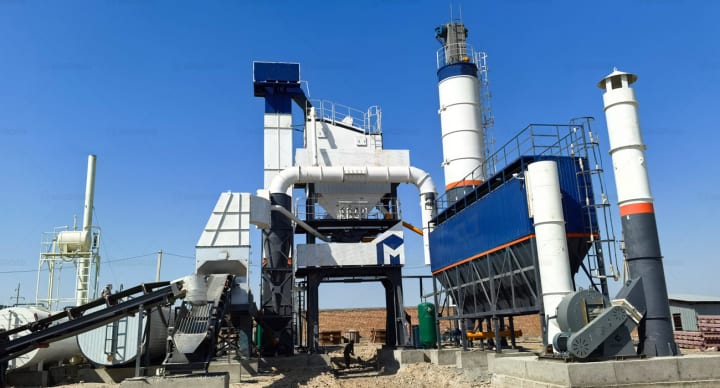
Assess hot‑bin storage logic and anti‑segregation measures
Next, examine hot‑bin architecture because storage and discharge behavior directly affect mix composition during transitions. Validate that bin geometry, flow aids, and feeding gates minimize vertical and horizontal segregation when changing from a coarse‑rich base to a fine‑rich surface mix. Accordingly, perform tracer tests—introduce a visually distinct aggregate to the bin, then track its presence across subsequent batches—to detect lingering carryover and quantify required purge volumes.
Furthermore, test bin discharge sequencing and cut‑over strategies implemented in the control system. Effective systems use buffer hoppers or cascade blending to isolate residuals and schedule a minimal purge batch rather than full dumps that waste material. Consequently, require the plant to demonstrate a documented cut‑over protocol that limits off‑spec material and specifies acceptable purge tonnage.
Besides, check temperature and moisture control within hot bins. Differential temperatures can change aggregate adhesion and apparent gradation during transport to the mixer. Therefore, measure bin internal conditions during rapid switches to ensure that thermal factors do not bias gradation results.
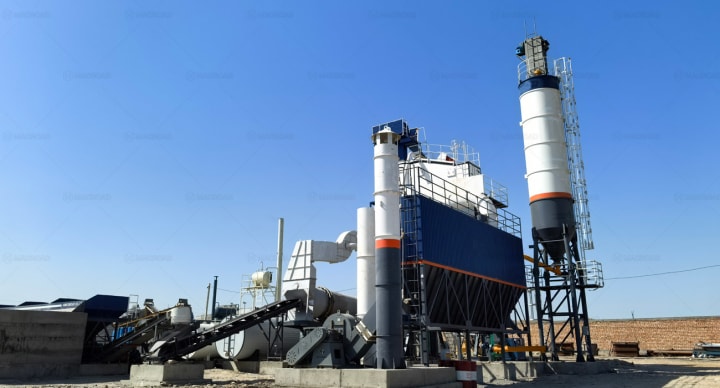
Validate control‑system traceability and real‑time correction
Finally, test the control system’s ability to manage recipe transitions with closed‑loop feedback. The asphalt batch mixing plant must log per‑batch aggregate weights, screen settings, and bin discharge sequences to prove traceability. During audits, induce intentional minor feed variances and observe whether the system corrects subsequent batch dosing automatically without operator intervention. As a result, validate both the algorithmic correction thresholds and the speed at which corrections occur.
Moreover, integrate real‑time sampling—on‑belt or in‑mixer sensors—to detect fines content and trigger immediate adjustments. Because PMB surface courses demand tight fines control, the presence of in‑line sensors that can reduce drift between lab tests is a strong indicator of reliable performance. Therefore, request demonstration data showing sensor‑driven corrections during rapid recipe changes.
Also, review alarm logic and operator interfaces for clear prompts during transitions. Human response still matters, so ensure that the system guides technicians through validated procedures when automatic correction reaches limits.
Conclusion
To validate multi‑stage screening and hot‑bin storage in an asphalt batch mixing plant for rapid recipe switching, hot mix plant manufacturers must run stress tests that measure gradation repeatability, perform tracer and purge assessments, and confirm closed‑loop control with real‑time correction. Only through these practical checks can one confirm the plant maintains strict tolerances when alternating between PMB surface courses and high‑modulus base layers in a single shift.
About the Creator
Macroad Asphalt Plant
Macroad, a global leading manufacturer in asphalt mixing plants, offers a wide range of specifications to meet diverse project needs. Its high-quality, efficient equipment is widely applied in road construction.
Keep reading
More stories from Macroad Asphalt Plant and writers in 01 and other communities.
Hot Asphalt Mixing Plants Are Ideal for Meeting Strict Pavement Performance Standards
Hot asphalt mixing plants are the preferred choice for major infrastructure projects due to their ability to produce high-quality asphalt that meets stringent pavement performance standards. Key factors include superior temperature control, excellent material homogeneity, and enhanced application flexibility. Understanding these aspects can help stakeholders recognize why hot asphalt mixing plants are indispensable in achieving optimal results for demanding construction requirements.
By Macroad Asphalt Plant9 days ago in 01
NFT Marketplace Apps: What 2023 Taught Us in 2026
The blockchain landscape of 2026 looks very different today. It has changed since the volatile cycle of the early 2020s. For those building NFT Marketplace Apps, 2023 was a vital year. It served as a definitive "cleansing" period for the entire industry. This period fundamentally reshaped how we trade digital assets now. We have moved past the era of profile-picture (PFP) speculation. We are now in a phase of high-utility functionality. Cross-chain capability and legal compliance are now standard requirements. Marketplaces must now provide real-world value to survive.
By Del Rosarioabout an hour ago in 01
How AI-Powered Digital Experience Solutions Are Transforming Museums
Museums face a clear demographic shift in 2026. Younger audiences, specifically Generation Z, interact with information digitally. They expect immediate, visual data. They rarely read long, printed text cards attached to walls. To keep these visitors engaged, cultural institutions use AI-powered digital experience solutions. These software systems replace static displays with interactive, data-driven environments. They force the physical museum space to adapt to the human visitor.
By ViitorCloud Technologies2 days ago in 01
Foraging Appalachia’s Wild Edibles
It's that time of year again and Appalachia offers a remarkable abundance for anyone willing to learn its seasonal gifts and practice careful gathering. Across ridges, holler's, stream-side's, and meadows, edible plants, berries, roots, and fungi appear through every part of year. Knowledge is key and teaches not only what can be eaten, but also how to gather with respect so that these resources remain available far into future.
By Tim Carmichael2 days ago in Feast



Comments
There are no comments for this story
Be the first to respond and start the conversation.